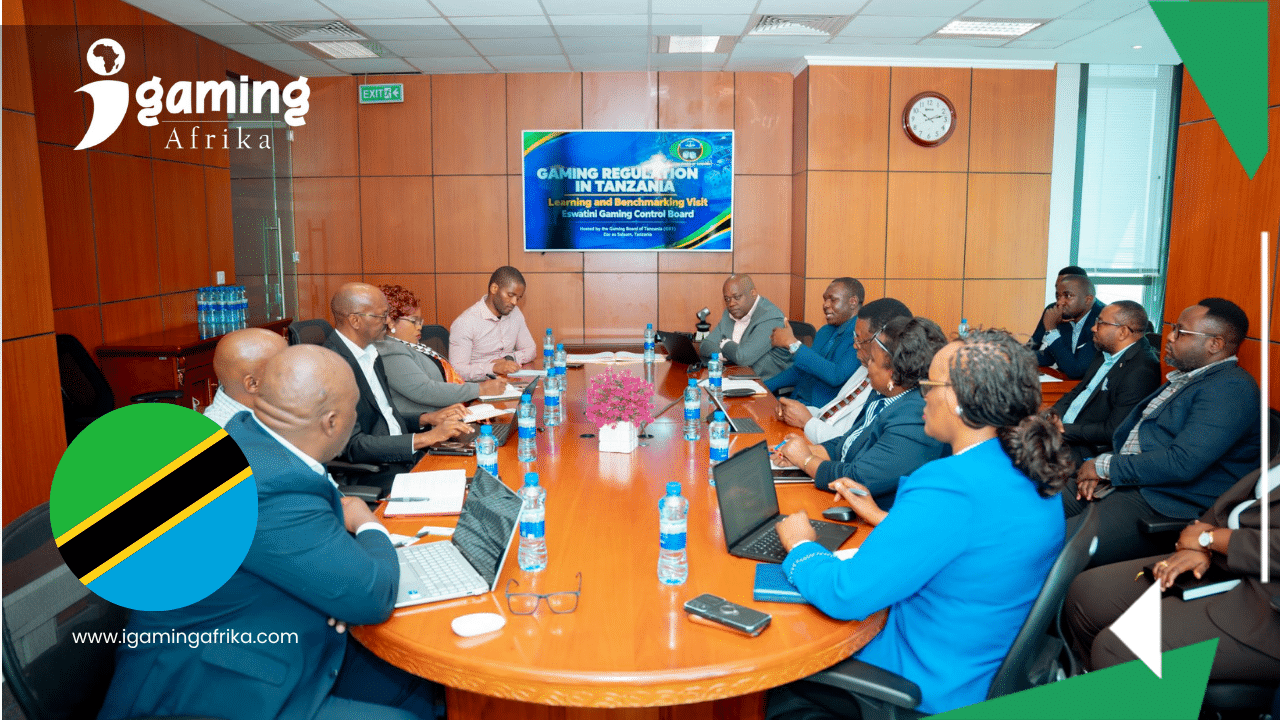
The Gaming Board of Tanzania (GBT) recently hosted a delegation from the Eswatini Gaming Control Board for a two-day strategic learning visit.


The visit provided an opportunity for the two regulatory bodies to exchange technical knowledge, share operational experiences, and discuss best practices in gaming regulation, market oversight, and sector governance.
The visit forms part of Eswatini’s broader regional benchmarking strategy to align its regulatory systems with those of established peer institutions across the continent. In meetings with the GBT, the delegation explored Tanzania’s statutory framework, anti-money laundering and counter-financing of terrorism (AML/CFT) controls, and governance models.
Tanzania has a centralized regulatory framework administered by the GBT under the Gaming Act of 2003. A key focus of the exchange was the country’s regulation of internet gambling, including the Internet Gaming Regulations of 2022 (GN No. 478T).






The visit comes at an important time for Eswatini, which regulates land-based casinos, lotteries, and traditional bookmakers under the Gaming Act of 2022. The country’s gaming sector falls under the Ministry of Tourism and Environmental Affairs, led by Minister Jane Simelane, and is overseen by the Eswatini Gaming Control Board.

Eswatini is working to update its laws in response to the rapid growth of digital gambling. With more than 380,000 registered online gamblers in the country, Parliament approved a motion directing Minister Simelane to establish a centralized monitoring system to help prevent underage gambling and support people experiencing gambling-related problems.
The meeting between GBT’s Board Chairperson, Ambassador Modest Mero, and Hon. Mandla Dlamini reflects growing momentum toward cross-border regulatory cooperation in Southern and Eastern Africa. By drawing on Tanzania’s experience with digital licensing and data localization, Eswatini aims to develop a modern regulatory regime that protects consumers and supports a transparent gaming market.