Gamble Alert Uncovers Deep Social Pressures Behind Rising Underage Gambling

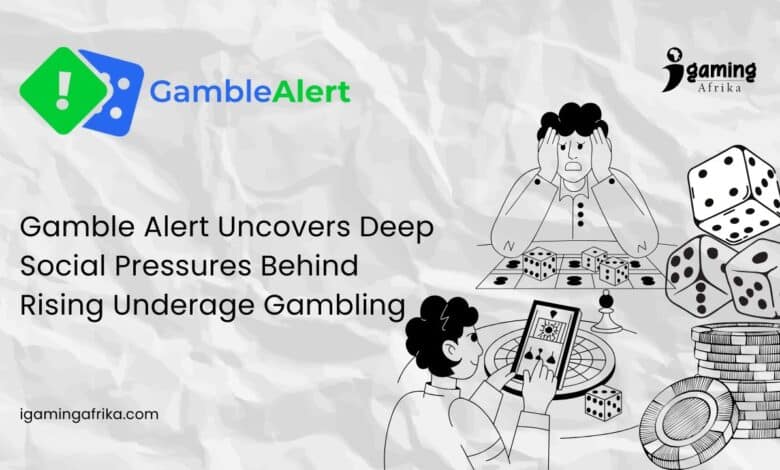
Underage gambling has quietly become one of the fastest-growing concerns in Lagos State, and new evidence from Gamble Alert’s latest research tour shows just how deeply the issue has taken root. In its newly released research report, the organisation presents one of the most detailed examinations to date of adolescent gambling in Lagos, drawing on a study conducted during the 7th edition of its Advocacy Tour.


The research team surveyed 800 students across four public secondary schools in Alimosho Local Government Area. The process was carried out with the full cooperation of school administrators and the active participation of the Lagos State Lotteries and Gaming Authority (LSLGA), the Association of Nigerian Bookmakers, WYS Solicitors, and several industry operators.
Gender was established as one of the strongest behavioral predictors in the dataset. Although the distribution among respondents was fairly balanced, with 55.4% male and 44.6% female, boys dominated actual gambling activity, accounting for more than two-thirds, 68%, of underage gamblers. The research noted that boys were twice as likely to gamble as girls. This disparity suggested that interventions aimed at reducing underage gambling might need to be tailored differently for boys and girls, focusing on the social and cultural factors that made boys more susceptible. Moreover, understanding why boys were more inclined to engage in gambling could help policymakers, educators, and parents develop targeted prevention strategies and early intervention programs.
What stood out immediately was how familiar students already were with gambling. Almost all the respondents had not only heard about it but could clearly define it. A striking 91.4% said they had heard about gambling, and 96.6% could define what it was. This high level of familiarity did not exist in a vacuum. It indicates that gambling is already a recognizable concept among minors, even before participation occurs. Exposure to advertising may have reinforced this familiarity, with 209 respondents reporting that they had seen gambling advertisements



Peer pressure emerged as one of the other strongest driver of underage gambling, shaping participation more than individual curiosity. Among the students surveyed, 53.7% of underage gamblers reported engaging in betting because of friends or peers, while only 30.6% gambled independently. Overall, 35.3% of students said they had participated in gambling, and the study found that peer influence effectively doubled the likelihood of involvement.
Read Also: GambleAware Calls For Awareness as Gambling Harm and Neurodivergence Intersect


Adult- mediated activities and family dynamics added another significant layer to underage gambling behavior. The frequency with which children were sent to bets by adults showed a clear relationship with participation. Students who were never sent to bet had the lowest involvement at 31.1%, those rarely sent reported 51.9%, those that were sent sometimes 71.4%, and those sent very often reached the highest levels of participation.
Fisayo Oke, Chief Executive Officer at Gamble Alert said, “While harm awareness does help steer some young people away from gambling, the broader risks remain significant. Gambling behaviour is rarely accidental; it grows out of social dynamics, family patterns, financial curiosity, and media exposure that (indirectly) normalize betting from an early age.”
The gap between exposure and understanding among underage gamblers is striking. While gambling is widespread, nearly half of minors, 48%, reported being unaware of its dangers, and only about one-third demonstrated a clear understanding of the risks involved. Participation is largely shaped by peer influence, family involvement, and community normalization, with advertising further reinforcing familiarity and acceptance.
Enforcement gaps in Lagos State allow minors to access both physical and online betting platforms, while common practices such as children being sent to betting shops normalize the behavior. Schools rarely provide structured education on gambling harms or early identification mechanisms, and persistent exposure to outdoor and digital advertisements ensures that awareness alone is insufficient to prevent engagement. In this environment, peer networks, family practices, and community exposure converge, making gambling accessible and socially normalized long before adolescents fully appreciate its financial, social, or emotional consequences.
Tackling underage gambling in Lagos State demands a coordinated, multi-layered effort that brings together the Lagos State Lotteries and Gaming Authority, schools, families, community leaders, and NGOs. Strengthening enforcement through rigorous age verification at betting outlets, regulating the placement and content of gambling advertisements, and embedding gambling-harm education into school programs are vital steps. At the same time, community outreach and sensitization campaigns can reshape local norms, discourage risky practices, and offer young people safer alternatives for recreation.