Exclusive: Mark MacCombie – Lessons from Africa: Growth, Opportunity and Busting the Myths

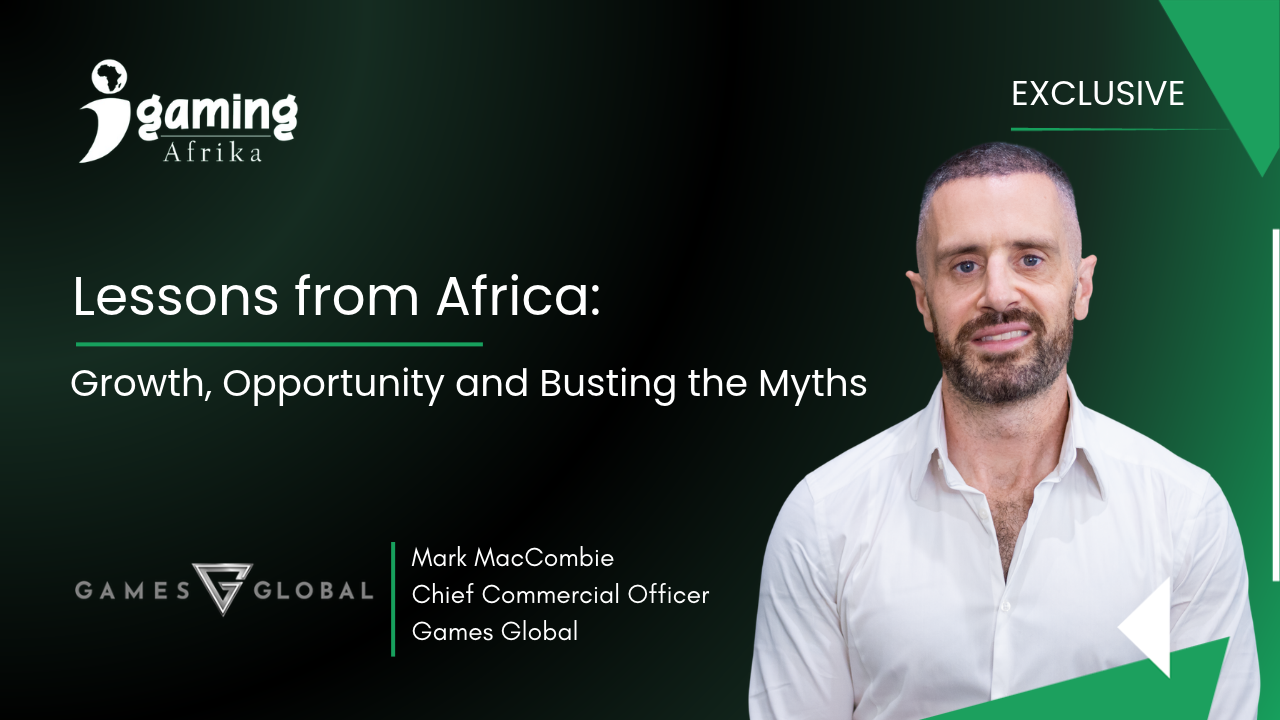
Games Global’s Chief Commercial Officer, Mark MacCombie, on why Africa demands a country-by-country approach, the commercial value of local expertise and why the industry needs to reassess its understanding of the continent.
Many suppliers have traditionally approached emerging markets by adapting products that have already proved successful in Europe. What have African markets taught you about why that approach does not always work?


The difficulty with taking a one-size-fits-all approach to Africa is that every country has fundamentally different requirements, so a product that performs well in one market will not necessarily succeed in another. You have to understand those differences from the outset rather than try to account for them once you have already decided which products to take to market.
The competitive landscape is also significantly different from what we see in Europe and North America. The suppliers that succeed in Africa are not necessarily the same ones that win in those regions, which is why the market demands a more considered approach. Africa is one of the fastest-growing casino markets on the planet, and as a result, deserves its own strategy rather than being treated as an afterthought.
Africa is often spoken about as a single market, despite the differences between individual countries. How does Games Global account for those differences when deciding which products to offer?



Africa is one of the most exciting growth regions in our industry, and that is exactly why we approach it market by market. Each country has its own player culture, preferences and commercial landscape, and the opportunity lies in understanding those differences and responding to them. Our operator partners are central to this. They know their players better than anyone, and we work closely with them to shape a portfolio that fits each audience.
Curation is at the heart of our go-to-market model globally, and Africa shows why it matters. We start with our customers’ strategic goals and the dynamics of their markets, then deliver products and services built around those needs. We do not take existing content and hope it fits, we focus on what will engage players and drive results for our partners in each market.

We also look for the themes that connect markets across the continent. Crash is a great example. We are investing significantly in it because it appeals strongly across Africa, especially to sports betting players. Its simplicity and immediacy give it real reach, and we still tailor how we bring it to each market. Combining shared opportunities like this with a deep understanding of each country’s needs is what sets our approach apart and positions us for long-term success in Africa.
Mobile accessibility is an important consideration across many African markets, but that does not mean players want a less sophisticated gaming experience. How does Games Global balance technical limitations with the need to deliver engaging content?
Players across Africa expect strong maths, engaging features and themes that connect with them, the same as players in any market. The challenge for us as a supplier is delivering that experience where mid-range devices and inconsistent connectivity are part of everyday play.
Read Also: Honoré Gaming’s Tangi Daniel on the Potentia of Side Bets in Africa
Those conditions shape how we build our games from the outset. An engaging product has little value if heavy graphics slow download times or make it awkward to play on the devices people actually use. So, the responsibility sits with us to make sure our games perform well without diluting the experience. In practice, that means optimising assets and file sizes, keeping data usage low, and testing on the devices most common in each market.
It is a challenge we take seriously. Players do not want something less sophisticated, so our job is to deliver the quality they expect within the technical realities of the markets we serve.
How important is local expertise when navigating the commercial and regulatory requirements of individual African markets?
Local expertise is imperative, of course, and not only at a continental level but on a country-by-country basis. As discussed, with each market having its own commercial and regulatory requirements, those differences have to inform the decisions we make about where to focus our efforts and how to enter each jurisdiction. Even within Africa, there is no substitute for understanding each country on its own terms.
South Africa is a good example. There we operate through a distributor because of the regulatory and compliance framework requirements. There are also restrictions on the products we can provide in the country, which means our approach has to reflect the specific conditions under which we operate.
That is why we are methodical about the countries we prioritise and how we approach them. Having people on the ground who understand the customers and the markets is absolutely crucial, particularly when navigating the commercial and regulatory landscape. Additionally, having a broad range of studios across the region has really given us a different perspective on what players want and has helped influence the next steps of the wider Games Global portfolio.
What do you think the wider iGaming industry still misunderstands about Africa, particularly when it comes to the sophistication of its players and the commercial opportunity?
There are many misconceptions, and the most common is that Africa is a low-value mass-market opportunity. In reality, it is a high-growth, profitable and sophisticated market, and you can see that in the public results of operators active on the continent. We are now seeing major brands, both within the industry and outside it, putting Africa at the centre of their strategy, and I believe they are winning as a result.
Read Also: You Can’t Google Your Way Into Africa
There is also a question around the way Africa continues to be described as an emerging market. It may be more mature from a sports perspective than from a casino perspective, but that does not mean the opportunity itself is new. Perhaps Africa is emerging in the consciousness of companies that have been late to the party and have allowed other businesses to steal a march on them in those jurisdictions, but the reality is much different.
That distinction is important because, if companies are only now recognising the potential of markets where others have already established themselves, they need to understand that the opportunity has been there for some time. Africa deserves to be approached on the basis of its actual commercial potential, rather than the industry’s perception of how developed the market might be.
Looking ahead, where do you see the biggest opportunities for Games Global across Africa, and how is the business positioning itself to capitalise on them?
Given our heritage in South Africa, we have a substantial employee base there and established partnerships with some of the biggest operators in the country. We are already live with a number of those operators, so growing our presence in South Africa will remain a short-term priority. It is arguably the most mature market on the continent from a casino and iCasino perspective, and we need to continue building on the position we have established there.
Beyond South Africa, it is important to recognise that population does not correlate with market size in Africa as closely as it does elsewhere. Regulation, payment infrastructure and mobile adoption often have a bigger influence on the real size of the opportunity. Nigeria is a clear example: the scale of its population makes it an obvious market, but those other factors determine how that potential translates commercially.
There are further opportunities across East Africa, including Kenya and Tanzania. At the moment, Kenya is going through its own regulatory process, while Angola is revisiting its licensing tender, so there is a range of opportunities that we need to fully qualify before acting on them.
Our studio model is one of Games Global’s key strengths, and we are focused on making sure our studios build the games we need to succeed in Africa. The aim is to bring that understanding of individual markets into the content we develop, rather than rely on products designed for other regions.
Ultimately, the games matter most. Yes, understanding the markets and identifying the opportunities are important, but we need to turn that knowledge into the right content for the players we want to reach. That is where our studio model and our curated approach come together, and it will be central to how we look to grow across the continent.