
Success in Africa’s iGaming payments market requires more than payment technology. It depends on local expertise, trusted relationships, adaptable infrastructure, and the ability to manage operational challenges.


In issue 9 of iGaming AFRIKA Magazine, Juliet Mphande, Regional Director for Africa at FLEXIFAI, explains why Africa’s positioning as “the next frontier” for global operators overlooks the broader context. She highlights how understanding local regulatory environments, payment behaviours, and business cultures, rather than relying on technology alone, has contributed to the company’s growth.
Why International Operators Need More Than Local Payment Methods
Africa is routinely pitched to global operators as “the next frontier.” For FLEXIFAI, recently named Payment Service Provider of the Year at the iGaming AFRIKA Summit, that framing misses the point entirely. Understanding deep local regulatory environments, payment behaviors, and business cultures, more than any single technology, is what the company credits for its growth.
“The hardest part isn’t finding providers”
Markets like Nigeria, Kenya, and Ghana now have strong instant payment infrastructure and widespread mobile money adoption. “People think the challenge is finding somebody who can process payments,” says Juliet. “That’s actually the easy part.”
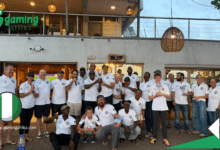





Because providers, regulations, and behaviors shift rapidly, success demands continuous adaptation, not just one-time integrations. Furthermore, unlike Europe’s contract-driven deals, African markets prioritize relationships. “Trust is what keeps things running,” Juliet explains. “It’s built over years, not through emails.”
“You can’t spend one hour a week thinking about Africa”
“Some companies think about Africa for one hour a week,” Juliet says with a smile. “We think about it every day. You can’t Google your way into Africa. You can read about the markets, but until you’ve spent thousands of hours working there, meeting providers, speaking to regulators and solving problems, you don’t really understand how things work.”

This deeply impacts product design. European user journeys rarely work in Africa; flows must be lighter, faster, and localized. Shifting to host-to-host integrations to boost conversions shows the main goal: understanding actual transaction behaviors, rather than simply translating interfaces for a new market.
Why operators don’t need twenty local providers
Merchants often assume they must negotiate with providers country by country. “That’s exactly what we are trying to save them from,” says Juliet. “Our merchants already have enough things to worry about. They shouldn’t be spending months building relationships in every market.”
Through one integration, FLEXIFAI gives access to multiple countries while supporting providers and operations. This model extends beyond Africa to its international merchants generally.
When cheaper becomes more expensive
Direct local relationships often look attractive on price. But according to the FLEXIFAI team, cost is only one part of the equation.
“Cheap can become very expensive,” says Juliet. “We help manage much of that operational complexity. If something breaks, you’re the one trying to solve it. We absorb much of that complexity. That’s part of the value we provide.”
Having people on the ground is how the company builds relationships, understands individual providers, and responds quickly when something changes.
Juliet remembers one situation particularly well. “We lost two payment rails almost at the same time. Because we had already built relationships, we could quickly activate new providers without merchants feeling the disruption,” she explains. “That’s why physical presence matters—you need somebody to call when things go wrong.”
Technology matters too
Relationships alone aren’t enough. FLEXIFAI invested heavily in host-to-host integrations, cascading infrastructure, and AI-driven analytics.
“Years ago we started with redirect integrations,” says Juliet. “Conversion wasn’t where we wanted it to be. Too many steps, too much friction. So we rebuilt everything around host-to-host integrations. Every extra step can negatively affect conversion: you move the user between pages, ask them to do more actions, and you immediately start losing people.”
Today, FLEXIFAI combines host-to-host integrations with cascading across multiple providers: “If one goes down, we already have alternatives. That’s not something you build overnight.”
“We don’t want merchants to become African payment experts”
“Our merchants don’t need to become experts in Nigeria, Kenya or Cameroon. That’s our job,” Juliet says. Local payment methods matter, but the real differentiator is who helps when regulations change, a provider disappears, or something breaks on a Friday evening.
The tagline, “Convert Where Others Fail,” is framed internally as an obligation. Declines and failed payments can lead to lost conversion opportunities. And the responsibility is ongoing: adding providers, adjusting routing rules, or catching an issue before a merchant ever notices it.
As the company puts it, the tagline isn’t a claim of perfection—it’s a commitment to treating a merchant’s payment performance as its own.