Central Gaming Bill 2025 Passes Senate, Awaits Presidential Assent

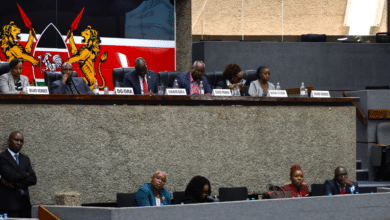
The Central Gaming Bill 2025 (HB.2062) has thrust Nigeria’s gaming sector into a storm of constitutional debate, raising questions about federal authority, state autonomy, and the rule of law. Passed by the Senate in its third reading, the legislation seeks to repeal the National Lottery Act of 2005 and its 2017 amendment, replacing them with a single federal framework to regulate all forms of gaming, including online and cross-border operations. Federal lawmakers argue the Bill is necessary to modernize regulation in the digital era, but state governments and regulatory bodies insist it exceeds constitutional limits.


Senator Opeyemi Bamidele, the Leader of the Senate, explained that the Bill is designed to establish a clear legal foundation for federal oversight in the Federal Capital Territory (FCT), while streamlining revenue collection and compliance measures across the sector. He told lawmakers: “The Bill provides a clear legal foundation for the conduct of gaming activities within the Federal Capital Territory (FCT), where the Federal Government retains regulatory authority. The Bill aims to improve revenue collection from gaming activities by streamlining taxation, licensing fees, and compliance measures while ensuring transparency, accountability in revenue remittance, and promoting responsible gaming, preventing gambling addiction, and protecting consumers from fraudulent practices.“
While confirming the Bill’s passage in the Senate, Deputy Senate President Barau Jibrin said, “A bill for the Act to repeal the National Lottery Act Number Seven of 2005 and the National Lottery Amendment Act Number Six of 2017 and to enact the Central Gaming Bill to regulate the operation and business of all forms of online and remote gaming across the geographical boundaries of the federation units and beyond the borders of Nigeria, provide for the conduct of gaming in the Federal Capital Territory and enhance revenue generation for the federation and for related matters, 2025 (HB 262) third reading taken and passed.”
With the Senate passage complete, the Central Gaming Bill now awaits President Bola Tinubu’s assent.






The 2024 Supreme Court Ruling
The Central Gaming Bill, however, comes in the shadow of a landmark Supreme Court ruling. In 2024, the apex court nullified the National Lottery Act 2005, ruling that the National Assembly had overstepped its constitutional authority. Justice Mohammed Idris, delivering the judgment on the case SC/1/2008, emphasized that lotteries and games of chance are not on the Exclusive Legislative List that empowers the National Assembly to legislate nationwide. Instead, these matters fall within the exclusive jurisdiction of state Houses of Assembly except in the FCT, where the federal government retains authority.
Read Also: Lagos Moves To Hold National Assembly Over Central Gaming Bill


The judgment referenced specific constitutional provisions, including Sections 4(2) and 4(3), confirming that the federal legislature lacks the authority to regulate lotteries. Sections 4(4)(a) and (b) and Part 2 of the Second Schedule further reinforced that lotteries are not matters of concurrent legislative powers, leaving regulation firmly with state Houses of Assembly. Additionally, Sections 17 through 21 of the National Lottery Act 2005 were ruled inconsistent with the Constitution, while Section 4(7)(a) and (c) of the First Schedule reaffirmed that state legislatures, including Lagos State, hold exclusive powers to oversee and control lotteries within their territories.
According to the judgment, “Lotteries or games of chance are not one of the items on the Exclusive Legislative List contained in the Constitution in respect of which the National Assembly has the powers to make laws for the whole of the country.”
State and Regulatory Opposition
Even before the Senate passed the Central Gaming Bill 2025, several state governments and regulatory bodies voiced strong opposition, citing constitutional and fiscal concerns. Lagos State, through its Attorney-General and Commissioner for Justice, Lawal Pedro, SAN, described the Bill as a “voyage of unconstitutionality.” He warned that extending federal oversight across all states would undermine state revenue systems and violate the 2024 Supreme Court ruling, which placed gaming regulation primarily under the jurisdiction of state Houses of Assembly.
“As the Chief Law Officer of Lagos State, it is both my constitutional duty and responsibility to draw the nation’s attention to the voyage of unconstitutionality embarked upon by the National Assembly to enact Act to Regulate the Operation and Business of All Forms of Online and Remote Gaming Across the Geographical Boundaries of the Federating Units and Beyond the Borders of Nigeria,” Pedro said.
The Enugu Stage Gaming Commission, responsible for regulating lotteries and gaming within Enugu State, firmly opposed the Bill, calling it “unconstitutional and a direct encroachment on state powers.” The Commission warned that centralizing regulation would disrupt licensing, taxation, and oversight systems, potentially depriving the state of vital internally generated revenue. ESGC urged lawmakers to respect the Supreme Court ruling and maintain state authority over gaming operations outside the FCT.
The Federation of State Gaming Regulators of Nigeria (FSGRN), the umbrella body representing gaming regulators across Nigeria’s states, condemned the Bill as “an unconstitutional overreach that threatens the federal structure and rule of law.” The coalition stressed that nationwide federal regulation would directly conflict with judicial precedent, undermine state revenue streams, and strip states of their historical regulatory responsibilities. FSGRN formally petitioned the National Assembly to restrict the Bill’s scope exclusively to the FCT, preserving state control elsewhere.
Civil society groups also joined the opposition. Nelson Ekujimi, the spokesperson of the Coalition for Good Governance (CGG) described the Bill as “a voyage of legislative rascality and lawlessness,” cautioning that granting nationwide authority to the federal government over gaming could erode democratic norms and weaken rule of law.