The big topic in the fast-changing African iGaming scene is localization. Whether in podcasts, at conferences or in articles, industry stakeholders often emphasise how tailoring products and services to suit local markets has become a critical strategy for operators to succeed across the continent.


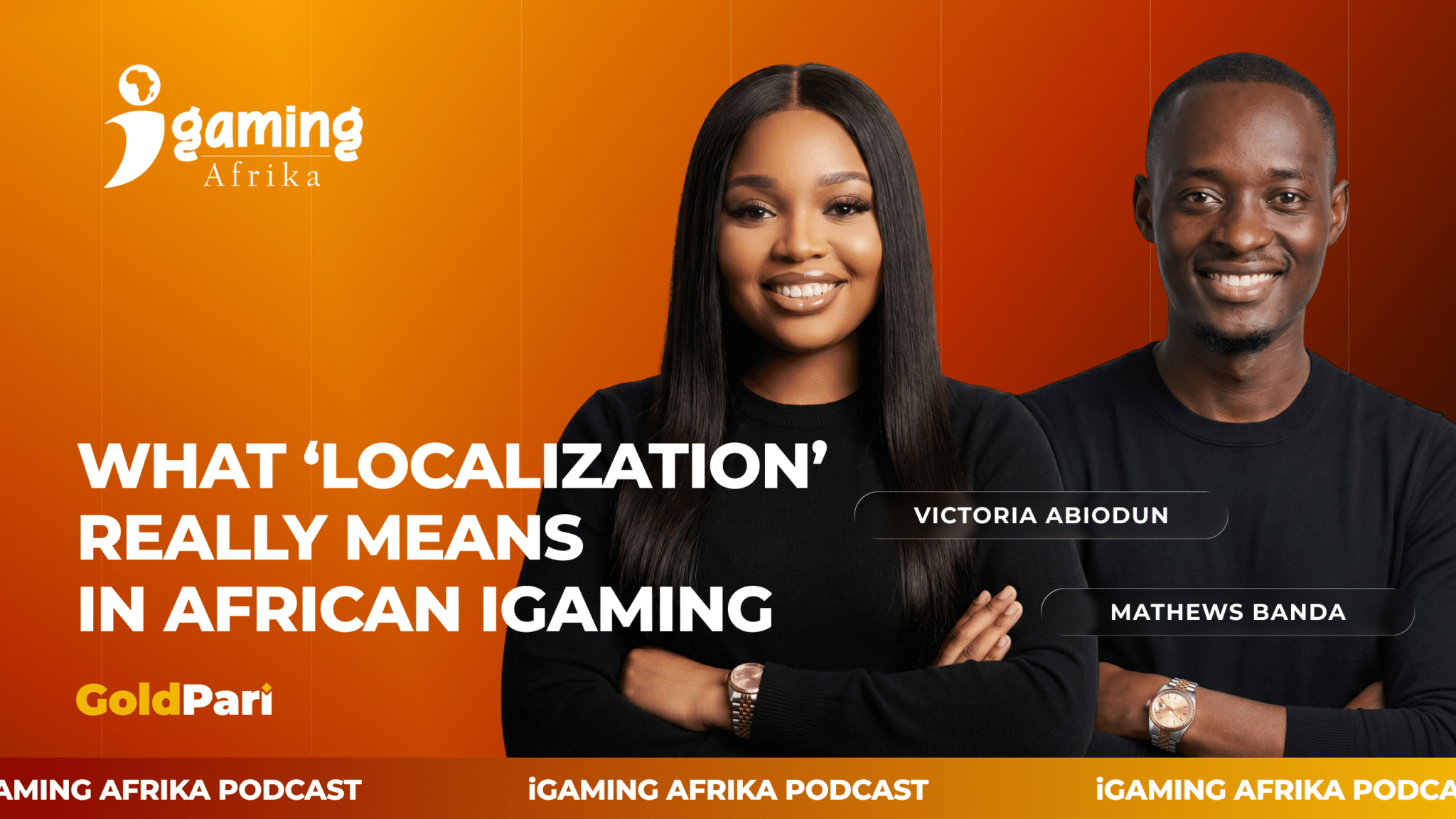
In Episode 15 of the iGaming AFRIKA Podcast, host Victoria Abiodun talks with Mathews Banda, who is an Affiliate Manager at GoldPari. Banda explains what localization in Africa really means, breaking it down into three main parts, functional localization, content/cultural localization, and behavioral localization. He also highlights the need for operators to move beyond “shallow” assumptions and adopt a deeper, psychologically informed approach to product strategy.
Often referred to as the next frontier for iGaming, the African market has experienced growth as various jurisdictions continue establishing frameworks to ensure regulation. Investor confidence continues to grow, with operators expanding into new jurisdictions in anticipation of long-term growth opportunities. After the initial entry, the conversation has shifted from expansion to engagement. The question is no longer just where to launch, but how to build products that genuinely resonate with local players.
Many operators mistake localization for a simple translation exercise or the addition of a few local payment methods like M-Pesa or OPay. Banda argues that this approach is fundamentally flawed because Africa is not a monolith, what works in Lagos may fail in Cape Town.





“Localization is not a translation exercise. It is psychological. It’s understanding what people really think, how they behave, and interact with the product,” Banda asserts.
He breaks this down into three distinct, essential layers, including functional, cultural, and behavioral. Functional localization is the name of the game for any successful African market entry and works hand in hand with performance and mobile optimization. Many users across the continent use low-cost Android devices such as TECNO, Infinix and iTel, operating on 3G networks with unstable internet.

The biggest mistake operators make is copying European-style user experiences (UX) directly into the African mobile market, platforms that are built for high-end laptops and stable connections. These “heavy” interfaces tend to become slow and unusable on local devices and prevent user engagement.
The strategy, therefore, is to strip away unnecessary features to ensure fast loading times and low data usage. Banda explains that while “fast loading and local payments are mostly no longer the competitive advantages, they are the minimum requirement to even enter into the market.” Without meeting these basic expectations, users are likely to abandon the platform before they even place a bet.
Read Also: What African Players Really Want: Beyond Industry Assumptions – A Podcast with Mathews Banda
The second layer moves beyond technicality to communication and local relevance. While many operators hire local influencers, they often fail by making them use “corporate scripts” written in Europe or Cyprus.
“Many campaigns fail due to most operators, they often localize faces but not communication. They mostly localize faces, but not communication,” Banda explains.
To build trust, communication needs to feel natural. That means using local humor, slang, and understanding the unique football cultures of a place.
For instance, if you work with artists like Khaligraph Jones in Kenya or influencers like Mr. Bayo in Nigeria, it only works if the brand allows them to speak in their own voice. Sounding “over-corporate” creates distance rather than the intended trust.
The final layer involves understanding how users naturally interact with a product, recognizing that player patterns vary significantly between regions. In Nigeria, for example, people often spend time looking at stats and making big, complicated accumulator bets. But when they’re live betting, they usually just want to place quick bets while watching the game.
Banda notes that operators often times over-engineer the platforms with social features. “Users do not necessarily want social networks inside the betting apps,” he notes. Since they already have WhatsApp and Telegram, they value speed and freedom of choice over artificial community mechanisms.
The question is, why do international giants still struggle? Banda attributes it to the “copy and paste syndrome,” where operators ignore the diversity of the continent and invest heavily in bonuses while neglecting the product experience.
“You can attract attention with marketing, but you cannot retain users if the experience itself creates friction,” Banda warns. Retention is not bought with bonuses, it is built through consistency, reliable performance, and fast withdrawals.
As the market matures in 2026 and beyond, users are becoming more experienced, and their expectations are rising.
Shallow localization is no longer enough. Banda’s final takeaway for operators is clear, “The African iGaming market is evolving, and the market is becoming more mature, users are more experienced, and the expectations are high, and people no longer accept shallow localization. The industry is moving away from the old translation approach, and it’s shifting towards understanding user behavior, the needs, and how people actually think and interact with the product.”