Beyond the Boardroom: Loyce Oluoch on Leadership, Governance and Africa’s Future

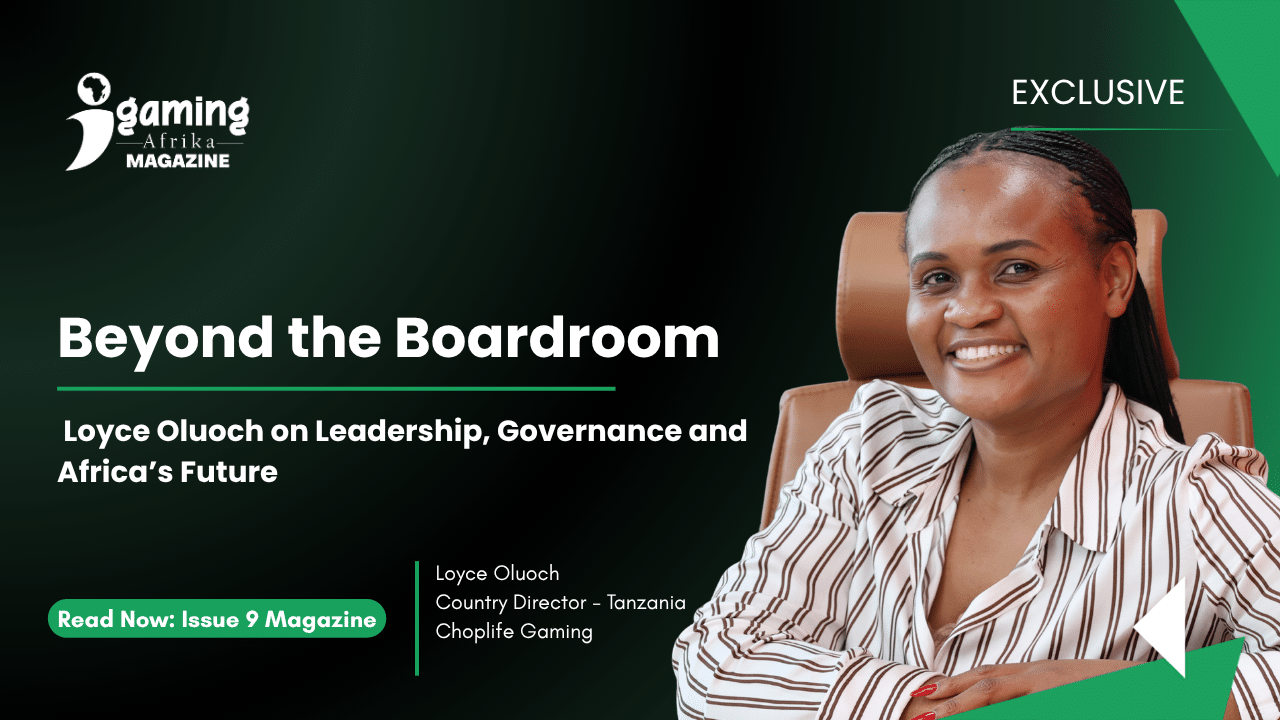
Loyce Oluoch, Country Director at Choplife Gaming, shares insights drawn from more than a decade of experience in leadership, governance, and across multiple African markets and industries.


In an interview with iGaming AFRIKA Magazine, Loyce discusses corporate governance and compliance, responsible leadership, technology, women in executive roles, and Africa’s growing entrepreneurial potential. She also reflects on what it takes to lead effectively in Africa today.
Could you please tell us more about yourself and what you do?
My name is Loyce Oluoch. I am basically a Pan-African leader with more than a decade of experience in leadership and governance. My experience cuts across different countries and industries, including law, mining, oil and gas, FMCG and, currently, iGaming.
Your career spans across commercial law, corporate governance, and executive leadership across different African jurisdictions. How have these disciplines shaped the way you approach leadership?
Every discipline is unique and comes with its own challenges. Through these challenges, I’ve learned to be a person of the highest integrity and, importantly, a very good listener.




To understand where my contribution can be most useful and how I can add value to a business, I first have to listen and understand its needs and requirements. My experience has therefore given me the ability to listen carefully, focus on growth and balance strategic ambitions with discipline and execution.
How would you define responsible leadership?
To me, responsible leadership is the ability to adapt to the work environment or the space where I’m called to work or consult while also understanding the culture and having the cultural intelligence to operate effectively within that environment. It also means understanding the organisation’s technology and its openness to innovation.

I believe corporate responsibility should be a core value of any responsible organisation. I would look at how they invest in corporate responsibility, especially in the communities or societies where it operates.
That is how I would define responsible leadership.
You are an executive leader, and leading across different African markets requires carefully navigating different legal and regulatory landscapes. What principles have enabled you to succeed?
I think first and foremost, I’m a very good listener. When you join an organisation or are brought in to consult on a specific business challenge or task, the first thing you have to do is listen.
By listening, you understand what people need, what they’ve been through, what part of the solution they require and how you can address their needs at that particular time.
Listening is therefore one of the things I’m very good at. I make sure I listen to everyone, from management to employees at every level. This helps me understand their perspective on the business and ensures that when I develop action plans or determine how to move a business forward, those plans are aligned with the people working locally.
One thing that stands out across all these businesses, whether it’s iGaming, mining, law, corporate consulting, or legal work, is integrity. Being a person of high integrity takes you further because it gives you the ability to serve as many people as you can while remaining transparent about the approach and action plans you intend to use.
My clients and management should understand the proposed solution clearly: this is what needs to be done, these are the steps we will take, and this is the action plan for the particular task.
So, if I were to summarise it, I would say: be a very good listener, be transparent, and be a person of integrity.
Read Also: The Bigger Picture: Why Retargeting is Africa’s Untapped Growth Opportunity
You mentioned that you have a background in law. From your perspective, why are governance and compliance increasingly important in today’s business environment?
I think my legal background gives me an advantage because lawyers are trained to assess risk. Whenever something comes to me, whether it is positive or negative, I naturally focus on what the potential risk could be for the business.
Lawyers are trained to identify risks, and that gives us a very keen eye for compliance. We have to make sure that everything follows the law of a particular country and the principles set by the relevant regulator. This supports long-term governance because we see so many businesses falling because of non-compliance, especially in iGaming, you would see in the UK where some big companies have penalties. So it saves companies costs, and also reputation.
Being a compliance company gives you a very good reputation. I’ll give an example, where I am now at Choplife, we have had the best certificates for tax compliance for two years in a row now. That puts us in a very good space compliance-wise. Compliance turns the governance, like when a company is in compliance, then governance becomes very easy, this is why these two aspects of corporate settings are very important to each other.
From your experience, what distinguishes companies that succeed in Africa?
I think one of the biggest factors is investing in people. When I walk into a company, I tend to evaluate it from the first person I meet, whether that someone is at reception or the most senior manager. From the way people present themselves and interact with you, you can often recognise whether a company is investing in its people.
When you invest in African talent, they often give you more than you initially expect. So, one thing that stands out to me is how companies invest in their people.
I also look at how they manage their partnerships, including the agreements and relationships that underpin those partnerships. I pay attention to whether those relationships are sustainable because they can tell you a lot about whether a company intends to remain on the continent for the long term.
Some partnerships have unfavourable terms and conditions that make them difficult to sustain over a long period.
I also look at how companies execute and communicate their policies. There are organisations where policies are understood only by management, and then management expects everyone else to deliver.
If you have a six-year strategy, a one-year plan and quarterly objectives, those priorities need to be communicated clearly to everyone, from senior management to employees at every level. When people understand the direction of the business, it becomes much easier for them to work towards a common goal.
So, I would look at the company’s partnerships, both locally and internationally, and how it invests in its people. I’ll also look into how well they communicate their plans, and how effectively it communicates its short- and long-term plans.
When you look at corporate responsibility, how do you make social impact strategic and actually create meaningful impact?
In the past, I would go for an interview and get a job, and that was it. But I am now at a stage in my career where, before joining an organisation, I ask, “What are your CSR plans?”
We need to give back. It is not just about working, executing tasks and earning money. I also believe we have a responsibility to impact the communities in which we do business.
I am very proud of Choplife, where I am currently based, because whenever I approach the board or the chairman with a CSR suggestion, there is already a strong commitment to giving back. The group has several CSR initiatives that make a meaningful difference.
As a country manager for Tanzania, I am proud to be part of a group that gives back to the communities where it operates.
I would encourage other companies to follow the same approach. If they are already doing so, they should consider having a specific budget for social impact. CSR should be part and parcel of the business because, ultimately, we have to impact the communities we serve.
On a personal basis, I am eager to be part of teams and organisations that have a CSR budget because I feel that I need to positively impact the society in which I do business.
Read the full interview in our digital magazine: