How Well Does AI Understand the Players It Protects?

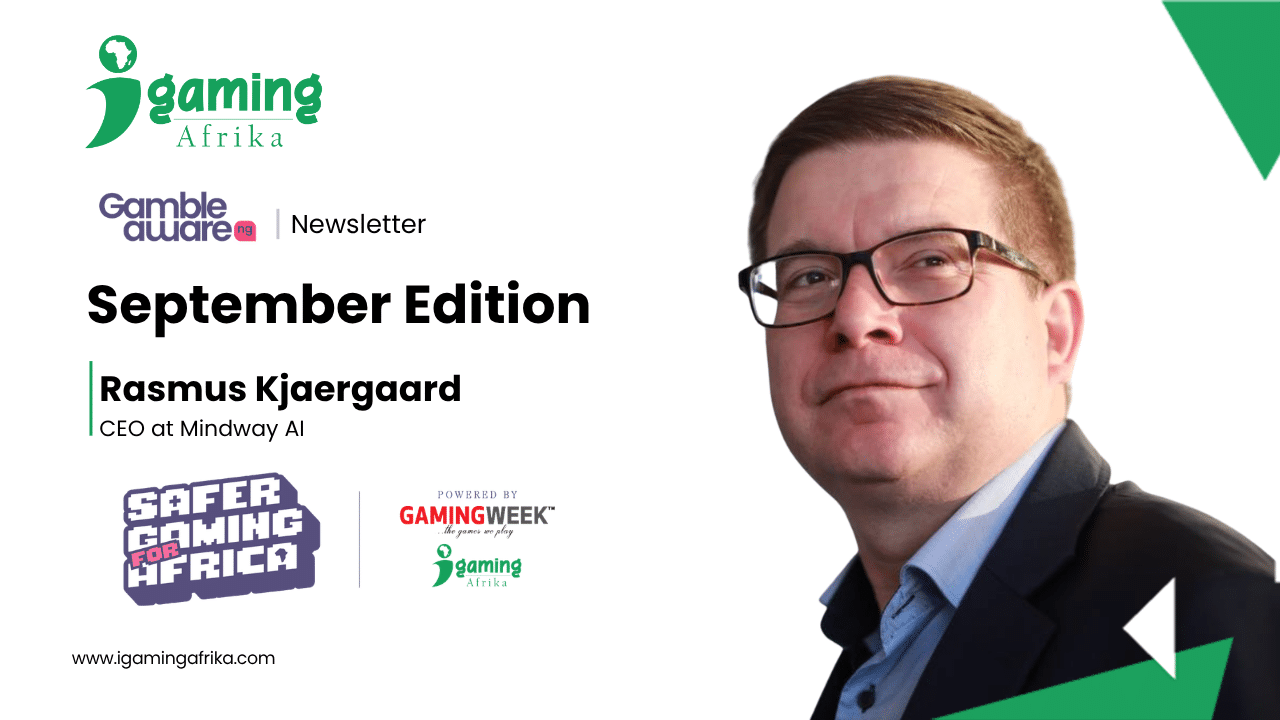
Rasmus Kjaergaard, CEO of Mindway AI, sees an opportunity for artificial intelligence to help African operators identify gambling harm earlier, provided the systems account for the circumstances of their customers. Income, sports preferences and local events influence how people bet, so a change in account activity needs careful interpretation before an operator decides that it signals a problem.


In his contribution to the September edition of the Gamble Aware NG’s Safer Gaming Newsletter, that is powered by iGaming AFRIKA and GamingWeek, Kjaergaard explains how these differences affect Mindway AI’s work across jurisdictions. A national sporting event can produce a surge in activity that would look unusual at another point in the year, while the popularity of particular sports affects how customers use a platform. He cites horse racing in Australia and football in Brazil as examples of the differences that inform an assessment.
“For every region we operate in (now 73 jurisdictions), it’s important to consider a variety of things specific to that jurisdiction. A national sporting event in one country is going to show very different betting patterns than in another,” he said.
Kjaergaard explained that economic conditions, cultural habits, legislation and digital infrastructure must inform how an operator assesses a customer’s gambling behaviour. Economic conditions are particularly relevant when it comes to expenditure, since an amount that appears modest within one market may carry considerable weight within another where disposable income is limited.





“The social economic status of the player base is another thing to take into account, how much disposable income do they have and what kind of economy are they operating in?”
Mindway AI applies this broader assessment through GameScanner, its player protection system. According to him, the technology examines several aspects of an individual’s gambling behaviour, with human experts involved in its development. Their assessments help the algorithms weigh indicators of normal and addictive behaviour, which he says reduces the risk that unusual but legitimate activity will be misinterpreted as harm.

“The fact that GameScanner’s algorithm is trained by human experts means there are meticulous assessments of every aspect of players’ gambling patterns. GameScanner’s algorithms learn to weigh different indicators of normal as well as addictive behaviour. This gives us the unique ability to explain its decisions with clear reasons, which form an easy and sound basis for following up with players,” he explained.
Once staff understand why a customer’s behaviour raises concern, they must decide how to respond. Kjaergaard acknowledges that this decision becomes harder when the account generates substantial revenue, because a care call or suggested break may affect that income. In more serious cases, the customer’s circumstances and local regulation may require account closure.
This commercial pressure helps explain his emphasis on earlier contact, while an operator still has an opportunity to address risky behaviour before it becomes severe. He argued that by the time account closure is necessary, the customer may already have suffered considerable harm, and the response may demand far more care and resources than an earlier intervention would have required.
Read Also: Losses Don’t Always End the Betting
Kjaergaard says Mindway AI’s experience with its operator partners supports the case for earlier intervention. The company has observed fewer customers who progress into high-risk gambling and self-exclusion, alongside higher customer lifetime value. These reported results suggest that an operator can protect customers without sacrificing its longer-term commercial interests, particularly when continued harm could expose the business to fines, legal action, reputational damage and lost investment.
The ability to intervene this way depends partly on the data an operator holds, which varies across African markets as businesses differ in size and technical capacity. He explained that GameScanner’s minimum requirements reflect the information available within each operator. Mindway AI assesses that information through a standardised format and determines whether any gaps can be accommodated through omission or substitution.
“So, the specific minimum level of data depends on what is available with the specific operator. When it comes to the investment required, our experience is that our starting price is at a level that should be feasible for all operators, including small ones,” he explained.