Exclusive: Shaping Africa’s Regulatory Future: Insights from Namibia’s Rising Star

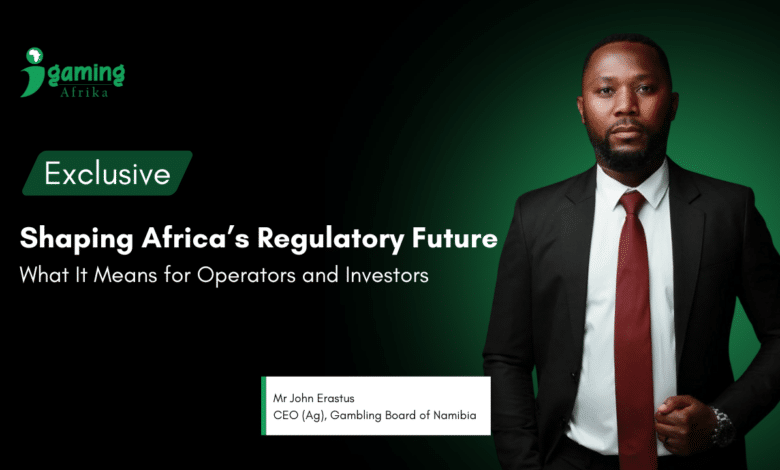
In an in-depth interview with iGaming AFRIKA Magazine, Mr John Erastus, the Chief Executive Officer (Ag) of the Gambling Board of Namibia, provides a rare look into the country’s regulatory journey. Recently celebrated as a Rising Star Regulator and listed among the Top 50 Men in Gaming, he opens up about the responsibility that comes with such recognition, Namibia’s commitment to responsible gambling, and the strategic reforms aimed at protecting players while attracting ethical investment.


iGaming AFRIKA: You were recently listed among the Top 50 Men in Gaming in 2024, and at the Gaming Tech Summit, you received the Rising Star Regulator of the Year award. Could you share your vision for the gaming industry, and also tell us how these recognitions made you feel and what impact they have had on your career?
Mr John Erastus: As I mentioned earlier in my interview, receiving the award during the day was a great honor and a privilege. It was a wonderful recognition for such a young man. My vision for the industry is to have a unified gaming sector for Africa that adheres to best international practices and promotes harmonious standards compatible with all countries or jurisdictions within Africa. I’m deliberate with Africa, not that I’m ignorant of the other international jurisdictions, but we feel that Africa has attracted quite a large significant number of investors, and also perceived by some as a dumping site, and I think the time is now.
For far too long, as I always mention, we have been taken advantage of. I believe that we need to put an end to that so that we put our industries in the best format, so that our people can benefit locally, and our economies can equally thrive with those multi-millions that are being shipped out of Africa daily. We should make sure those revenues do not leave our countries and that they develop the social-economic sectors and that those funds are ploughed back to the community, especially the vulnerable communities that do not have privileges like in Western countries.
iGaming AFRIKA: Responsible gambling is a key pillar of sustainable regulation. What are some of the strategies, policies, or frameworks that the Gambling Board is implementing to foster responsible gambling in Namibia?
Mr John Erastus: There is a new jurisdiction that is being put in place that speaks to treatment of addiction, public awareness campaigns, and making sure that we sensitise our continuous awareness on the effects of gambling and how much it can affect our socio-economic livelihoods.




Read Also: John Erastus on Building a Compliant and Regulated Gaming Market In Namibia
We do have a strategic theme that caters for responsible gambling, and we are at advanced stages to activate and ensure that we reach out to all our communities and also provide services and platforms where people can apply and also provide continuous awareness campaigns and sensitising our masses on the effects that gambling can have on their families and communities, and of course households at large.

iGaming AFRIKA: Given concerns about mobile betting and accessibility among young and unemployed populations in Namibia, how is the board working to enforce age restrictions and raise awareness to address the problem of gambling and underage gambling in the region?
Mr John Erastus: Like any other jurisdiction, as I indicated, remember we are a virgin market. We are new to this industry, especially the sportsbook and online betting, and our law has not addressed this much. So, what we have tried to do as a board, and as a country, for online and sportsbook betting in terms of age control, is to roll out our electronic central monitoring system, which we believe will be built with all the tools and mechanisms to control underage gambling and verify all players participating in that space. This will be mandatory and a requirement. We believe that this will be essential in curbing underage gambling.
iGaming AFRIKA: Could you walk us through the key steps, requirements, and procedures for obtaining the different types of gaming licences in Namibia?
Mr John Erastus: In our country, we have a variety of different types of licences, and each of these licences comes with its own requirements and regulations. The types of licences that we have in Namibia include a casino licence, a gambling house licence, a bookmaker licence, and a totalisator licence, which, as I mentioned, are mostly available online. There is also a manufacturer or supplier licence for those who wish to provide gaming equipment to operators within Namibia.
Anybody interested in participating in our industry is strongly encouraged to visit our website. The Gaming and Entertainment Control Act No. 13 of 2018, along with its 2021 regulations and the Gaming and Control Act Amendment of 2020, contains the steps to apply for a licence of whichever type or category one wishes.
Read Also: Ghana Moves to Regulate Crypto With Education at the Core
Mr John Erastus: You mentioned the Gaming and Entertainment Control Act. Since its enforcement, over 280 previously unlicensed operators have submitted applications for licences. What progress has been made in transitioning these operators from non-compliance to operating fully within the legal framework?
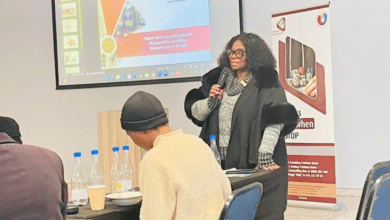
Mr John Erastus: Ours is very simple. We have the Windhoek Agricultural and Show Exhibition Showgrounds in Namibia, where there was a large stand dedicated to sensitising our industry. What we want is to cooperate and work hand in hand with industry operators. We need them as much as they need the board. Therefore, we do not want to fight the industry; we want to establish a harmonious process that brings everyone together so we can coexist in this sector.
Read Also: Namibia Court Rules Gambling Operators Must Pay Levies
We need operators in the country to start complying. We have been reaching out to them, and they have been reaching out to us, intending to cascade this down to other illegal operators so they feel isolated and left out, and see the benefit of joining the “winning team”—the compliant side of the law.
The integrated strategic business plan of the Gambling Board, which is a five-year strategy, recognises that we will not see miracles overnight. We are moving in steps, and gradually we aim to reach a level where a significant percentage of the industry is compliant, if not 100%.
Read the full interview in our digital magazine: