The Ugandan government has tabled a proposal to introduce a uniform 30% gaming tax on gross gaming revenue to standardize the sector and address revenue leakage.


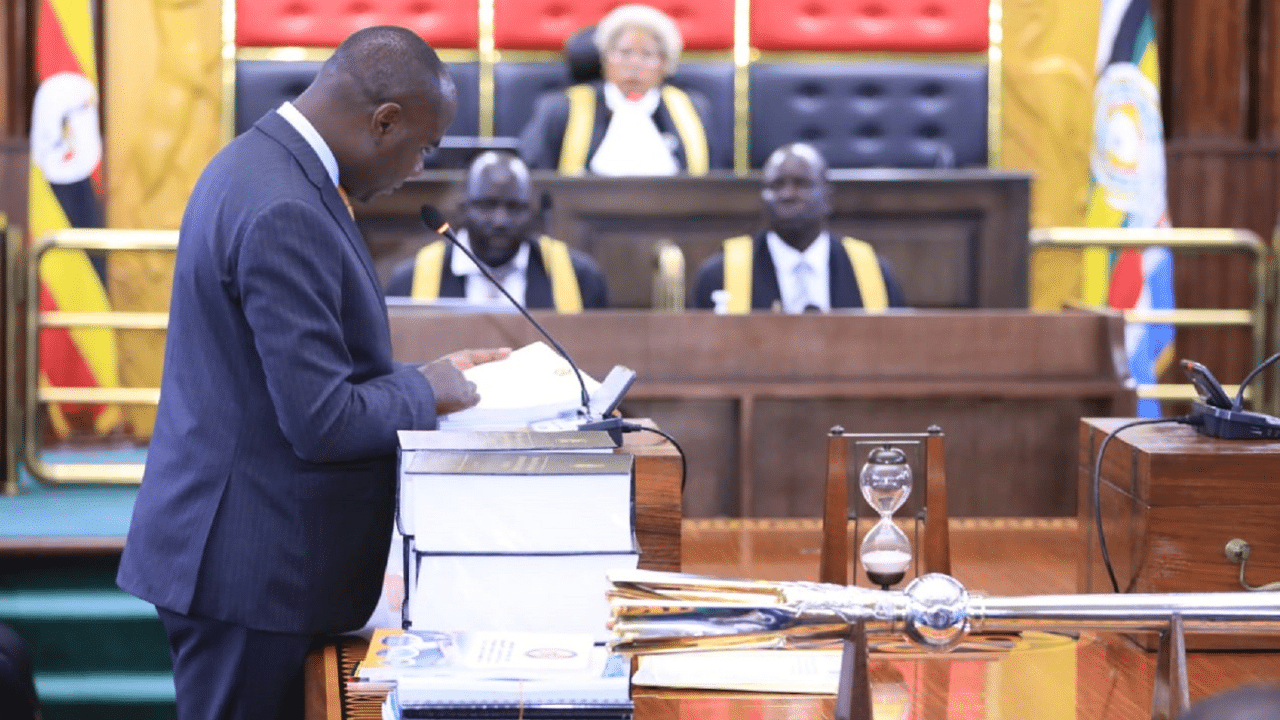
The tax bills were officially tabled by Hon. Henry Musasizi, the Minister of State for Finance, Planning and Economic Development (General Duties), and Hon. Matia Kasaija, the Minister of Finance, Planning and Economic Development, in early April 2026. Under the proposed framework, the 30% tax will be applied to gross gaming revenue (GGR), defined as the total amount staked by players minus the winnings paid out.
To boost national revenue, the Income Tax (Amendment) Bill, 2026, also proposes a 15% withholding tax on net winnings. Net winnings are specifically defined as the amount a player receives minus the original stake placed.
The rapid expansion of the gaming market in Uganda and across Africa is closely tied to the increased smartphone access and the spread of online betting platforms.The government also proposed a 10% withholding tax on commissions earned from telecommunications services, including mobile money operations and related network services, to further capture revenue from this digital ecosystem.






Read Also: NLGRB Partners with Media to Promote Responsible Gaming and curb Underage Gambling
Authorities have strengthened monitoring of these digital financial flows to provide the government with greater visibility into betting transactions, which are now largely conducted via mobile phones. This integration of telecom and gaming taxes aims to simplify enforcement and improve compliance among licensed operators in a market that primarily targets young urban consumers.

The push for tax reform follows a significant surge in the sector’s profitability over the past few years. Recent reports indicate that revenue collections increased from Shs110 billion in the 2021/22 financial year to Shs151.9 billion in 2022/23, before climbing to Shs194 billion in 2023/24. In the latest 2024/25 financial year, collections reached a record high of more than Shs323 billion, highlighting the industry’s growing importance as a contributor to both tax and non-tax revenue.
Despite this growth, some operators have expressed concerns that a 30% tax rate could squeeze thin profit margins. Industry players argue that heavier taxation might force smaller firms out of the market or push consumers toward unregulated offshore platforms.
Contained within the Lotteries and Gaming (Amendment) Bill, 2026, this measure seeks to replace fragmented tax approaches with a single rate calculated on gross stakes after payouts. If approved by Parliament, the new tax regime will take effect on July 1, 2026. The proposals have been referred to parliamentary committees for scrutiny before a final vote.