Uganda’s President Museveni Returns Key Tax Bills to Parliament Over Betting and Plastic Duty Proposals

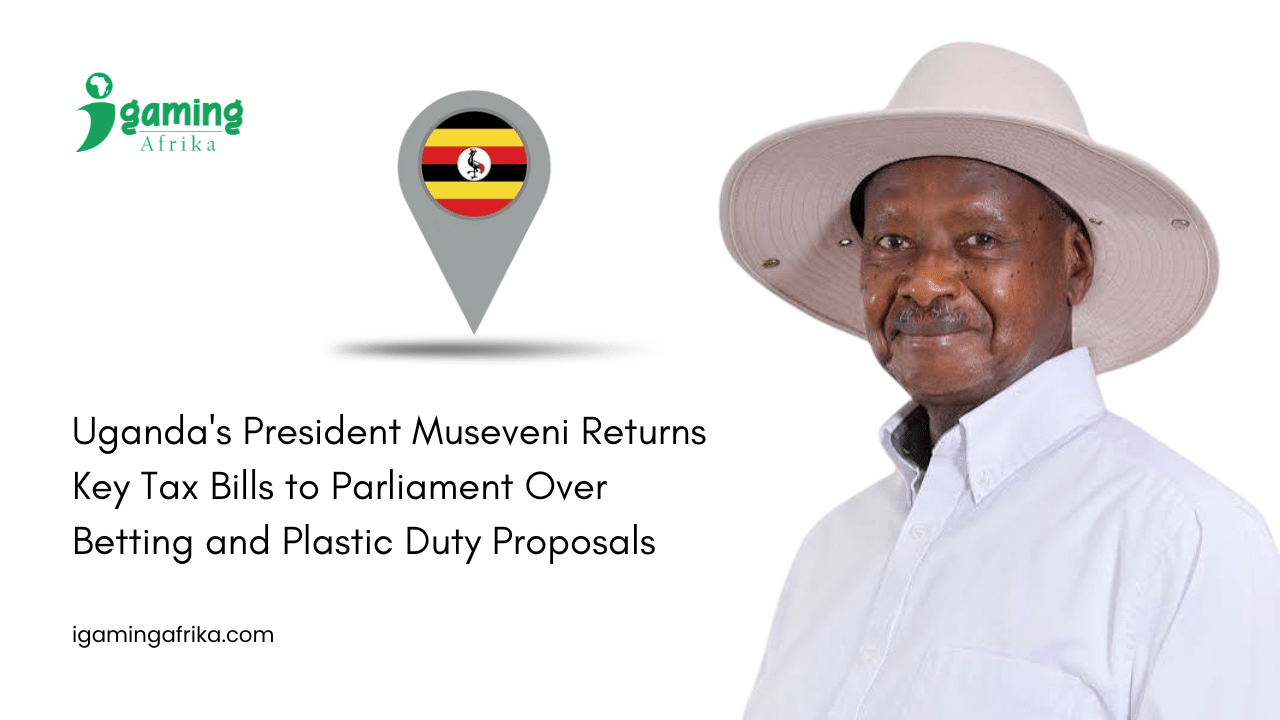
Uganda’s President Yoweri Museveni has declined to sign the Income Tax (Amendment) Bill, 2026, and the Excise Duty (Amendment) Bill, 2026. These bills were initially passed by the 11th Parliament ahead of the new financial year starting in July 2026 and have now been returned to Parliament for reconsideration.


On 14 July 2026, during a parliamentary session, Deputy Speaker Thomas Tayebwa stated that President Museveni had raised objections to certain clauses in both bills. A primary point of contention for the President was Clause 11 of the Income Tax (Amendment) Bill, which sought to introduce a withholding tax on winnings from betting and gaming activities. While the bill aimed to generate revenue from this sector, it included a specific exemption for winnings obtained from land-based casinos.
“The President is against the passing into law of Clause 11 of the Income Tax Amendment Bill, 2026,” Tayebwa said.
President Museveni argued that the exemption for land-based casino winnings was unjustifiable, as it created an uneven playing field between different categories of gaming operators. He cautioned that such a loophole would lead to revenue leakage, providing opportunities for businesses to restructure transactions to minimize their tax obligations, and result in unfair treatment, as similar economic activities should not face different tax treatments.





“The exemption creates opportunities for tax avoidance and revenue leakage,” Museveni stated in his communication to Parliament, adding, “There is no justification for exempting one category while taxing the other.”
Read Also: Uganda’s Gaming Industry Booms to UGX 8 Trillion with Digital Transformation

The President also vetoed a proposed sharp increase in the excise duty on single-use plastics. Parliament had approved raising the existing rate from 2.5% (or $70 per tonne) to a staggering 25% (or $1,500 per tonne), whichever is higher.
While the measure was intended to strengthen environmental protection, Museveni argued that the proposed hike was too drastic for the current economic climate. His objections focused on several key points: the increase would impose significant cost pressures on manufacturers, Uganda’s manufacturing sector is not yet fully prepared to transition, as viable alternatives to plastic packaging are not yet readily available, and the President warned that higher costs could stifle investment, production, and employment within the plastics sector.
The return of the bills has sparked a debate within the House regarding legislative procedure. Some legislators, including Hon. Charles Tebandeke, questioned whether the bills should undergo entirely new legislative procedures rather than just a reconsideration. However, Deputy Speaker Thomas Tayebwa defended the timeline, noting that the Constitution allows the president 30 days to either assent to or return a bill. The President has also recommended further study into environmental policy measures before implementing such substantial tax increases.