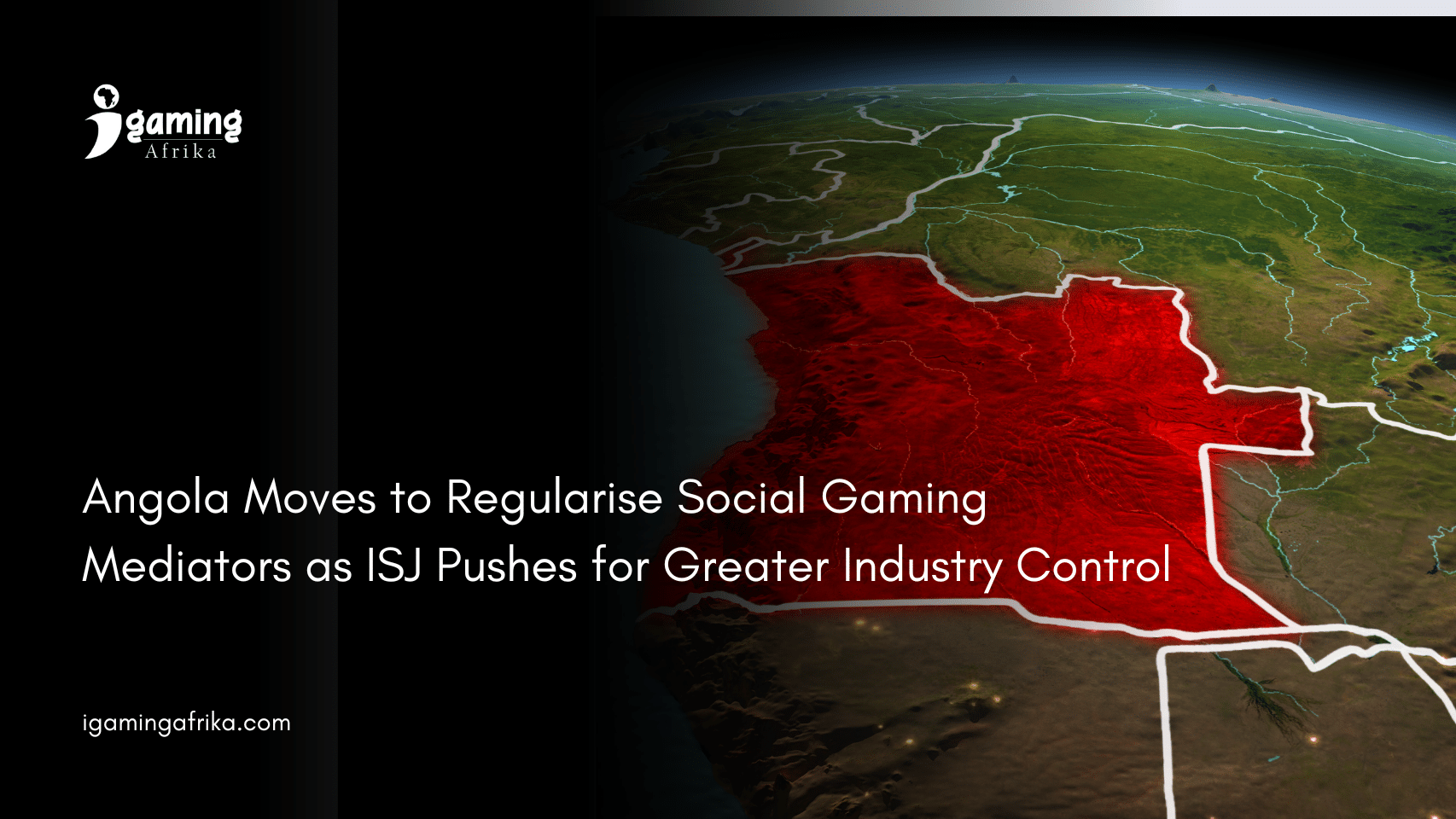
Angola Moves to Regularise Social Gaming Mediators as ISJ Pushes for Greater Industry Control

The Gaming Supervision Institute (ISJ) of Angola has confirmed that social gaming mediators will have until 14 December 2026 to fully comply with the requirements set out in the new Gaming Activity Law. The plan was presented during a meeting chaired by ISJ Director-General Dr. Nerethz Tati with Gaming Operators (EEJ), the entities licensed to operate gaming activities in Angola.


The engagement focused on the implementation of the Plan for the Regularisation of Social Gaming Mediator Activities, a framework designed to ensure that mediators operate under clear regulatory requirements and within the approved legal framework.
According to ISJ, the regularisation plan is built on the principles of legality, responsibility, transparency and the protection of the public interest, with the regulator seeking to ensure that social gaming mediation is carried out within a clear and supervised legal framework.
A key focus of the discussions was strengthening the integrity of the sector through enhanced player protection measures. Operators were reminded of their obligation to prevent minors from entering gaming establishments and to safeguard other vulnerable groups in accordance with Angola’s Gaming Activity Law. The regulator also set out a number of operational requirements that will remain central to the regularisation process.






Social gaming mediators will be required to operate exclusively from authorised and properly identified establishments, ending the sale of games from streets and other unauthorised locations. Existing rules governing advertising and the location of gaming venues also remain in force, including the requirement for establishments to be situated at least 1,000 metres from schools, hospitals and institutions representing state authorities.
Alongside the compliance plan, ISJ reiterated that gaming licences cannot be sold, donated or transferred, warning operators against advertisements promoting such transactions. The regulator clarified that licences are administrative authorisations granted exclusively by the State. However, investment in licensed gaming companies remains permitted through the acquisition of shareholdings, provided any changes to ownership, share capital or company management receive prior regulatory approval.