Blask data ties Bangladesh’s synchronized brand collapse to a law that targets payment rails.


By August 2026, iGaming demand in Bangladesh had fallen 52% YoY and sat 58% below the January peak, and not one of the top 26 brands by January Blask Index had escaped the slide. The trigger was a single law, but by the time it passed, most of the damage was already priced in.
Context: what has changed in BD
A historical move has happened in Bangladesh: the Gambling Prevention Act 2026 replaced the outdated Public Gambling Act 1867 and took effect on 1 July. Parliament passed the bill on 30 June.
The law makes hundi*, hawala*, and crypto transfers of gambling proceeds predicate money-laundering offences. Online cases sit with the Cyber Tribunal. Authorities can freeze MFS accounts, digital wallets, and crypto wallets. Bangladeshi operators ran almost entirely on bKash, Nagad, Rocket, and informal remittance channels to move money, the exact payment stack the GPA 2026 was written to shut down.





*Hawala and hundi are trust-based informal transfer networks, agents settle debts across borders without moving money through banks.
Every leading brand lost ground
Projected revenue baseline (measured by CEB) for Bangladesh dropped 22% year-over-year, dragging the country from #54 to #66 in Blask’s global country rating, a 12-spot fall in a single stretch.

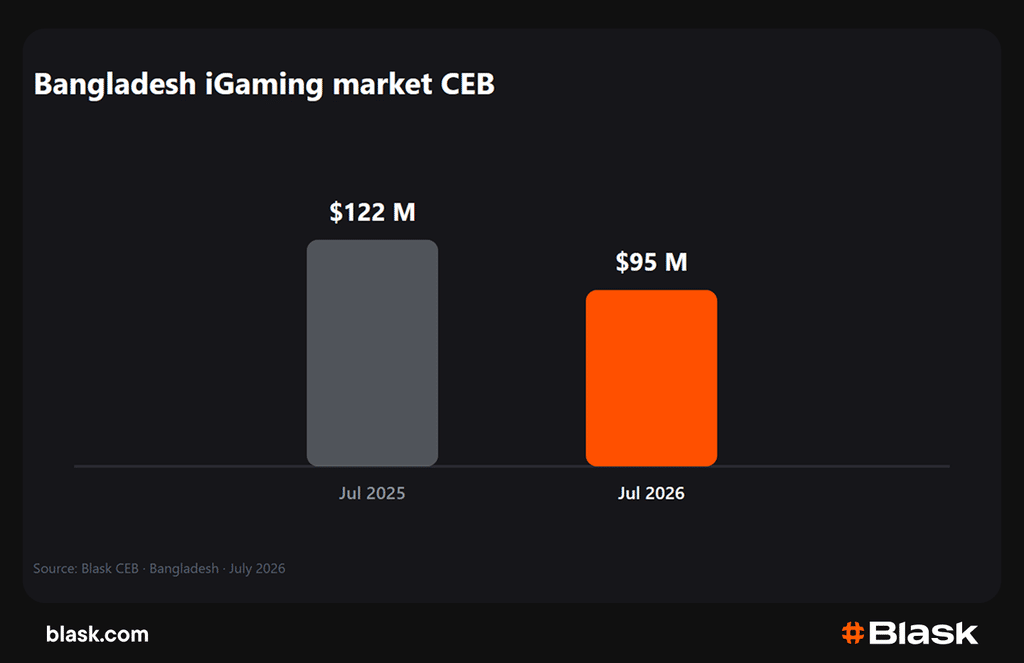
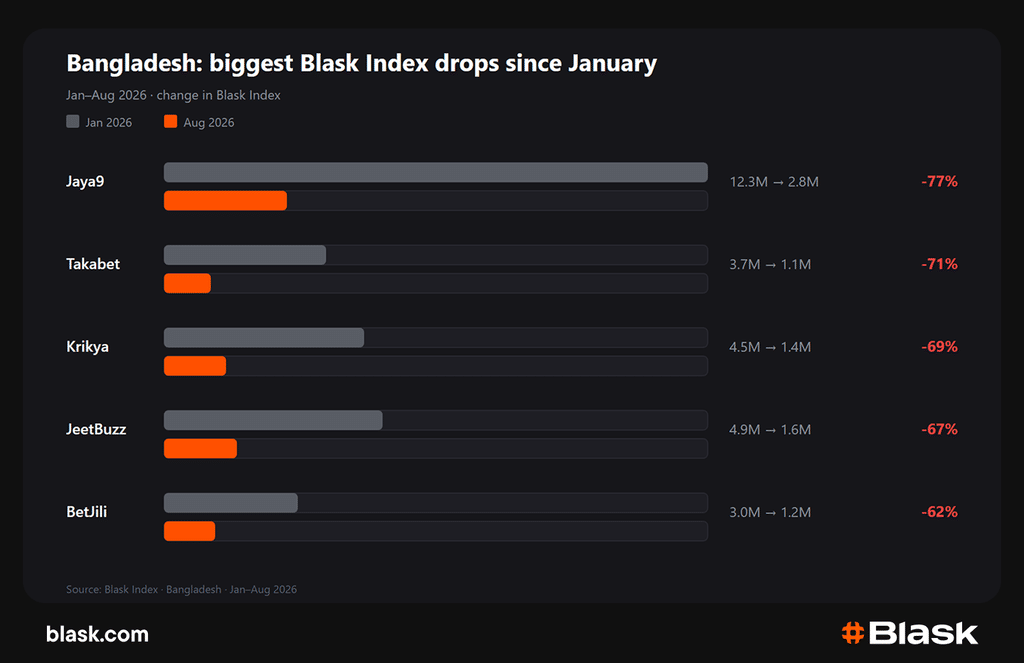
Every one of the top 26 brands by January Blask Index posted a lower search demand in August than it started the year with. The slide hit market leaders and mid-tier brands alike, at roughly the same pace and in the same months.
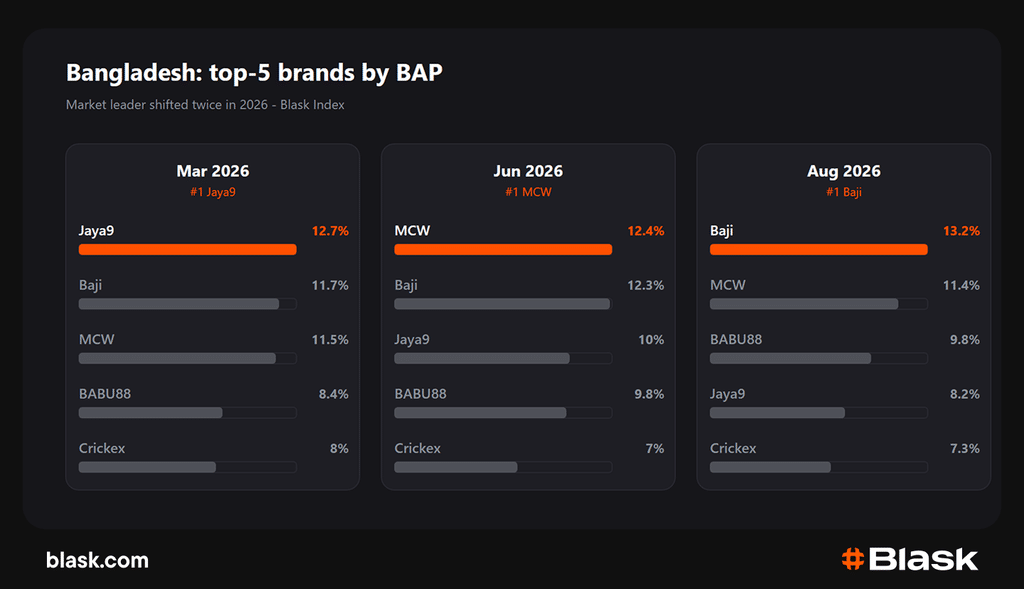
The market leader changed twice in H1 2026: Jaya9 held the top spot through March, MCW led in May and June, and Baji has led since July, reaching 13.2% BAP by August.
How the whole market reacted
Demand started falling long before 1 July. Blask monthly data shows 88% of the peak-to-trough drop happened between January and June, while the bill moved through parliament. Average month-on-month compression ran at –12.5% in that period. After the Act entered force, the pace slowed to –7.3%.
July and August accounted for just 12% of the total decline from the January peak. The market discounted passage months before enactment. The 30 June vote confirmed what search data had already priced in.
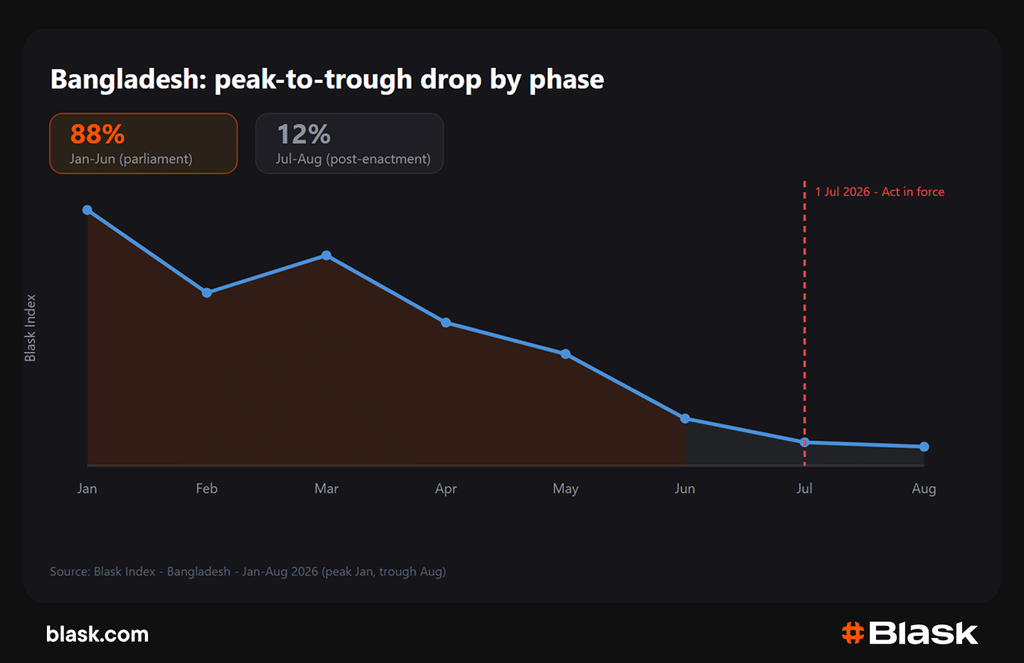
June was the heaviest single month (–24.6% MoM). July added wallet freezes and cyber-tribunal jurisdiction, but the curve had already bent.
Read Also: Live dealer interest in Africa splits at the Sahara
Bottom line
The Gambling Prevention Act 2026 changed laws according to the digitalisation, because the previous law did not describe what online gambling actually is. Blask data shows the heaviest contraction arrived before enactment.
For operators still in the market, the open question is whether any payment rail remains stable enough to convert the search interest that survives.
About Blask
Blask is an AI-powered platform for iGaming and gambling market analytics. The company turns fragmented open-source signals into real-time insight on brand visibility, player demand, and baseline revenue metrics, helping teams move first, spend smarter, and reduce risk across global markets