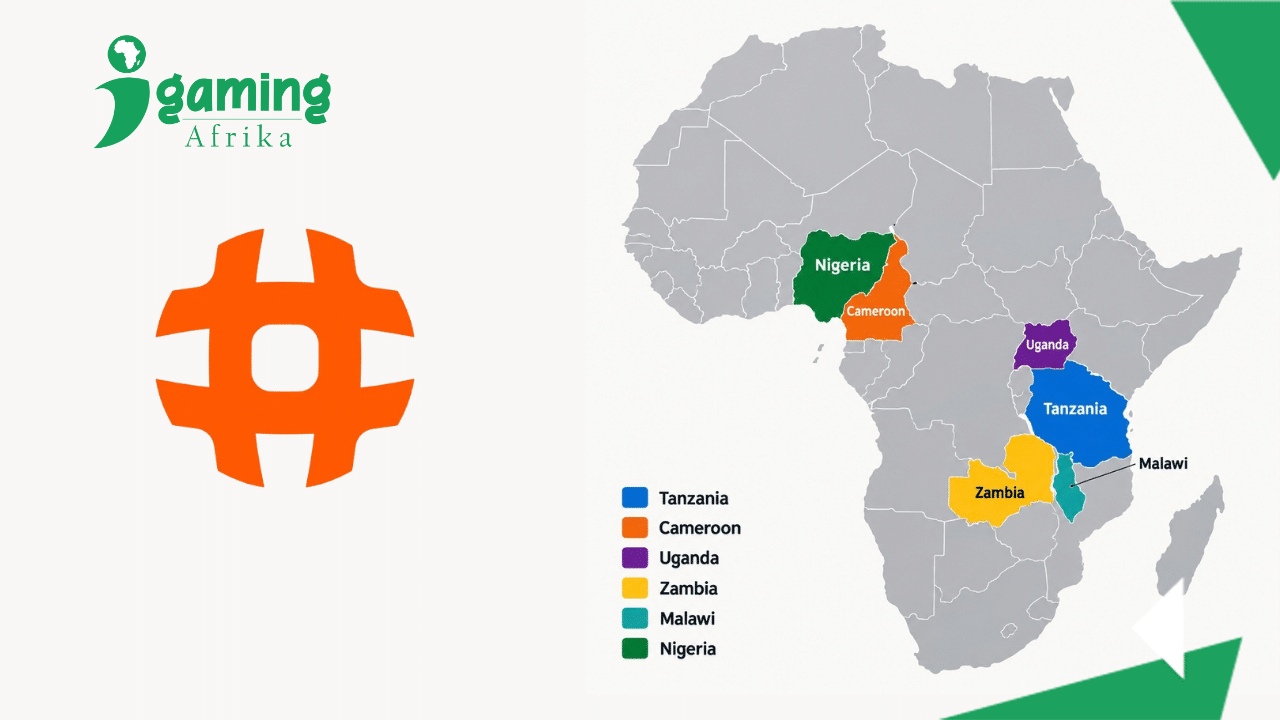
Six countries hit an early-2026 high in the same window, then spent the next months sliding on almost the same line.


Six African markets moved together in 2026: a build through the winter, a peak in February or March, a slide that bottomed out in July. The shape held across markets with nothing else in common. This piece tests three explanations, national tax calendars, the football calendar, and the leading brand’s market share, against that shape.
Blask metrics:
- National Blask Index shows the interest in iGaming in a particular country.
- Brand Blask Index demonstrates the interest in a particular brand in a certain country.
- BAP (Brand’s Accumulated Power) is a brand’s share of total market demand in a given country.
Six markets, one mid-year bend
Indexed to August 2025, the six national series belong on one picture: a winter build, an early-2026 high, and a slide into July. Five of the six posted that high in February or March. Malawi peaked in January and joined the same descent.





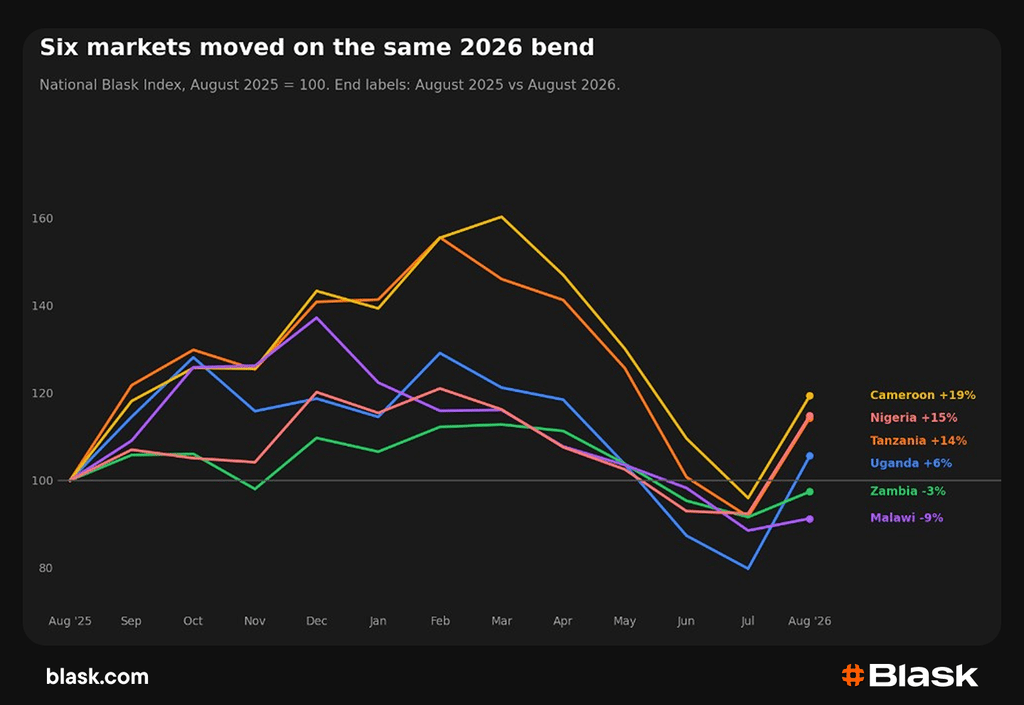
Depth differed. Tanzania, Cameroon and Uganda lost around two-fifths of their 2026 high by July. Zambia’s cut was the shallowest, closer to one-fifth. August bounced in every series, hardest in Uganda. The rebound did not put the whole group back on the same side of the year-ago line.
That kind of synchrony has an obvious first suspect: something common on the calendar.

The calendars do not explain the shape
If one regional cause lined six clocks, it would share a date. Tax memos and football fixtures both miss that test.
Uganda’s Lotteries and Gaming amendments put betting and gaming on a single 30% tax of stakes less payouts from 1 July 2026, with a 15% withholding rate on net winnings in the same package. That date sits five months after Uganda’s February peak. Most of the descent sat in the months before July.
Tanzania’s 11 June budget speech floated a 5% excise on gambling stakes. The government withdrew the proposal during Finance Bill talks. The enacted 2026/27 package does not include it. The deepest peak-to-July cut on the panel arrived in a year when the stake excise never became law.
Read Also: Blask launches affiliates: a dashboard that maps every brand on every affiliate site
Cameroon, Malawi, and Zambia cooled on the same calendar without a matching 2026 tax pin. Local statutes still matter country by country, they do not assemble into one regional shock.
A football calendar fails the other way. European leagues settle titles in May. The UEFA Champions League final was 30 May 2026 in Budapest, but the panel was already falling from April. A late-spring peak is the opposite of the chart.
CAF staged AFCON in Morocco from 21 December 2025 to 18 January 2026. That window covers the late-2025 build and Malawi’s early high. The February, March caps in the other five sit after the final.
The FIFA World Cup then ran from 11 June to 19 July 2026. July is the trough on every series, the tournament sat on the bottom of the curve.
betPawa versus the rest of the market
betPawa dominates in three of the six markets. It’s BAP for January–August 2026 is 88% in Cameroon, 70% in Uganda and 63% in Tanzania. In those GEOs the national line will follow the brand. The test is whether residual demand (national Index minus betPawa) fell with it, or held while betPawa dropped.
In Zambia the same brand holds 39% of demand, in Malawi 53%, in Nigeria 1.6%. Those three are the control.
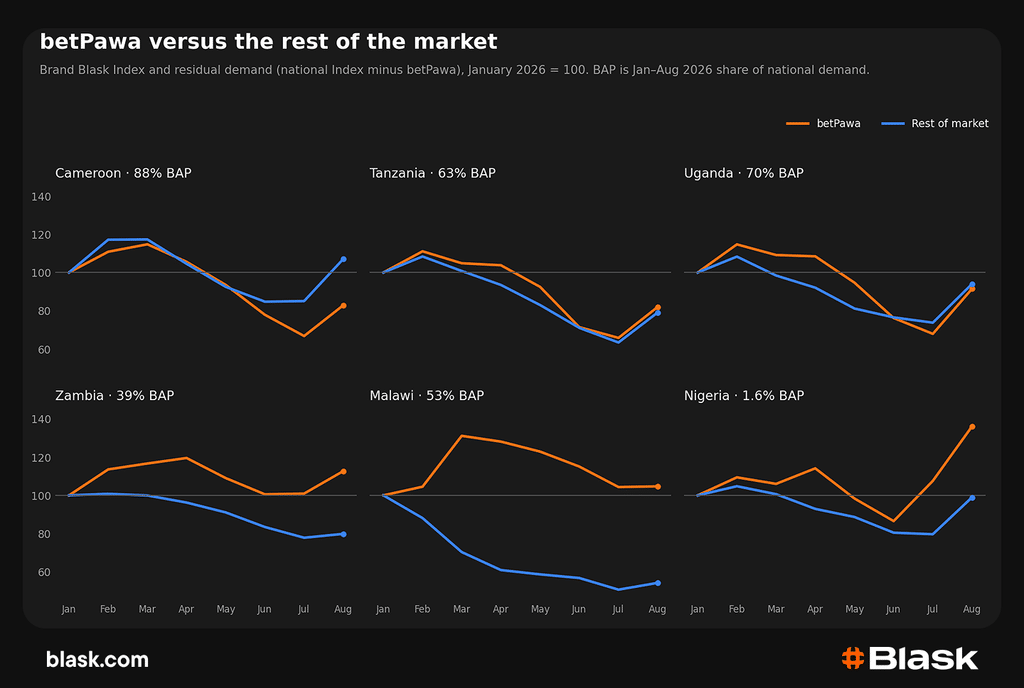
From January to July, Tanzania’s residual fell with the brand (about one-third each). Uganda’s residual fell −26%, the brand −32%. Cameroon is the only concentrated GEO where the brand dropped harder than the tail (−33% against −15%). Even there the rest of the market went down. A pure operator shock would have left the residual flat.
Zambia and Malawi break the brand-led reading. betPawa’s Index held or rose from January to July, while residual demand fell by about one-fifth in Zambia and by about half in Malawi. BAP in both countries rose as the floor emptied around the leader. Malawi’s January national high sat on that fat tail: the brand had come off December, then held, while the rest of the book collapsed.
Nigeria is not a betPawa market. SportyBet led the country over the same window with 41% of demand; Bet9ja held 30%. The national curve is the residual, betPawa’s own Index in Nigeria rose from January to July.
The pattern that survives is a demand slide underneath the leader. In Cameroon, Uganda and Tanzania the national print is the brand, so the slide wears that name. In Zambia, Malawi and Nigeria the name is optional and the country cooled. Blask has shown how often one brand is the market in Africa; this year the concentrated geos did not invent a separate crash.
Bottom line
Six African betting markets bent together in H1 2026. Tax calendars do not line up with that bend. The football calendar does not either: title races belong in May, and the World Cup sat on the July trough. A betPawa-only crash fails where the brand is not the market: the country still fell and the operator often did not. What remains is a demand to drop the fixtures and the statutes never named.
About Blask
Blask is an AI-powered platform for iGaming and gambling market analytics. The company turns fragmented open-source signals into real-time insight on brand visibility, player demand, and baseline revenue metrics, helping teams move first, spend smarter, and reduce risk across global markets