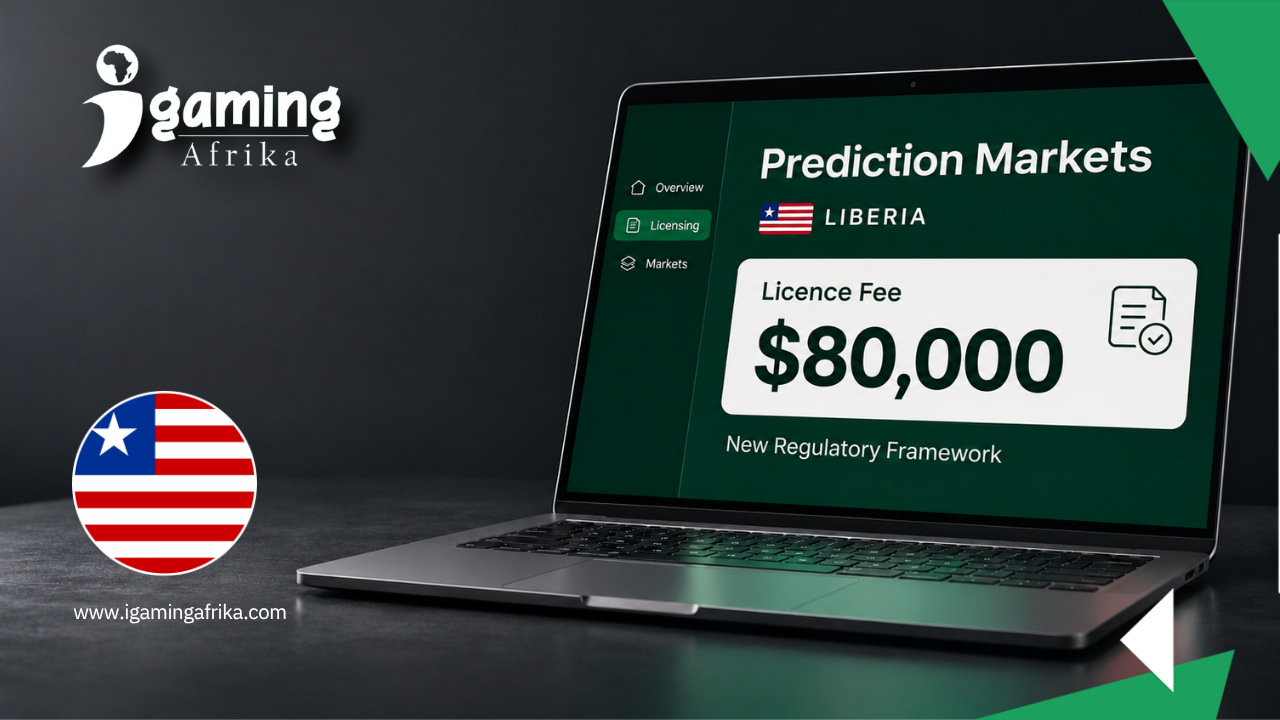
Liberia has formally included prediction markets under its gaming regulatory framework with the introduction of licensing regulations that will allow authorized operators to offer contracts linked to future occurrences and verifiable results.


Resolution No. 005 of 2026’s requirements define prediction markets as a separate class of gaming activity from sports betting markets that are covered by current sports betting licenses.
An operator to provide prediction markets to clients in Liberia, they are required to secure a specific license or function within a partnership authorized by the National Lottery Authority (NLA) board. On which they must pay a license fee of US$80,000 and maintain paid-up capital of at least US$500,000. The regulations allow markets based on legitimate, verifiable occurrences, but they forbid contracts connected to a person’s death, illegal behavior or the result of an election in Liberia.
Read Also: Lucy Vivi Joins ARGN Advisory Board





Licensed operators are required to set maximum exposure limits, post market rules and disclose the sources that are used to calculate results. In addition, they have to put policies in place to stop money laundering and market manipulation, maintain player funds apart from company funds and provide dispute resolution processes.
Additionally, the new framework enables the NLA to form business partnerships pertaining to lottery products and prediction markets. Subject to board approval when necessary, these could be joint ventures, concession agreements, technical-service contracts, or platform licensing arrangements. Draw-based lotteries, instant-win games, numerical games, keno, and a projected national online lottery platform may all be included in the collaborations.

The NLA board must approve major partnership agreements, which must outline the parties’ ownership interests, financial commitments, data rights, access to the proposed Central Lottery Management System, and dispute resolution and termination processes.
The authority’s suitability requirements must be met by partners, their directors, and those with at least 10% beneficial ownership. For related-party transactions involving NLA officials, operators must get board approval and reveal politically vulnerable individuals.