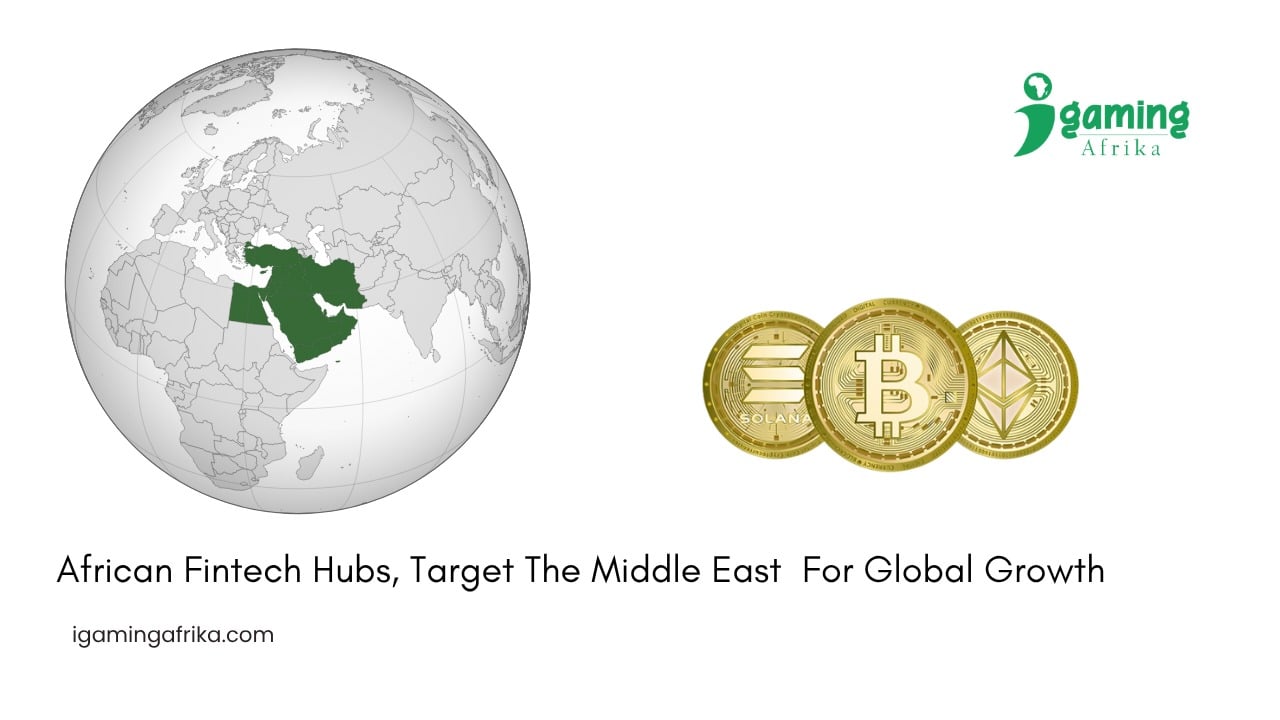
African fintech hubs are expanding into the Middle East. This is evidenced by MNT-Halan’s recent Dubai debut and Paymob’s scaling operations across Saudi Arabia, Oman, and the UAE.


Egypt’s fintech giant MNT-Halan recently launched in Dubai with salary-financing products. Paymob Technologies has expanded across the United Arab Emirates, Saudi Arabia and Oman. Paymob Technologies secured a full UAE Central Bank license last year. Nigeria’s Innovate1Pay runs global operations from Dubai’s Jumeirah since 2019. Lagos-based Flutterwave soon will be the latest to set up shop in the UAE after expanding into Saudi Arabia and Bahrain in 2024.
Gulf Remittance Corridor
A key driver of this expansion is the remittance corridor between the Gulf and Africa. Researchers estimate that between 3 million and 5 million African migrants now live and work across the Gulf. Most of them are from Egypt, Sudan, Ethiopia, Kenya and Uganda. According to the World Bank, global remittances to Africa reached $109 billion in 2024. About a third comes from the GCC, but a lot of transfers remain unrecorded in national data sets.
Currently, a lot of the money still moves around in cash, through operators such as Western Union, MoneyGram or Gulf exchange houses. These operators have a fixed cost for sending funds averages between 8% and 9% among the highest in the world.






This opens a clear opportunity for lower-cost digital alternatives. A recent Visa study found nearly two-thirds of UAE residents now prefer digital apps over physical locations for sending money abroad. Key drivers include ease of use (50%), followed by safety, privacy and speed (46%). Cashless solutions are heavily encouraged by most GCC governments to increase compliance, traceability and transparency.
Zeepay Joining the Gulf Race!
Some companies like Zeepay, a Ghana-based payment firm that already operates in 25 countries, are gearing up to tap into that market and the recent war in the Middle East is far from deterring their motivation.

Kojo Amofa, Partnerships Manager at Zeepay said, “For us, it’s a new chapter. We are eager to make an impact and become the remittance solution in the Gulf. Many migrant workers want to send money home, and the current volatility creates an even more drastic need that we want to answer.”
For Zeepay, the UAE is the natural entry point. It is the MENA region’s most mature tech hub and the world’s third-largest remittance sender. It is sometimes described as a financial “switchboard” for Africa-bound flows. To make its first steps, the company is looking for partnerships with digital payment firms already located in Dubai or Abu Dhabi, who would be interested in trying out an African remittance corridor.
Amofa added, “We need to test the appetite. Rather than entering a market we are not native to, we prefer collaboration so that our services can be tried out,Once there is a significant level of interest, we can then start to explore creating a physical presence.”
FinTech Fundings Boosting Growth In Africa!
Last year, African FinTech’s raised $1.5 billion across 150 deals, according to data from global investment platform Partech Partners. A growing number of deals involve GCC investors as sovereign wealth funds and family offices from the UAE and Saudi Arabia are increasing their exposure to African assets. In the past decade, GCC countries have invested more than $100 billion in the continent.
In 2022, Nigeria’s Moove.io, a mobility fintech that provides car loans and operates a green ride-hailing platform ,raised a $30 million private credit sukuk arranged by Franklin Templeton Investments in Dubai. It later opened an office in the UAE to oversee its MENA expansion.
Read Also: FinTech Giant Revolut to Launch a Physical Store in Barcelona and a Bank in South Africa!
More recently, Kenya’s iconic fintech M-PESA teamed up with the UAE-based ADI Foundation to explore blockchain. The partnership has a significant weight from ADI’s parent company, IHC a $240 billion giant chaired by the UAE president’s brother.
Future Growth Markets!
For Gulf investors, the appeal is straightforward: Africa remains the fastest-growing fintech market globally. Revenues are projected to rise thirteenfold to $65 billion by 2030, according to Boston Consulting Group. For now, digital payment tools still dominate, but the next phase is expected to center on small and medium sized enterprise (SME) finance, credit, and broader digital banking services.
In the medium-long term, a Gulf–Africa fintech corridor is taking shape. Companies scaling up and capital circulating between the two regions. In the short term, there are some regulatory bottlenecks and geopolitical challenges ahead. The war in the Middle East might slow down Gulf investments for a while as governments prioritize spending money at home.