Cyber Risk in African Gaming: Why Operators Can No Longer Afford to Ignore It

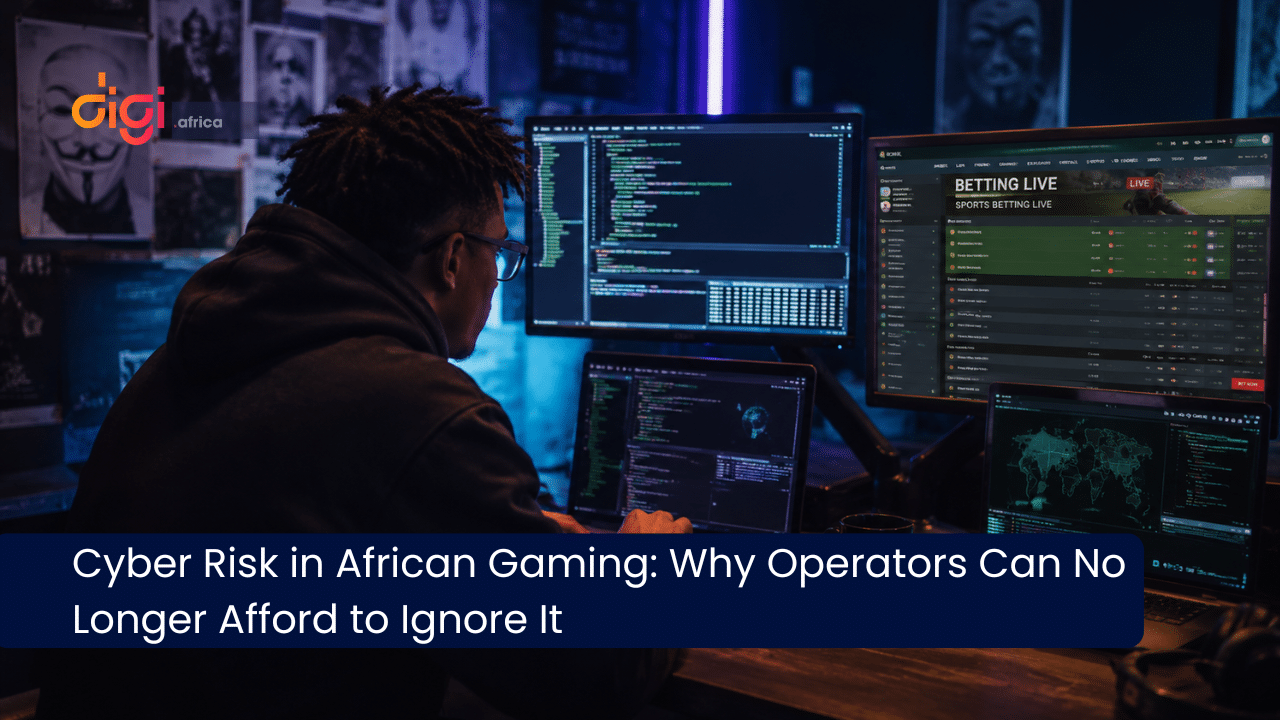
At the iGaming Summit AFRIKA held in Nairobi earlier in May, the atmosphere was charged with palpable optimism. Industry leaders, regulators, and innovators gathered to discuss the staggering expansion of the continent’s gaming sector. The key panels dominated familiar, high-growth themes: the harmonization of regional regulatory frameworks, the integration of frictionless cross-border payment rails, hyper-localized player acquisition strategies, and the evolving mandate of responsible gaming.


Yet, underlying every discussion about scale, market entry, and technological innovation was an unspoken, structural reality. Every digital advancement that makes the African gaming market incredibly exciting also makes it uniquely vulnerable.
As operators digitize, optimize, and expand across borders, they are quietly transitioning into prime, high-value targets for global cybercriminals. Cyber risk is no longer a peripheral IT headache, it is a core, balance-sheet-altering threat that the African gaming ecosystem can no longer afford to ignore.
The Digital Architecture of African Gaming: A High-Exposure Environment
To understand why gaming operators face such acute cyber exposure, one must examine the specific technological plumbing that powers the African market. Unlike legacy Western gaming frameworks built on desktop infrastructure and credit card banking, Africa’s gaming boom is entirely mobile-first, high-velocity, and heavily integrated.






This structural interconnectedness creates several unique exposure points:
- The API Mesh Network: Modern operators do not build everything in-house. Their platforms are a complex web of integrations, sportsbook engines, live casino aggregators, local payment gateways, and player verification (KYC) tools. A vulnerability in any single third-party API can grant hackers a backdoor into the operator’s central database.
- Constant Financial Liquidity: Gaming platforms operate as high-velocity financial hubs. They process millions of micro-transactions, deposits, and payouts 24/7, largely driven by instant mobile money webhooks (such as M-Pesa, and Airtel Money). This continuous, automated flow of capital presents a highly attractive target for digital financial fraud.
- Goldmines of Personal Data: To remain compliant with intensifying local regulations, operators collect massive volumes of Personally Identifiable Information (PII), including national ID scans, phone numbers, email addresses, and transactional histories.
The Realities of the Modern Threat Landscape
Cyber threats in the gaming sector have evolved far beyond basic script kiddies attempting to cheat a virtual slot machine. Today, operators face highly organized, syndicate-backed cyber campaigns.

1. Advanced Ransomware Campaigns
Ransomware remains the single most destructive cyber threat to business continuity. Attackers gain access to the operator’s core servers, encrypt vital system files, including active player balances, historical game databases, and transaction logs, and demand massive payouts to unlock them. During a high-profile sporting event, such as a major Champions League night or an international derby, even a single hour of platform downtime can result in millions of shillings in lost Gross Gaming Revenue (GGR).
2. Regulatory-Triggering Data Breaches
With data protection acts now strictly enforced by watchdogs like Kenya’s Office of the Data Protection Commissioner (ODPC), the financial penalties for exposing player data are severe. A leak of customer ID scans or deposit records does more than damage player trust; it triggers automatic regulatory investigations, potential operating license suspensions, and heavy statutory fines.
3. Distributed Denial of Service (DDoS) Attacks
By overwhelming an operator’s servers with artificial traffic, cybercriminals can knock a gaming site completely offline. In the highly competitive African gaming space, if a platform is slow or unavailable for just fifteen minutes during a live match, players will not wait, they will simply open a rival app and place their bets there. DDoS attacks are frequently used as extortion tools, with hackers demanding ransoms to stop the disruption.
4. Account Takeovers (ATO) and Payment Fraud
Using automated botnets, attackers run credential-stuffing campaigns to break into player wallets, drain active balances, or exploit promotional bonuses at scale. When fraudulent pay-ins or pay-outs occur, operators are often left to settle the financial discrepancies out of pocket to protect their brand reputation.
The True Cost of a Cyber Incident
Many executives mistakenly calculate the cost of a cyber incident based solely on the immediate IT expense required to patch a server or restore a database. In reality, the direct IT fix is merely the visible tip of a massive financial iceberg.
When a breach occurs, the indirect and consequential costs quickly eclipse the initial technical fallout:
- Forensic Investigation Costs: To satisfy regulators and discover exactly how deep a breach went, operators must hire accredited, third-party cyber forensic teams, which bill at premium hourly rates.
- Business Interruption Losses: During system downtime, your operating overheads remain constant, but your revenue drops to zero. Recouping lost momentum and re-acquiring players who migrated to competitors during the outage is incredibly difficult and expensive.
- Brand Reputation Erosion: In the igaming sector, trust is the primary currency. If players believe their wallets or personal data are unsafe on your platform, your brand equity can evaporate overnight.
Shift Your Perspective: Cybersecurity vs. Cyber Resilience
For years, the industry standard has been to invest heavily in cybersecurity, firewalls, antivirus software, and encryption protocols. While these defensive barriers are absolutely essential, they are no longer sufficient on their own.
The global consensus among risk managers has shifted toward Cyber Resilience.
Cybersecurity assumes you can build a wall high enough to keep everyone out. Cyber resilience accepts the hard truth that sooner or later, an incident will occur. It focuses on how quickly and effectively your business can anticipate, withstand, recover from, and adapt to an attack without facing operational or financial ruin.
The Strategic Role of Cyber Risk Insurance
This is where the transition from pure technical security to comprehensive risk management occurs. Cyber Risk Insurance is designed to act as your financial shock absorber when your technical defenses are breached.
Rather than being a simple post-event payout mechanism, a modern cyber insurance policy operates as an active, rapid-response ecosystem. When an operator triggers a claim, the policy instantly deploys:
- An Incident Response Coach: A specialized legal or technical expert who coordinates the immediate stabilization of your business.
- A Cyber Forensic Team: Professionals who pinpoint the source of the breach, isolate infected systems, and verify if any sensitive player data was exfiltrated.
- A Specialized PR Firm: Communications experts who draft transparent, compliant disclosures to players and regulators, preserving brand reputation and minimizing trust erosion.
- Financial Indemnity: Coverage that offsets business interruption losses (reimbursing lost GGR during unexpected downtime), data restoration costs, and third-party liabilities or legal defense costs arising from regulatory actions.
A Checklist for Gaming Executives
Take a moment to ask your leadership team these five critical questions:
- Do we know our exact maximum financial loss if our platform suffers 24 hours of complete downtime during a major sporting tournament?
- If our central database was compromised today, how quickly could we legally identify, isolate, and report the breach to local data protection commissioners without disrupting daily operations?
- Are our third-party game aggregators and payment providers bound by the same security and liability standards that we are?
- Do we have a dedicated, tested incident response plan that outlines exactly who calls the forensic experts, who notifies the regulator, and who speaks to the media?
- Is our balance sheet protected against the heavy, multi-layered financial fallout of a successful ransomware attack, or are we relying entirely on our IT team’s ability to keep hackers out?
Conclusion
The trajectory of the African gaming market is undeniably upward. The innovations showcased at the Nairobi summit proved that local operators are among the most agile, creative, and forward-thinking in the global igaming arena.
However, building a sustainable gaming brand in this fast-paced environment requires matching aggressive growth strategies with robust risk management. Cyber threats are an inevitable tax on digital progress. By embedding cyber resilience and financial risk transfer mechanisms like Cyber Risk Insurance into your broader corporate strategy, you protect your players, secure your operations, and ensure that your brand is built to endure.
About Digi Africa
Digi Africa is a premier corporate risk advisor working alongside businesses to manage emerging digital liabilities. Our specialized Cyber Risk Insurance solutions are built specifically to help organizations navigate, respond to, and fully recover from today’s sophisticated digital threats.
Learn More About Digi Africa’s Cyber Risk Solutions Today