Exclusive: 1xCare’s Chris Bird Challenges Industry to Put Player Protection Before Profit and Publicity

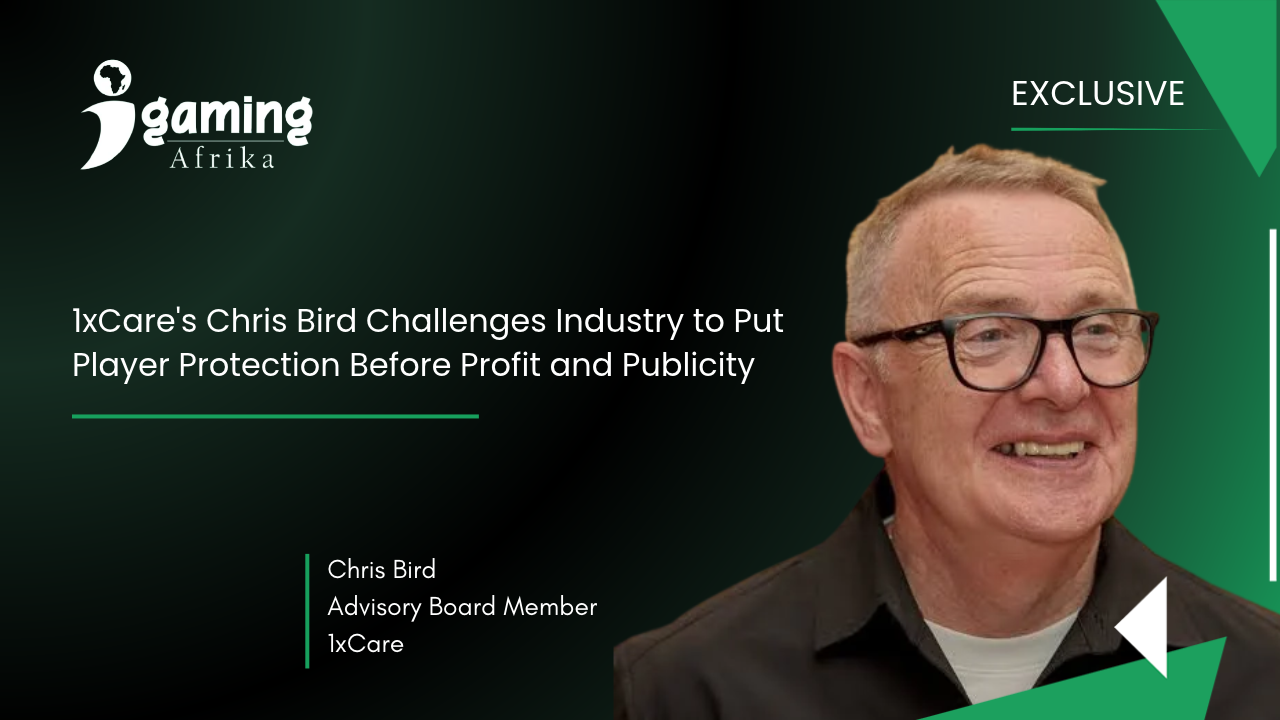
During the recent SBC Summit 2026 in Lisbon, iGaming AFRIKA caught up with Chris Bird, a member of the 1xCare Advisory Board, to discuss the organisation’s work in player protection, sports integrity and responsible gaming, as well as the importance of genuine corporate social responsibility.


As Africa’s gaming industry continues to expand, conversations around responsible gaming, player protection and sports integrity are becoming increasingly important. While regulatory frameworks and technological solutions remain essential, there is also a growing need for industry-wide collaboration, education and a deeper commitment to player welfare.
For Bird, player protection must extend beyond regulatory compliance and become part of how the gaming industry conducts its business and engages with the people affected by its activities. This is the thinking behind 1xCare, an independent NGO focused on sports integrity, health, well-being and education within the gaming industry. He stressed that the organisation operates independently, with an advisory board comprising independent advisers and full autonomy over its work.
Its approach places considerable emphasis on education and engagement, particularly through sport. One example is 1xCare’s involvement in the 1xCup in Nigeria, where Bird delivered a media and communications workshop for more than 100 media officers representing participating clubs.






Held on 29 July 2026, the workshop, titled Helping Football Tell Better Stories, drew on Bird’s more than three decades of experience in sports media, brand storytelling and communications strategy. It covered club storytelling, media relations, matchday communications, photography, social media and responsible crisis response.
Bird explained that the idea was to help clubs recognise that their stories extend beyond what happens during a match. Drawing on his experience at Manchester City, he encouraged media officers to look at the people behind the teams, their journeys and the communities that support them.

“Every club has a story, whatever its size or budget,” Bird said in an earlier statement about the workshop. “This workshop was about helping clubs find those stories and tell them clearly, accurately, and with confidence.”
Speaking further about the initiative, he explained to iGaming AFRIKA that the training was intended to give media officers a better understanding of how to communicate throughout a tournament, including periods when no matches were being played. As he put it, “There are also backstories to every player, every team, and every supporter. Our mission really is to make sure that we’re developing programmes, developing research, and reporting back to the industry about the right way to focus on governance and integrity,” he said.
Read Also: 1xCare’s Chris Bird Delivers Media Training for 1xCup Clubs
Looking at the wider African market, Bird believes that dialogue will be particularly important as regulators work to strengthen player protection and address illegal gambling practices. He acknowledged that the continent is still developing its approach to responsible gaming, with regulators taking on the task of building frameworks and identifying ways to better protect players.
When asked what advice he would give governments, regulators and other authorities, he pointed to the importance of engaging organisations and institutions with expertise in education, health, well-being and research. “The first thing I would always say is dialogue. You have to talk to the people who are working towards the areas that we’re dealing with: education, health, well-being, and research,” he said.
He encouraged regulators, particularly those operating in emerging markets, to engage with organisations such as 1xCare and research institutions to better understand the challenges they face and the measures needed to address them. According to Bird, access to the right information and expertise would put authorities in a better position to respond to the demands of their respective markets.
He added that the real measure of the 1xCare’s work would be whether its messages reach the intended audiences and whether its programmes contribute to education, research and player well-being. More importantly, he wants player care to become part of the industry’s culture rather than something companies only acknowledge in their public communications. “It can’t just be a marketing line; it can’t just be a line in a programme. It’s got to be in the culture of any organisation in this sector,” he said.
This also informed his views on corporate social responsibility, particularly the tendency among some companies to use CSR initiatives to advance their marketing objectives or fulfil regulatory requirements and challenged business leaders to examine their motivations. He argued that when CSR is introduced in boardrooms as a marketing initiative, the immediate question should be why the company is pursuing it in the first place.
He explained that organisations should examine their culture and how they can make responsibility part of their everyday operations. “If the marketing director or PR director is putting CSR on the table as a great marketing initiative, I would ask the question why,” he said. “This is not about marketing. This is not about ticking boxes. This is about people’s lives and people’s employment, and it needs to be taken seriously,” he emphasised.
He maintained that genuine corporate social responsibility cannot be achieved through advertising campaigns or isolated programmes. Instead, the entire organisation, from the employees on the ground to senior management, must share the same understanding of what responsibility means. “This is not about mounting advertising; this is about care of people.”