Most iGaming brands launch their sports campaigns too late: they wait for the tournament to start and for betting activity to spike. On the surface this seems logical, the audience is already engaged, so you can quickly launch a campaign and collect conversions.


But during the World Cup, this logic works differently. The problem isn’t finding traffic, it’s how much each user action will cost when all operators enter the auction at the same time.
Brands that start warming up their audience in advance arrive at the tournament with a prepared base. By the time the matches begin, they already have retargeting audiences, tested creatives, validated GEOs, and engagement data. There’s no need to find users from scratch, and the path to registration or deposit is shorter.
That’s why pre-event awareness has become an important part of performance strategy. Below we’ll look at this launch strategy through the lens of the World Cup and the African iGaming market.




Why You Should Launch During the World Cup
The World Cup is one of the strongest periods for betting marketing. During the tournament, interest in betting, sports content, and iGaming apps grows significantly.
This is especially noticeable in Africa. In many countries across the region, football is the primary form of mass entertainment. During major matches, mobile activity spikes sharply as audiences:

- Watch the match
- Check live scores in real time
- Open betting apps
- Engage with push and display advertising
So launching during the World Cup matters not just because of traffic volume, but because of the audience’s high readiness to place sports bets.
During this period, the iGaming brand’s task is to launch ads at the right moment, because:
- Advertising during matches feels more natural
- Users have higher trust in the brand
This helps:
- Increase CTR during matches
- Lower the cost of conversion
- Simplify the user’s path to registration or deposit
It’s important to think of awareness as an ongoing process of working with the audience through repeated touchpoints.
How an Effective Pre-World Cup Launch Strategy Works
The optimal strategy doesn’t start on match day or a couple of days before the tournament. For major sporting events, it’s better to start at least a month out — or at minimum two weeks before the championship begins.
Stage 1. Pre-World Cup Awareness Campaign
The goal of the first stage is not only to drive registrations and deposits, but to build the widest possible audience for subsequent campaigns.
At this stage it’s important to capture any valuable user interaction with the brand: an ad view or click, a site visit, a registration, a deposit, or any other action. This data will help run retargeting later against audiences that have already shown interest.
The optimal time to launch the first stage is a month before the tournament. If there’s less time, the minimum workable window is two weeks before the championship starts.
Formats can vary:
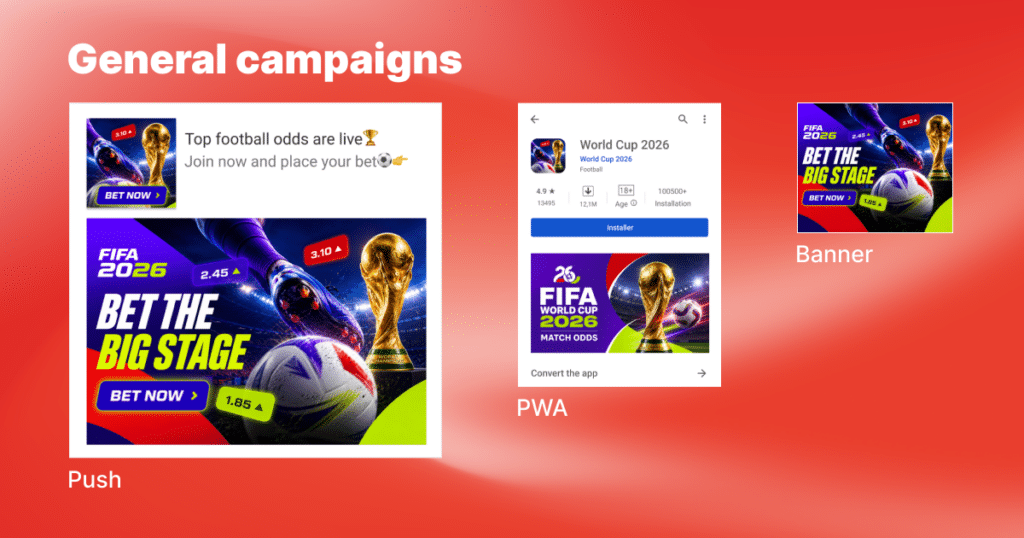
Push works well for short, situational messages — tournament reminders, bonuses ahead of the World Cup start.
Banner helps reinforce visual brand recognition: the same brand style, colors, characters, or football setup used before the tournament and later in retargeting.
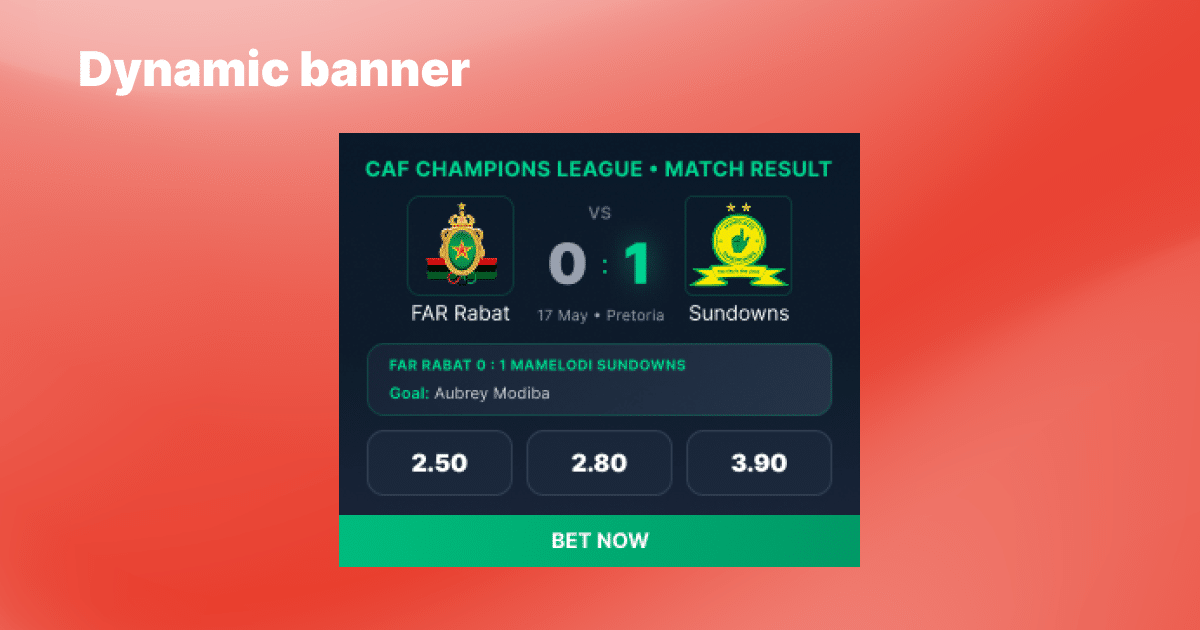
Dynamic banner is a creative that automatically updates via API. Data from your site — match, teams, odds, game time, or bonus — is pulled directly into the banner. This format makes it easy to adapt ads quickly to matches and live events like FIFA World Cup 2026.
Popunder + preland works for a more detailed explanation of the offer. For example, you can send the user to an intermediate page with the brand’s key benefits or a curated match schedule.
Read Also: The Next Big Chapter in iGaming – African Region
Video can be useful for larger brands that need to build trust in advance, especially in highly competitive GEOs.
PWA is a format that works almost like an app and can be opened from a phone. For an iGaming brand, it’s a way to maintain contact with the user after the first visit: reminding them about upcoming matches, bonuses, and current offers.
What Creatives to Use Before the Tournament
For African GEOs, a more local approach works well: football imagery, national colors, mentions of the national teams that matter to each specific market, and creatives built around major matches.
For example, for South Africa you can build a separate campaign logic around Bafana Bafana matches — including the Mexico vs South Africa fixture scheduled in the FIFA calendar for 11 June 2026.
Event-Based Strategy: How to Launch Around Specific Matches
The main mistake in World Cup campaigns is launching on match day.
On match day the user is already in an overheated information environment: there’s a lot of sports content, predictions, bonuses, and ads from many iGaming brands around them.
So it’s better to build the campaign around each important event in advance.
Before the Match
The optimal launch window is 7–3 days before the match. This is enough to warm up the audience, test creatives, and prepare retargeting segments.
At the pre-match stage, the goal is to create a sense of anticipation. Creatives can be tied to upcoming matches, predictions, bonuses for a specific game, or interest in the national team.
For example, a message like this works well in creatives:
“South Africa vs Mexico is coming. Get ready for the opening match.”
Read Also: How to Increase Deposits with Retargeting in African iGaming Market
At this stage it’s not necessary to push the user straight to a deposit. It’s more important to build the audience and return to it closer to the match, when readiness to act will be higher.
What It Looks Like in CPA
This is confirmed by Kadam campaign results. In one test, a campaign launched just three days before the match and already showed strong momentum: FTD cost dropped to $2 against the standard $6 in regular campaigns, and the number of deposits grew 35% compared to other launches.
The reason is that during a major event, users are already in the right context. They’re following matches, reading news, checking predictions, and responding faster to relevant offers.
During the Match
During the match, creatives need to be more dynamic. Live emotions, bets, fast offers, reminders, and retargeting of the engaged audience all work here.
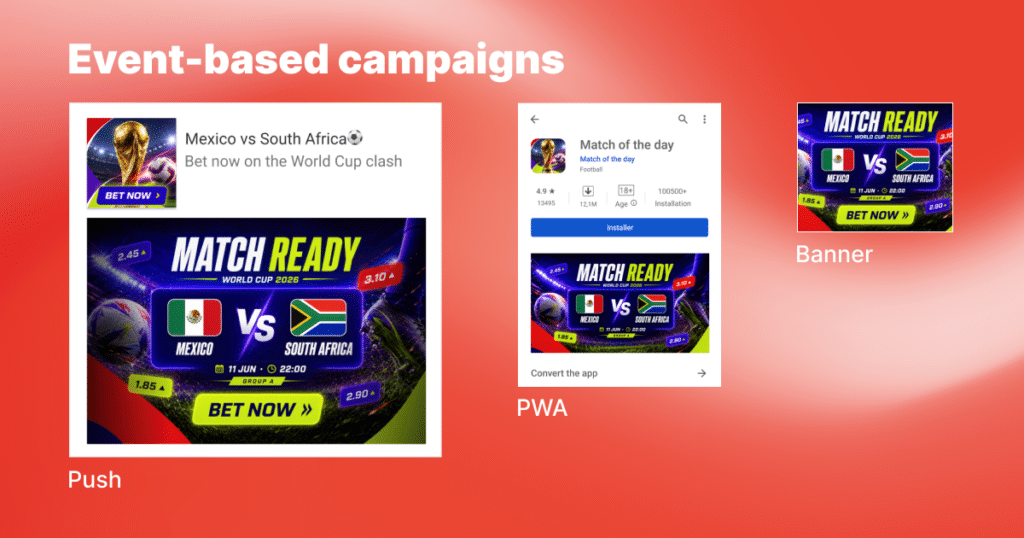
One important point: the same match can be packaged into multiple formats, but the visual logic should be consistent.
Dynamic banners are particularly effective here — they update in real time, pulling data directly from the site via API.
Example of a dynamic banner during a live match
After the Match
After the match, you cannot leave the old creative running. Once the match is over, the creative tie to that specific game must be stopped or replaced.
Example of a dynamic banner after a live match
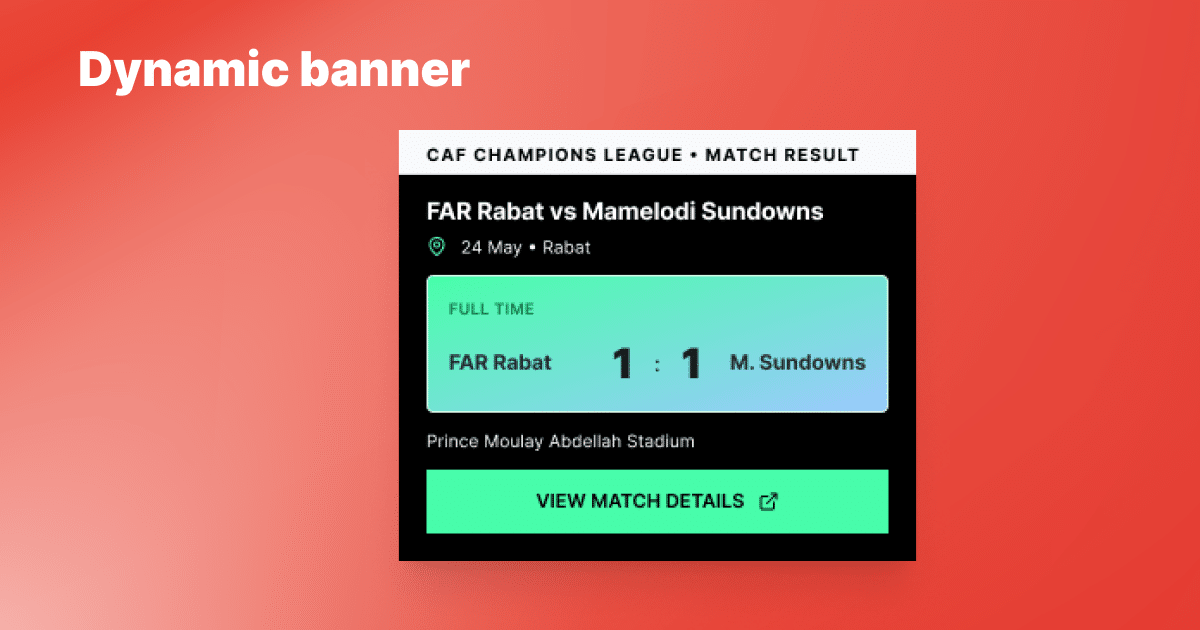
This is where time-targeting in the ad network settings becomes critical. During the World Cup, it’s not just the creative that matters — it’s the moment it’s shown. The same message can be powerful during a match and useless two hours after the final whistle.
Read Also: Can You Monetize African Traffic with Popunders?
After the match you can switch to:
- The next game
- A general World Cup bonus
- Reactivation of users who showed interest but didn’t convert into paying players
The Role of Retargeting: How Awareness Becomes Performance
Without retargeting, the effect of awareness burns off quickly. The brand must continue communicating with users who have already seen the ad but haven’t completed an action.
For the iGaming funnel this is especially important, because users rarely convert on the first touchpoint. They might leave to compare bonuses on another site or get distracted by the match — so it’s important to bring them back through retargeting.
In Kadam there are two types of retargeting available.
Pixel Retargeting
Pixel retargeting is built around a special JS code installed on the site, landing page, or specific funnel pages. Its job is to track user actions and pass events to the ad network for further retargeting and analytics.
The pixel is typically installed on:
- The landing page
- The registration page
- The thank you page
- The deposit page
- Dedicated World Cup or event pages
Installation can happen directly via the site’s HTML code, through Google Tag Manager, through the platform’s built-in tag manager, or via a JS trigger on a specific event.
Once installed, the pixel starts collecting data on user actions:
- Clicking through to the iGaming offer
- Starting and completing registration
- Viewing the deposit page
- FTD and repeat deposit
Based on these events, separate retargeting audiences are formed inside the ad network. For each segment you can run separate communication and show different creatives.
Additionally, some iGaming brands use S2S event transmission alongside the pixel. In this case, data on registrations, deposits, or repeat actions is passed directly from the advertiser’s backend system. This helps build more precise audiences, improve analytics, and work with deeper stages of the iGaming funnel.
Audience Retargeting
Audience retargeting helps you work not only with site visitors, but with audience segments collected at earlier campaign stages.
Inside the ad network, audiences can be built based on:
- Ad impressions
- Ad clicks
- Preland visits
- Site visits
- Interactions with specific creatives
The brand can then run retargeting specifically against these segments.
This is where awareness becomes performance through a sequence of touchpoints. First the brand gets attention through display campaigns. Then it collects the audience. Then it brings the user back at the moment when the probability of conversion is higher.
This is exactly how you can reduce dependence on the expensive auction during peak match hours: part of the audience is already collected, familiar with the brand, and can be brought back through retargeting.
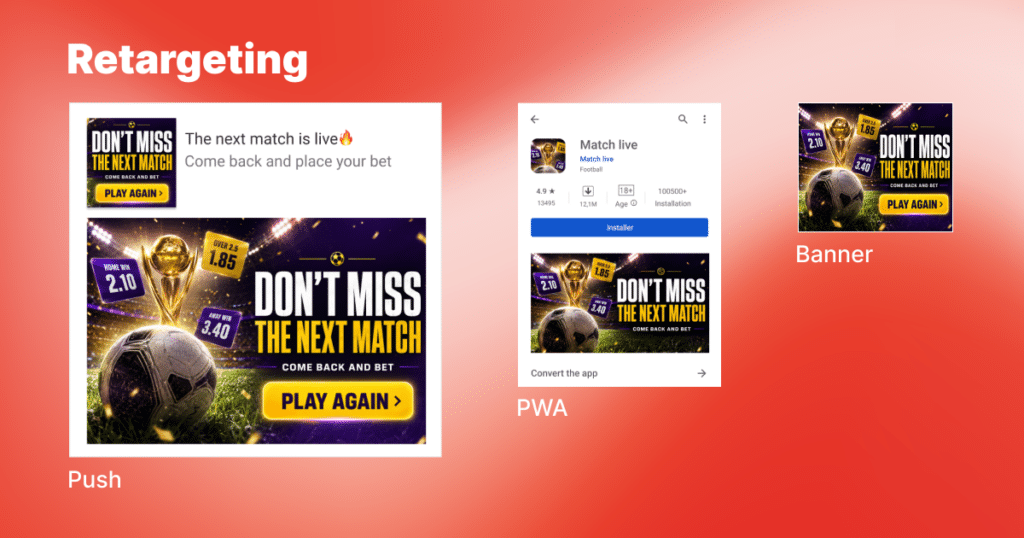
Creative example
What It Looks Like in Numbers
Using GEO ZA as an example, you can see how retargeting works across different stages of the iGaming funnel: first deposit and repeat deposit.
FTD Price — the cost of the first deposit for users who have not yet made a deposit. Deposit Price — the cost of a repeat deposit for the active base.
| GEO | Metric | Audience | Post-view min | Post-view avg | Post-view max | Post-click min | Post-click avg | Post-click max |
| ZA | FTD Price | Non-depositors | $0.43 | $2.11 | $4.49 | $6.26 | $8.71 | $9.98 |
| ZA | Deposit Price | Active base | $0.02 | $0.06 | $0.08 | $0.08 | $0.22 | $0.31 |
In ZA, the average cost of a first deposit was $2.11 post-view and $8.71 post-click. Repeat deposits were noticeably cheaper: an average of $0.06 post-view and $0.22 post-click.
These numbers show that retargeting helps work with users at different funnel stages: bringing new audiences to their first deposit and returning the active base to repeat actions.
Post-World Cup: Why the Strategy Doesn’t End After the Final
The biggest mistake is pausing advertising after the tournament.
The World Cup ends, but the audience the brand built over several weeks remains. If you stop communicating, you lose not only reach but potential LTV.
After the final, a different stage begins — audience retention. Users who registered during the tournament can return for local championships and other sporting events, especially if the brand is working with a multi-vertical funnel.
After the tournament, creatives need to change. Instead of match-specific messages, it’s worth returning to standard bonuses, repeat deposit offers, loyalty communication, and user reactivation.
This way the brand doesn’t lose the audience it already paid for, and continues working on LTV after the main event.
Kadam supports iGaming brands with dynamic banner formats, pixel and audience retargeting, and campaign tools designed for event-based performance marketing. Register on Kadam to prepare your World Cup 2026 campaigns.Contact: @najiib_kadam