Exclusive: Data-Driven Marketing Strategies Reshaping iGaming in Africa

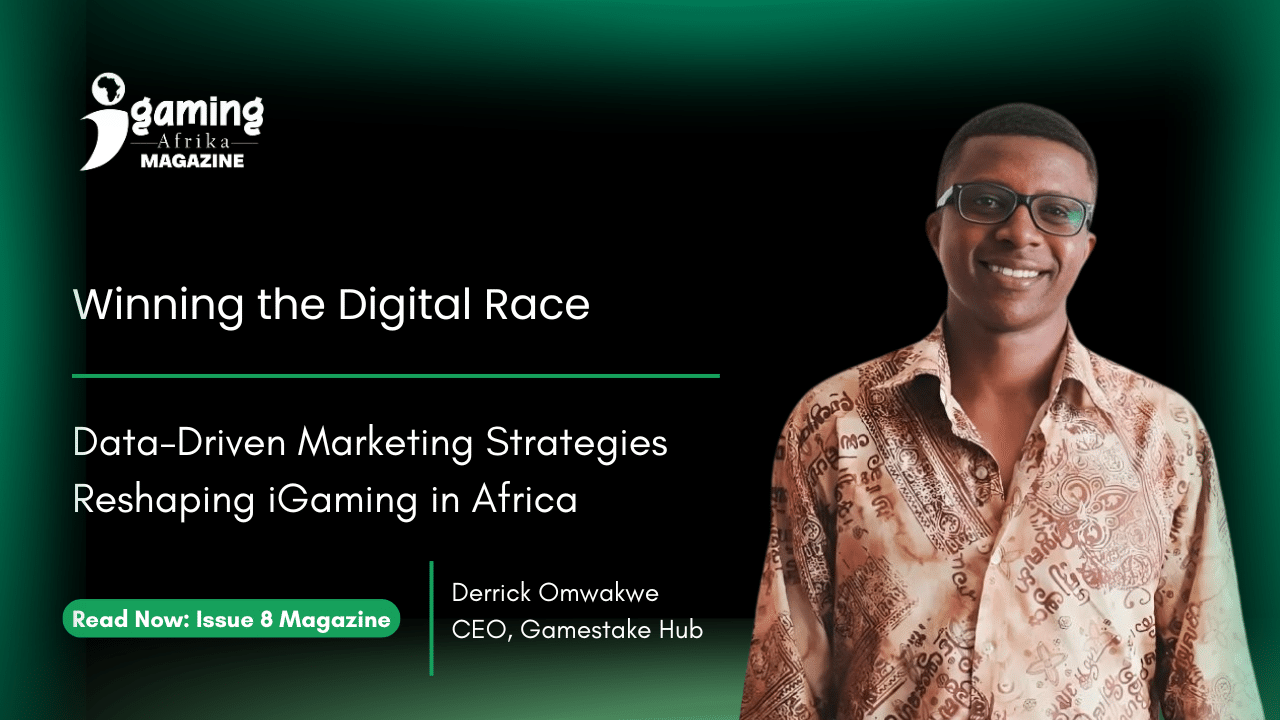
By Derrick Omwakwe | Chief Executive Officer, Gamestake Hub


Africa is not a future growth market; it is a present one. Kenya alone sits at the epicentre of one of the continent’s most active iGaming ecosystems, and the numbers confirm what operators on the ground already know: the window for early-mover advantage is narrowing fast.
Kenya’s iGaming market continues to demonstrate strong upward momentum, with revenues surpassing $100 million in 2024 and projected to grow at a CAGR of 12.3% through 2031, according to iGamingToday. Sports betting dominates the landscape, accounting for over 60% of total market share, underscoring the country’s deep-rooted betting culture.
Across Sub-Saharan Africa, the scale is even more compelling. Sub-Saharan Africa is expected to surpass 100 million active sports bettors by 2025, as reported by Yournotify. This surge reflects a broader generational shift, fueled by widespread mobile connectivity, the rise of mobile money ecosystems, and a young, football-driven demographic.





The strategic implication is clear: traditional, desktop-first advertising models are no longer effective in this environment. Success in Africa demands mobile-first, locally relevant, and culturally aligned marketing strategies.
Mobile is the Foundation
As early as 2019, 88% of Kenyan bettors were placing wagers via mobile devices, according to Slotegrator, a figure that has only continued to rise. The mobile device is simultaneously the marketing channel, the payment terminal, and the product interface. Any operator still treating mobile optimisation as secondary has already lost the acquisition battle.

Beyond the platform itself, SMS and push notifications remain highly effective direct channels in the Kenyan market, particularly when campaigns are segmented by user behaviour, preferred sport, and lifecycle stage. A well-timed, personalised pre-match offer consistently outperforms a generic broadcast, and the discipline of structured segmentation is what separates operators with sustainable CRM programmes from those burning budget on noise.
Read Also: Exclusive: The Role of Sports Betting in Driving Mobile Wallet Penetration in Developing Economies
From Broadcast to Intelligence
The 2026 marketing landscape has moved decisively beyond segmentation into AI-driven personalisation. According to Fgx, businesses deploying AI-powered personalisation agents have seen revenue lifts of over 30%. In iGaming, this manifests as dynamic bonus calibration, real-time event-triggered promotions, and churn-prediction models that flag at-risk players before they lapse. However, AI is only as strong as the data beneath it; operators must invest in clean, first-party data pipelines before personalisation can deliver commercial returns.
Findmoreafrica recently revealed that Aviator, the fast-paced crash game, has already become the primary product preference for 19% of African bettors, representing a structural shift toward high-frequency, instant-feedback formats. Operators whose marketing still treats the entire user base as sports bettors are leaving meaningful revenue on the table.
Organic Channels Compound: Paid Channels Drain
The operators posting the best acquisition economics are those investing in search optimisation, authoritative content, and community-building, channels that compound over time. Fgx points out that, in 2026, content is no longer written for keywords but for intent and context. Brands that appear as cited sources in AI-powered search results gain visibility that no paid strategy can fully replicate. On social platforms, short-form video tied to live football moments, and micro-influencer partnerships consistently outperform traditional display creative with the 18–35 demographic that drives most betting volume.
Compliance as Competitive Advantage
The Gambling Control Act 2025 imposes a genuine compliance burden, but operators who frame regulation purely as a cost are missing the strategic point. In a market where unlicensed platforms have historically eroded player trust, full BCLB licensing, transparent bonus terms, and visible responsible gambling tools are trust signals that discerning players actively evaluate. As the Kenyan market matures, the platforms that built trust through transparency will hold a structural retention advantage over those that competed purely on bonus value.
The Mandate for 2026
The data is unambiguous: the African iGaming market is large, growing rapidly, and structurally favourable for operators who invest in the right capabilities. Mobile infrastructure, first-party data, organic content, rigorous measurement, and compliance are not optional pillars; they are the foundation. The platforms making those investments now are building the competitive moats that will define the next decade of African iGaming. The race is already underway, and late movers will find it increasingly difficult to catch up.
Read the full article through in our digital magazine: