Jeremiah Maangi urges Africa to build stronger foundations for gaming growth

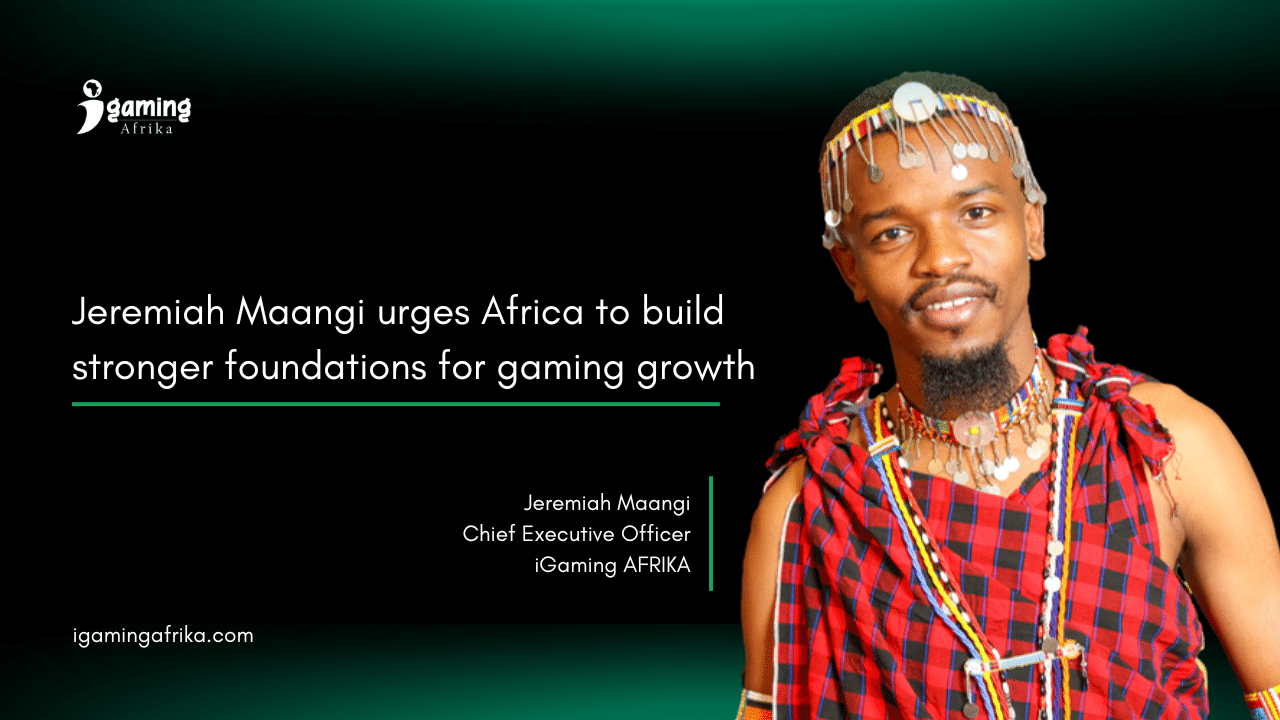
Speaking at the recent Enugu Gaming Conference in Nigeria, Jeremiah Maangi, Chief Executive Officer of iGaming AFRIKA said investment will increasingly flow to markets that offer regulatory certainty, efficient payment systems and evidence-based policies.


He argued that conversations about Africa’s gaming sector are still too often centred on its size and growth projections. While those fundamentals remain attractive, he said the industry’s long-term success will depend on whether governments and businesses can build the systems that give investors confidence.
Jeremiah also challenged the tendency to view growth only through the lens of major commercial centres such as Lagos, Nairobi or Cape Town. Cities like Enugu, he said, are becoming important technology hubs in their own right and are supported by growing digital infrastructure and an entrepreneurial workforce that is creating opportunities beyond the continent’s traditional markets.
“When people talk about African tech and entertainment, the media spotlight often defaults to Lagos, Nairobi, Cape Town, Johannesburg, Kampala, Da-er-Esalam, or Accra. But those of us who travel this continent, talk to developers, and study player metrics know the truth: the real engine of regional growth is powered by cities like Enugu. The entrepreneurial spirit here, backed by a massive, highly educated youth population and expanding digital infrastructure, makes the South East one of the most exciting, under-reported growth corridors in African gaming today,” he said.






He emphasized that success for operators entering the market will come from understanding local markets and not replicating strategies that worked elsewhere. African consumers adopted smartphones as their first gateway to the digital economy and this changed everything from how they access entertainment to how they make payments. Companies that recognise those habits, he argued, will be better placed to compete than those relying on large marketing budgets alone.
“The operators who win the African market will not necessarily be the ones with the massive multi-million-dollar marketing budgets. The winners will be the hyper-local operators,” he said. “The ones who understand that an everyday Nigerian uses their phone differently, values their data bundles fiercely, and expects instant payouts without friction.”

Jeremiah welcomed the growing involvement of African governments in strengthening oversight of the gaming industry and described responsible and transparent regulation as a catalyst for sustainable growth. He argued that clear regulatory frameworks build market confidence, attract institutional investment and support the development of technology, jobs and local supply chains. In the same breath, he warned that policy volatility remains one of the industry’s biggest challenges, particularly when tax rates change unexpectedly, licensing structures are frequently revised or multiple authorities impose overlapping regulatory requirements.
Read Also: Jeremiah Maangi on the Crucial Role of Operators and Regulators in Gaming Conferences
According to him, such uncertainty makes it difficult for operators to plan long-term investments and discourages international companies from entering or expanding within African markets and noted that responsible businesses are only calling for consistency. “Responsible operators want to pay their fair share. They want to contribute to public revenues, fund local sports development, and support community initiatives. What operators and investors ask for is predictability,” he said.
Jeremiah also argued that the industry’s future will depend on how effectively it uses data. He described data as “economic infrastructure” and noted that decisions on taxation, regulation, responsible gaming and investment should be grounded in reliable evidence. He observed that valuable market intelligence remains fragmented across operators, payment providers, regulators and researchers, which limits informed decision-making. To address this, he called for greater investment in data providers, regulatory technology and analytics platforms that can improve transparency, strengthen policymaking and support sustainable growth across Africa’s gaming industry.
“Every regulatory decision, every tax rate assessment, every responsible gaming initiative, every platform feature, and every investment thesis must begin with verifiable evidence. Right now, across much of Africa, gaming market data is fragmented and siloed. Supporting data infrastructure ultimately strengthens the entire value chain.”