Best Turnkey Sportsbook Solutions in Africa in 2026


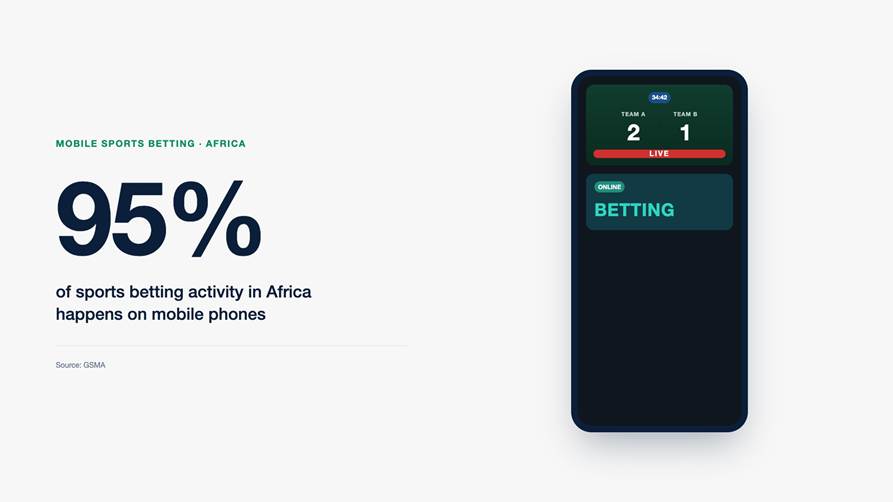
Africa is an increasingly important sportsbook market, with established betting audiences and growing digital participation. In GeoPoll’s 2026 survey of active bettors across six major African betting markets, 95% said they placed bets on a mobile device, pointing to well-established digital betting habits among players in these six markets.


At the same time, Africa is far from a single operating environment. Licensing, payments, infrastructure, and player behaviour vary significantly by country, making provider selection a market-by-market decision rather than a continent-wide one.
This guide compares leading turnkey sportsbook providers in Africa in 2026, looking at the factors that shape that decision: technology, regulatory coverage, commercial models, localisation, and implementation.
What Makes the African Sports Betting Market Different?
Treating Africa as a single sportsbook market is a mistake. Mobile betting is already dominant across major markets including Ghana, Kenya, Nigeria, South Africa, Tanzania, and Uganda, but connectivity, device quality, payments, regulation, and channel mix vary substantially by country.





Connectivity and device constraints make platform performance a critical consideration across African markets. The GSMA estimates that 63% of Africa’s population lives within mobile broadband coverage but still does not use mobile internet, with device affordability remaining a major barrier. Sportsbooks therefore need to perform reliably on lower-end devices and weaker connections, with particular attention to loading speed, bet placement, session recovery, and cashier flows.
Payments are equally market-specific. Sub-Saharan Africa accounted for more than two-thirds of new registered mobile-money accounts globally in 2025. Mobile money and domestic payment rails are central to sportsbook operations across many markets.

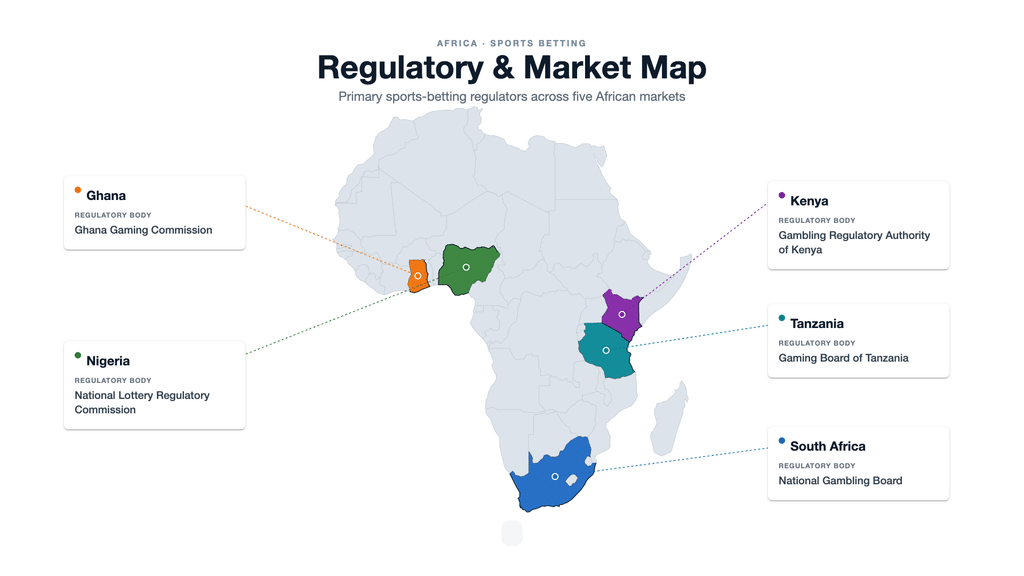
Regulation adds another layer. Kenya, Nigeria, South Africa, and Ghana operate under different licensing and compliance frameworks. Provider coverage should therefore be assessed country by country:
- Licences and certifications
- Supported currencies and payment methods
- Local integrations
- The ability to adapt KYC and compliance workflows to each jurisdiction.
Why Choose Turnkey Sportsbook?
A turnkey sportsbook is a good fit for operators that want to run their platform without building the technology from scratch. In this case, the operator works under its own licence and controls the brand, market strategy, customer acquisition, and growth. The technology provider supplies and maintains the sportsbook platform, including betting functionality, odds and event feeds, risk management tools, integrations, and technical support.
This gives operators more freedom to enter regulated markets and adapt the product to different jurisdictions. At the same time, turnkey removes much of the cost and technical work involved in developing a sportsbook in-house.
Read Also: What South Africa’s online betting patterns demand from the technology behind it
Best Turnkey Sportsbook Solution Providers in Africa in 2026
No single provider is the right choice for every African operator; the strongest shortlist depends on target markets, existing technology, retail requirements, licensing strategy, and the level of operational support needed.
Public disclosure also varies significantly between suppliers. The comparison below distinguishes documented African market presence from broader platform capabilities and does not assume local payment, regulatory, or channel support where it cannot be verified publicly.
| Provider | Best for | Payment solutions | Content | Compliance | Time to launch |
| SOFTSWISS | Locally licensed operators in established markets; omnichannel (online, mobile, retail); mobile-first | Over 100 payment providers; instant ETFs, vouchers, crypto payments | Over 100,000 live events processed monthly; more than 2,000 pre-match and live betting markets across over 200 sports and e-sports | Сertified for South Africa, Nigeria, and Ghana | 2–4 weeks, depending on the complexity and customisation |
| EveryMatrix | Online and retail-focused operators targeting local markets | Pre-built Orange Money, Vodacom, Unitel Money, PayPay Africa; Multiple currencies; PSP aggregation | More than 200,000 live events monthly across over 100 sports and e-sports | Licenced for South Africa, Kenya, Zambia, Dem. Rep. of Congo; Live with Betsson in Cameroon | 8–16 weeks |
| Digitain | Sportsbook-first operators; alternative betting channels | Custom integrations per market; standard payment methods supported | Over 180,000 monthly live events, more than 4,000 betting markets | BetJara partnership (Nigeria); South Africa Licence | Typically, 21 days |
| BetConstruct | Broad setup across digital and retail betting | Standard payment methods; local Nigerian integrations via Lagos State focus | Over 140,000 pre-match events and 90,000 live matches monthly; more than 120 sports types | Licences in South Africa and Nigeria | 8–12 weeks |
| Soft2Bet | Digital-first; managed turnkey setup | Local alternative payments (mobile-money optimized); PSP aggregation | About 67,000 live events and over 83,000 pre-match events monthly | Nigeria | 3–5 weeks |
| Playtech | Large operators with significant omnichannel or managed-trading requirements | Supports EasyEFT, cards, and e-wallets | More than 210,000 events per month across over 125 sports with more than 3,000 betting markets | South Africa | N/A |
| GiG | Modular architecture; implementation flexibility | Modular payment integrations; flexible PSP aggregation | Modular (operator chooses specific content) | Angola | 12–14 weeks |
Core Sportsbook Technology: What Operators Should Compare
A turnkey sportsbook solution should be reliable, scalable, and adapted to the target market. These requirements are assessed across four core areas.
Player Account Management, KYC and Payments
The PAM typically connects onboarding, wallets, bonuses, segmentation, and compliance, making it central to the bettor lifecycle.
For African markets, operators should assess whether onboarding and KYC flows can be configured by jurisdiction, local currencies and verification methods are supported, and domestic payment infrastructure can be integrated.
Payment evaluation should go beyond deposits. Withdrawal speed, failed transactions, reconciliation, fraud controls, settlement visibility, and the maturity of existing local integrations all affect customer experience and operating cost.
Risk Management and Trading
Trading and risk can be managed by the provider, the operator, or both. The right model depends on internal expertise and the level of control required.
Operators should compare how odds, margins, limits, and exposure are managed, what automated controls and manual overrides exist, and how the platform handles feed failures or unusual betting activity.
For teams without an established trading function, managed services covering odds, liability, monitoring, and day-to-day trading can be a key part of the turnkey proposition.
Sports Data and Local Content
Strong international coverage should be matched by relevant regional and domestic content. In Africa, this typically means major European football alongside competitions such as AFCON and other CAF tournaments, with rugby, cricket, racing, and local leagues weighted according to the target market.
Operators should compare event volume, market depth, data quality, update speed, settlement, and feed reliability.
Mobile, Retail and Scalability
Platforms should be tested under real operating conditions: weaker connections, interrupted sessions, low-end devices, and unstable cashier connectivity.
Where retail matters, operators should assess support for terminals, booking codes, shared wallets, agents, and unified account management across channels.
Scalability should also be tested against peak events. Useful evidence includes historical availability, maximum-load performance, incident procedures, recovery targets, and infrastructure relevant to the target geography.
Fixed Fees, Revenue Share and the Real Cost of a Turnkey Sportsbook
Turnkey sportsbook pricing can combine setup fees, monthly charges, minimum commitments, revenue share, and extra costs for trading, data, KYC, payments, integrations, or custom development.
A better comparison is three- to five-year total cost of ownership (TCO):
TCO = setup and migration + platform fees + revenue share + licensing and certification + data and trading + KYC + payments + integrations + local operations + ongoing development.
Revenue share can lower upfront cost but may include minimum commitments, while fixed-fee models offer greater predictability but may come with volume caps.
Contract structure matters just as much as the headline rate. Operators should confirm:
- Whether percentage charges are calculated on GGR, NGR, or another agreed base
- Which deductions apply
- What minimum commitments are required
- Whether trading, data, KYC, payments, support, and custom development are included.
Some agreements combine fixed and variable charges, so operators should model launch, base-case, and high-growth scenarios rather than compare a single fee in isolation.
African Sports Betting Regulation in 2026
Regulatory fit should be checked before product fit because a technically strong sportsbook is of little value if it cannot support the required operating model.
Kenya introduced the Gambling Control Act in 2025, establishing the Gambling Regulatory Authority of Kenya. Online bookmakers require a specific licence and must operate under an approved gambling control system.
Nigeria has moved in the opposite direction towards decentralisation. In November 2024, the Supreme Court held that lottery and games of chance fall within state competence, invalidating the federal National Lottery Act across the states while leaving federal authority in the Federal Capital Territory. Operators entering several Nigerian states may therefore face multiple licensing and compliance requirements.
South Africa permits online betting through bookmakers licensed by provincial gambling authorities, while other forms of interactive online gambling remain prohibited. The distinction is critical for any platform supporting multiple gambling verticals. Betting is already the country’s dominant regulated gambling category, accounting for around 70% of GGR in 2024/25.
Ghana operates a formal licensing regime through the Gaming Commission. Current requirements for sports betting businesses include a minimum stated capital of USD 2 million and partial or full Ghanaian ownership.
Other markets also have established licensing structures. Tanzania, for example, maintains a dedicated register of licensed online sports betting operators.
Implementation Timelines: Technical Launch vs Legal Go-Live
Turnkey removes the need to build the core sportsbook stack from scratch, but it does not eliminate the rest of the launch process. Compared with white label sportsbook software, it may also require more operator-side work around licensing, integrations, certification, and operational setup.
A sportsbook may be technically deployable within weeks while the business itself still waits for licensing, certification, payment-provider approval or local integrations. Operators should therefore manage at least four workstreams in parallel:
- Licensing and regulatory approval
- Platform configuration and certification
- Payments, KYC, and other local integrations
- Commercial preparation, including staffing, affiliates, CRM, and acquisition.
Sportsbook API integration should be assessed as part of the launch plan, particularly where the sportsbook is being added to an existing casino operation. Operators should confirm early how the sportsbook will connect to the casino’s PAM, CRM, payments, KYC, and affiliate systems, as well as what documentation, sandbox access, and testing environments are available.
Go-live preparation should also cover support ownership, escalation paths, incident SLAs, change requests, and staff training across trading, CRM, finance, and customer support.
Post-launch measurement should then cover more than GGR. Registration-to-first-deposit conversion, KYC completion, payment success and withdrawal times, active bettors, sportsbook margin, retention, and platform incidents provide a much clearer view of whether the technology is supporting the business as intended.
How to Choose a Turnkey Sportsbook Provider: Checklist
When comparing options, operators should focus on six areas:
● Regulatory fit
Confirm that the platform can support the licensing, reporting, KYC and technical requirements of every target jurisdiction. Existing deployments in those markets are a strong advantage.
● Local readiness
Check which currencies, payment methods, verification services, languages and locally relevant sports are already supported. Every missing integration adds time, cost and implementation risk.
● Sportsbook operations
Define how trading and risk will be managed, what remains under operator control and which services the provider can take over. This is especially important for teams without an established trading function.
● Technical fit
Test platform performance under realistic device, bandwidth and peak-load conditions, and confirm how easily the sportsbook integrates with the operator’s PAM, CRM, payments and other existing systems.
● Commercial model
Compare the full cost of operating the platform over several years, including setup, minimum fees, revenue share, managed services, data, integrations and ongoing development.
● Implementation and support
Establish what the provider delivers before launch, what remains the operator’s responsibility, who manages local integrations and certification, and what level of technical and operational support is available after go-live.
The final decision should prioritise the requirements that are hardest to change after launch: regulatory compatibility, core architecture, commercial terms, integration model, data portability, and the division of operational responsibility. Switching any of these later can require significant redevelopment, recertification, or migration work.