Inside the iGaming AFRIKA Summit: Dianah Wathanji on Growth, Opportunity, and What Comes Next

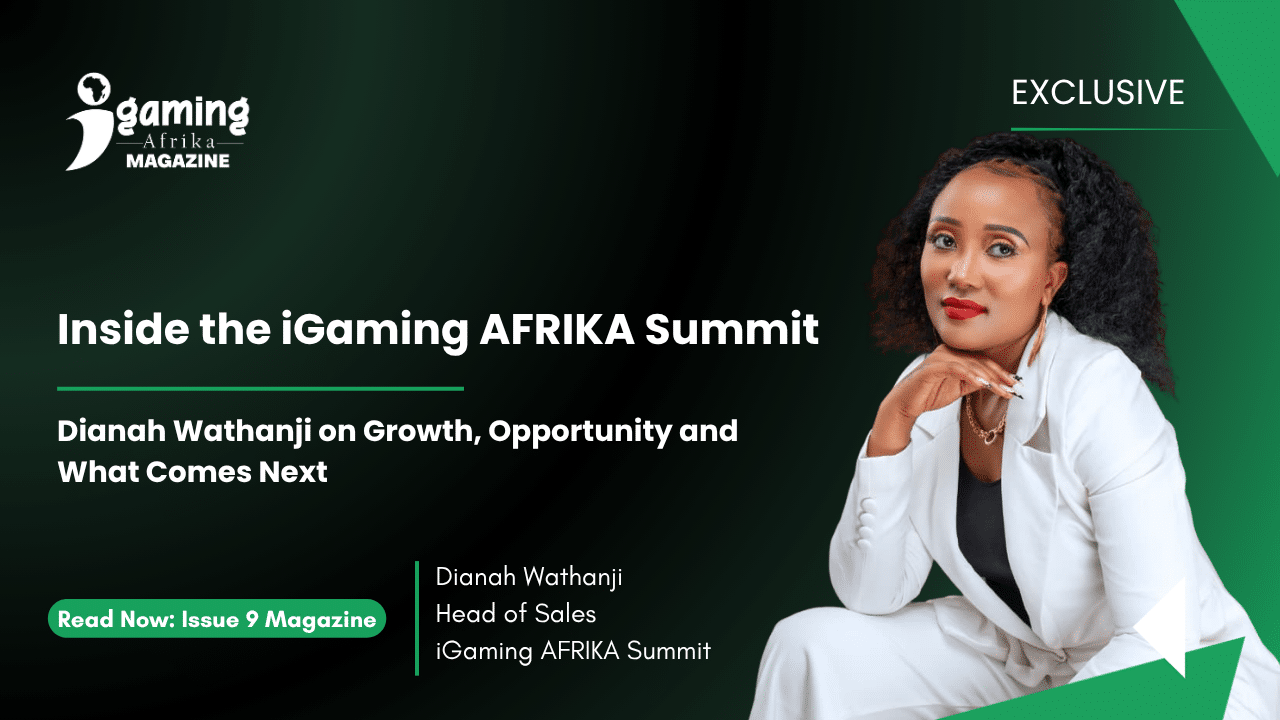
When the iGaming AFRIKA Summit was taking shape, the team had to convince businesses to back an event that had yet to prove itself. Dianah Ann Wathanji Kariuki, Head of Sales at the company, was part of that effort from the beginning.


In this interview with iGaming AFRIKA Magazine, Dianah talks about earning that early trust, the lessons she took from conversations with exhibitors and sponsors, and what businesses want when they commit to an industry event. She also shares how those experiences are informing preparations for the 2027 Summit.
Before the inaugural iGaming AFRIKA Summit, there was no previous edition or track record to sell. What did it take to get companies to believe in the vision and commit to the first edition?
The greatest challenge was trust. We were asking companies to commit a budget to an event they had never experienced, so naturally they wanted to know whether we could deliver the audience, the quality, and the industry participation we were promising.



Jeremiah Maangi, Our Events Director, and I handled many of those early exhibitor conversations together. We would attend the meetings and introduce the vision, and afterwards, I would take responsibility for following up and moving those conversations forward. Some took several conversations because, particularly with the larger commitments, companies needed confidence before making that investment. Attending international industry events also helped because people could meet us, understand what we were building, and see the team behind the summit. By the end of that first sales cycle, we had secured several sponsors and exhibitors.
The difference today is that we are no longer selling only a vision. We now have something tangible to show.

Having gone through the first edition, what did you learn about what companies in the African gaming industry are actually looking for when they invest in an industry event?
Exhibitors are very clear about what they want: foot traffic, and more importantly, access to operators and the right decision-makers. Visibility matters, but ultimately, they are investing because they want conversations that can lead to business.
I think we did a pretty good job of delivering that in the first edition. We had 3,000+ attendees across the three event days, with a good number of them being C-level executives. The feedback was also encouraging, with attendees highlighting meaningful connections and networking as some of the strongest parts of the event.
The lesson for me was that selling an exhibition stand is only one part of the job. What really matters is who is walking past that stand, who stops for a conversation, and whether those are the people the exhibitor came to meet.
What are exhibitors, sponsors, and partners saying about their priorities as you prepare for the 2027 edition, and how are those talks shaping the Summit’s commercial offering?
The message from exhibitors remains quite consistent: they want foot traffic, and they want operators. They want to know that the audience coming through the exhibition floor is commercially relevant to them.
That is influencing how we approach 2027. We now have actual performance from the first edition to work with rather than assumptions, and we also understand much better what different companies are trying to achieve. Some want exhibition presence; others want stronger branding, networking, speaking opportunities, or more experiential activations.
For 2027, we have expanded the commercial inventory across both exhibition and sponsorship opportunities. That allows us to have a much more tailored conversation with each company instead of trying to sell everybody the same package.
Africa continues to attract international gaming companies looking to enter or expand across the continent. From a sales perspective, what makes iGA Summit a valuable entry point for businesses looking to build relationships and explore opportunities in African markets?
One of the biggest advantages is concentration.The Summit brings together operators, suppliers, regulators, affiliates, payment companies, advisers, and other industry stakeholders, allowing companies to build relationships in one environment instead of trying to connect individually across multiple markets from a distance.
The first edition attracted participants from across Africa and beyond, with Africa accounting for most of the attendance. That gives international companies an opportunity to meet people already operating in these markets, understand what is happening on the ground and start building relationships face-to-face.
From a sales perspective, that is what makes the Summit so valuable. We are not saying that attending one event automatically gives you access to Africa. What we can provide is a platform where many of the conversations you would otherwise have to build separately can begin in one place.
Beyond visibility and brand exposure, what can exhibitors and sponsors realistically expect to gain from participating in iGA Summit 2027?
The main value should be business conversations and relationships. Visibility is part of any event, but if a company leaves with only photographs of its booth, then we have not delivered enough.
Companies should be able to meet operators, potential partners, decision-makers and other businesses that are relevant to what they are trying to achieve in Africa. That was one of the strongest outcomes from the first edition, with feedback showing that attendees made meaningful connections.
For 2027, we are looking at the commercial offering much more broadly. It is not only an exhibition space. There are networking environments, sponsorship activations, content opportunities and different ways for brands to position themselves depending on their objectives. The conversation I want my team to have with a client is not simply, “Which package do you want?” It is, “What are you trying to achieve, and how can we position you to get the most value from being there?”
The Summit brings together operators, suppliers, affiliates, regulators, investors and other stakeholders. How are you approaching the 2027 edition to create opportunities for these different groups to connect and do business?
For me, it starts with understanding that not everybody comes to the Summit for the same reason. A supplier may want operators. An international company may want local partners. Someone else may be interested in regulatory conversations, market intelligence or visibility within a particular segment.
Our job is therefore to create enough different environments for those conversations to happen. The exhibition floor is one part of it, but networking spaces, side events, presentations, sponsorship activations and more focused engagement opportunities are equally important.
We learnt from the first edition that networking was one of the things attendees valued most. So as we plan for 2027, the objective is not simply to make the event bigger. It is to make those interactions more deliberate and more commercially useful.