Inside The Responsible Gaming Symposium 2026 with Fisayo Oke

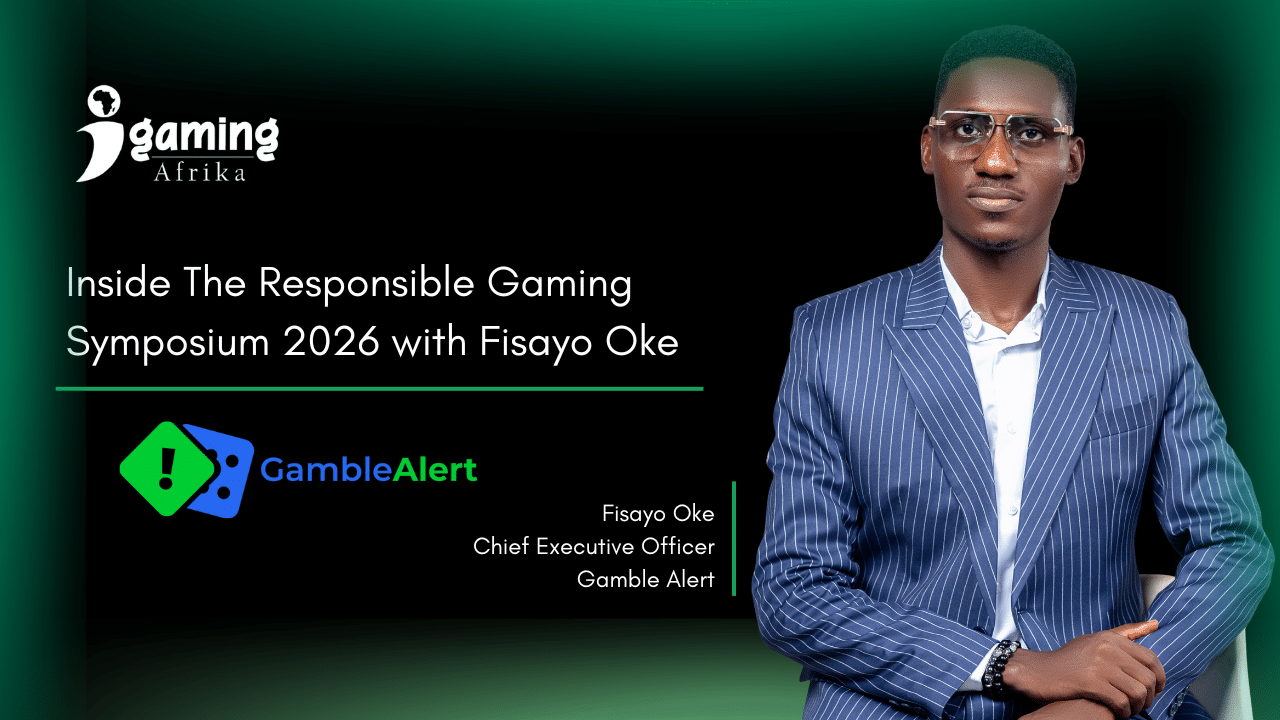
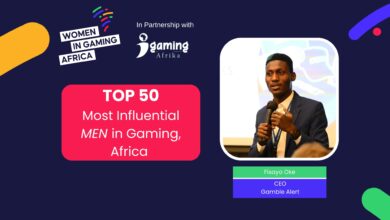
As anticipation builds for the The Responsible Gaming Symposium (TRGS) 2026, iGaming AFRIKA caught up with Fisayo Oke, Founder of Gamble Alert, to discuss this year’s expanded vision for responsible gaming in Africa. Bringing together regulators, operators, healthcare professionals, researchers, journalists, civil society representatives, and people with lived experience, TRGS 2026 aims to drive meaningful conversations around player protection and industry accountability. The event is set to take place on June 11, 2026 at the D’Podium International Event Centre, Ikeja, Lagos, Nigeria.


If you could summarize the core objective of TRGS 2026 in a single phrase, what would it be?
Well, interestingly, this year we’ve taken a bold step of bringing together stakeholders from across different countries on the continent, and that’s quite larger than what we had last year. We also expanded the scope of our stakeholders group to include people with lived experience, journalists, healthcare professionals, and just about any community level that could be impacted by problem gambling. We expanded the scope of the symposium this year so that everyone can have their say and their view being taken at the symposium.
What differentiates this year’s symposium from previous editions in terms of industry impact?
Very straightforward: “Building accountability, strengthening Africa’s model of player protection.”
In your view, what is the most pressing challenge facing the responsible gaming sector today?
I would say that very many operators still consider responsible gaming as a “nice to have,” and therefore it’s been treated as maybe a CSR project or something they can turn to at the end of the day. For some, they consider it as a compliance box that they need to check, and there are those who don’t, in fact, think that RG is an important aspect of their operation. So I think that that lack of synergy in terms of regulatory priorities versus operator priority in terms of RG is still the most challenging aspect for us in this space.


What is the number one takeaway you want regulators and operators to leave with this year?
Well, I would say that I want both regulators and operators to realize that responsible gaming is not anti-industry, right? We need to come to a point where we realize that without player protection, what we are effectively doing is to move wealth upward from the poorer communities to the rich communities, causing an imbalance. And therefore, it makes sense that regulators and operators begin to think about how to actually protect the most vulnerable of their customers.
Read Also: It’s Clean Up Time: Gaming Industry Faces Call For Collective Action on Addiction

How does TRGS 2026 bridge the gap between high-level policy discussions and actionable compliance?
Well, I think that the success of the symposium 2025 is something that we can use as a stepboard for this year. For us, we want to move beyond just conversations to action steps, and we’ve seen that been achieved last year. We’re hoping that we’re able to do more, you know, synergizing all stakeholders to say, “Look, we need to have the same mindset when it comes to player protection.”
It has to be about public health, you know, protecting everyone. Because for one person who is affected adversely by gambling, there are about six to seven others who are affected. So when everyone synergizes, we’re able to really achieve an industry that particularly prioritizes the players, right?
Collaboration is a major focus this year. How is Gamble Alert bringing diverse industry stakeholders to the table?
From our lineup of speakers, you would have seen what we’re trying to do. So you find people from academia, you find people who are neuropsychiatrists, you find healthcare professionals, mental health professionals. You find gaming operators, gaming regulators, you find industry associations, you find civil society, journalists—just about any community group, any stakeholder group that you can think about. We’re bringing all of these people together to say, “Look, let’s talk and let’s have a roundtable to truly achieve player protection.” And that’s how we’re able to bring together all these stakeholder groups to achieve the objective of the symposium.
Without naming names, which panel or presentation do you believe will spark the most vital debate?
Well, we’ve carefully curated the titles and the topics for the symposium, so really, if you look at each of them critically, you will find out that all of them are capable, you know, of steering a lot of debate. But for me, I would say that the presentation that actually queries the work of the regulators across the continent may spark a little bit of debate from some participants, especially because it asks questions around whether we are chasing what is right or not right. So for me, that would be [it], but generally, all of them are capable of steering debate.
Where do you see the trajectory of gaming advocacy in Africa over the next five years?
Over the next 5 years, I think that the industry would have to choose whether we want to operate with a damaged reputation or we want to operate where people trust us to actually have the health of our customers, you know, being prioritized. And therefore, I’m aware that beginning from this year to the next year, and then the next 5 years, you will see a lot of advocacy groups springing up across different countries in Africa asking the right questions around player protection. In fact, some of them will be very influential to even be asking questions about banning the operations of gaming operators, you know, on the continent. So yes, advocacy would move from the very gentle way of diplomatically engaging to something a little bit stronger, and then it would now be a question of whether you’re going to protect your reputation or you’re out of the business.
Complete this statement: “The success of TRGS 2026 will be measured by…”
The success of TRGS 2026 is going to be directly measured by how many steps gaming regulators across the continent, you know, are taking after the symposium, and then how much changes we’re noticing in terms of the operations of gaming operators in the continent. In terms of when we discuss tools that need to be applied, you know, at the symposium, we want to see that being implemented on their platforms.
In terms of also protection, when you talk about the customer recovery journey, you know, the commitment of gaming operators in that regard. I would say that the success of TRGS will be also the alignment in terms of priorities now government regulators, gaming operators, other stakeholders beginning to look at gambling harm from the public health lens. You know, that way, if we see that synergy coming on board, we would say that TRGS has really achieved its objective.
For stakeholders still on the fence, what is your definitive 15-second message on why their presence at TRGS 2026 is critical?
I’d say that if you attend TRGS 2026 and you feel like your time was wasted, we would apologize to you—that’s how bold we are about the impact and the necessity of the program. I think that it’s important for every stakeholder group to think of attending the symposium because gambling harm is not just for or about the player; it’s also about the community. So if you think that you are not affected, think about one person who is connected to you, or who is connected to someone who is connected to you. Everyone needs to be a part of this conversation. I am Fisay, and I am inviting you to the Responsible Gaming Symposium 2026.