Sitting on Both Sides of the Table: A Compliance Leader’s Blueprint for Africa’s Gaming Future

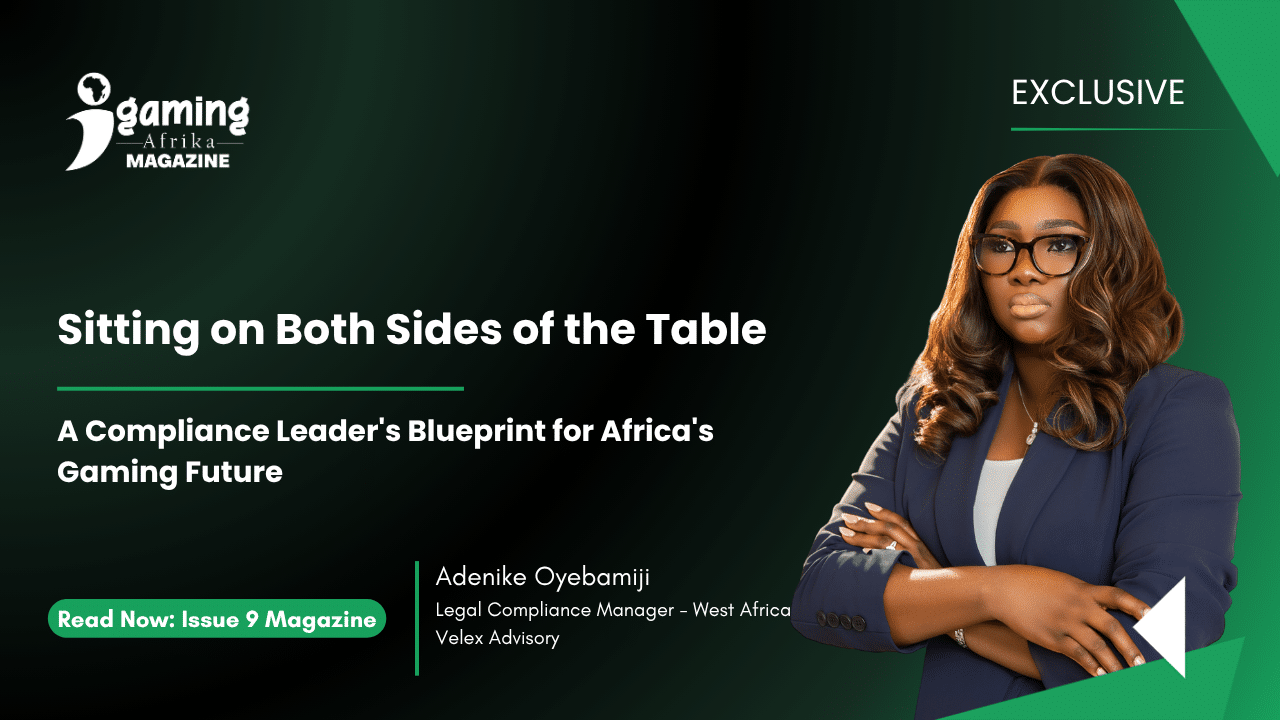
Adenike Oyebamiji’s approach to compliance draws on experience on both sides of the regulatory process. At the Lagos State Lotteries and Gaming Authority, she helped shape the rules that govern the sector. Her work with international operators now gives her a close view of how those rules affect market entry and day-to-day business decisions.


As Legal Compliance Manager for West Africa at Velex Advisory and Chief Operations Officer of the Africa Gaming Expo, she brings that experience into discussions about the sector’s future. In this conversation, Adenike examines where international companies misjudge African markets, what effective compliance requires, and why closer cooperation between regulators and operators matters for the industry’s growth.
Africa’s gaming industry is experiencing rapid growth, but growth often brings greater responsibility. From your perspective, how can African markets strike the right balance between encouraging innovation and ensuring strong, responsible regulation?
I believe that responsible regulation is the bedrock upon which this growth should be built. Regulation should not exist to stifle growth; it should provide the structure that allows innovation to thrive. Regulation and innovation do not have to compete with one another; they should complement each other.
When I worked on the regulatory side, I saw why robust regulation is necessary. Regulators are responsible for protecting the industry, players inclusive and for ensuring market integrity and maintaining public confidence. However, working with operators has shown another side of the story. Businesses need certainty, and regulations must be clear, predictive and practical enough to allow operators to innovate and invest with confidence. The best regulation is the smartest regulation.





Therefore, I believe the balance comes from continuous engagement. Regulators and operators should have open and ongoing conversations about emerging trends, challenges and opportunities. These conversations enable regulators to make informed decisions and formulate regulations that are effective, as they have a better understanding of what is going on in the market and are able to develop policies that complement.
Having worked closely with gaming regulations in Nigeria and across West Africa, what do you believe are the biggest regulatory conversations the industry needs to have over the next five years?
Over the next five years, I believe the biggest regulatory conversation in the African gaming industry will be how to regulate for the future without limiting innovation. The African gaming market is growing rapidly, and regulatory frameworks therefore need to evolve at the same pace as the industry. Regulators should adopt more principle-based approaches that are flexible enough to accommodate emerging technologies, new business models, products and changing consumer behaviour.

Another critical conversation will be around digital payments. Some jurisdictions have restrictions on the use of digital payment technologies such as blockchain, cryptocurrency, etc. The question should not simply be whether these innovations should be permitted, but how they can be regulated responsibly through KYC, AML and responsible gaming measures that mitigate risk without discouraging progress.
Read Also: Exclusive: Hamed Rahimi on Technology, Localisation, and the Future of Gaming
The industry also needs to have more coordinated discussion on cross-border regulatory collaboration and enforcement. Illegal and unlicensed operators do not recognise jurisdictional boundaries, and neither should regulatory cooperation. Greater collaboration between regulators will strengthen enforcement, reduce the impact of the black market, improve information sharing, and create a more predictable environment for compliant operators seeking to expand across multiple African markets.
It is encouraging to see organisations such as the African iGaming Alliance (AIA) and the African Lotteries and Gaming Association (ALGA), together with industry platforms like the Africa Gaming Expo (AGE) and the Gaming Tech Summit Africa (GTSA), fostering these important discussions. If this collaborative approach continues, I believe Africa will be well positioned to develop regulatory frameworks that not only address today’s challenges but are resilient enough to support the industry’s long-term growth and global competitiveness.
You have had the unique experience of sitting on both sides of the table; from regulating gaming activities at LSLGA to advising operators and stakeholders at Velex Advisory. How has seeing both perspectives changed the way you approach compliance and industry growth?
One of the greatest advantages of my career has been the opportunity to see the industry from both the regulators’ and the operators’ perspectives. The dual perspective has changed the way I approach compliance.
For me, compliance is no longer just about interpreting legislation or ticking regulatory boxes. It is about helping businesses understand the intention behind the rules and finding practical ways to achieve compliance while still meeting their commercial objectives to make a profit.
We at Velex Advisory encourage operators to engage regulators early and see compliance as a business enabler rather than just a legal obligation. At the same time, I believe regulators achieve better outcomes when they understand the commercial realities operators face. The best results come when both regulators and operators work together.
As Legal Compliance Lead for West Africa at Velex Advisory, you work with businesses entering and expanding across different jurisdictions. What are some of the mistakes international companies make when they underestimate the complexity of African gaming markets?
One thing I have consistently observed is that many international companies enter African markets with an incomplete understanding of the realities on the ground. Some are led to believe that market entry is straightforward, with minimal operational challenges or guaranteed success, only to discover that the reality is very different.
One of the biggest mistakes is treating Africa as a single market. Every jurisdiction has its own legal framework, tax regime, consumer behaviour and operational realities. In such a dynamic industry, operators should expect regulatory reforms, changes to licensing conditions, new tax obligations and evolving advertising rules. A strategy that works in one country may not necessarily work in another.
Read Also: Issue 9 of the iGaming AFRIKA Magazine is Out Now!
Another common mistake is focusing almost entirely on obtaining a licence while overlooking operational readiness. Securing a licence is only the beginning. Success depends on understanding how the market operates in practice, from compliance and tax obligations to payments, customer support and regulatory engagement. This is where trusted local advisers with jurisdiction-specific knowledge become invaluable. They help operators anticipate challenges, avoid costly mistakes and make informed decisions, rather than learning expensive lessons after launch.
I also see operators underestimate the cost of customer acquisition in mature markets such as Nigeria, Kenya and South Africa. These markets already have well-established brands with loyal customer bases and deep knowledge of local consumer behaviour. Before entering any market, operators should conduct thorough market research and ensure they have the financial capacity to compete sustainably.
Technology localisation is another area that is often overlooked. Some companies deploy the same platforms they use in Europe without considering local infrastructure. Depending on the jurisdiction, operators should optimise their platforms for lower bandwidth, older Android devices and local internet conditions to ensure a seamless customer experience.
Finally, successful market entry in Africa is not just about obtaining a licence. It is about understanding each market on its own terms, working with trusted advisers who understand the jurisdiction, and building an operating model that reflects the realities of that market. Those who invest in local expertise from the beginning are far better positioned for long-term success.
Read the full interview in our digital magazine: