Exclusive: John Mutua of AGOK Shares Insights on Regulation, Responsibility and the Future of Kenya’s Gaming Industry

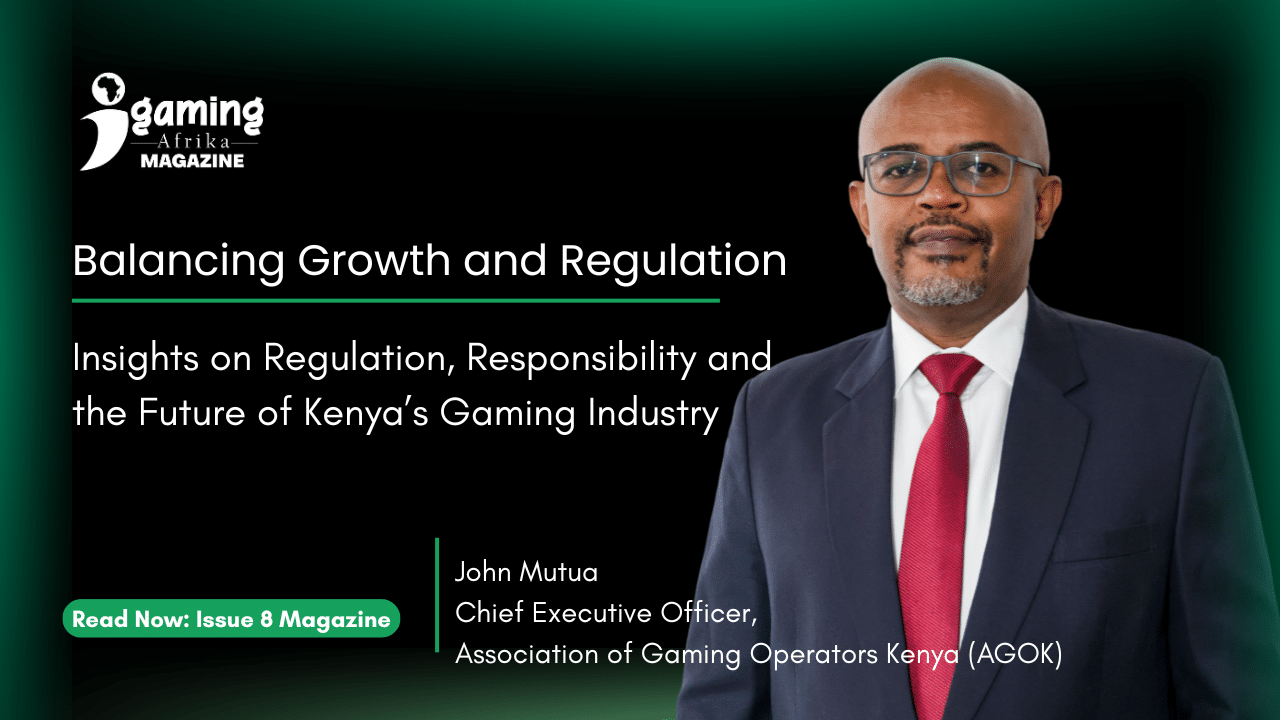
John Mutua, Chief Executive Officer at the Association of Gaming Operators Kenya (AGOK), sees Kenya’s gaming industry as one that has matured significantly but is still working through the basics of structure, trust, and consistency in regulation. It is one of the most developed betting markets in Africa that is shaped by rapid growth, mobile money adoption, and strong consumer demand, but also still navigating questions around taxation, oversight, and long-term stability.


At the centre of AGOK’s role, he explains, is something simple. Giving licensed, tax-compliant operators a structured and credible voice in how the industry is governed. Without that, he says, decisions are often made without enough practical input from the industry itself, which can lead to gaps between policy and reality.
In this conversation with iGaming AFRIKA, John reflects on the industry’s earlier years when operators were fragmented and engagement with regulators was limited. Competition was strong, but there was no unified platform for dialogue. Over time, that gap meant policies were sometimes developed without enough industry input. AGOK was formed more than two decades ago out of that reality. It began with informal conversations among operators at the Mayfair Casino in 2003, who felt the industry needed a shared platform.
Since then, its mission has remained steady, supporting a gaming industry in Kenya that is both commercially viable and socially responsible. Today, AGOK’s work is built around three core areas. The first is representation. The association engages regulators and institutions such as the Gaming Regulatory Authority, KRA, National Treasury, and Parliament on behalf of licensed operators. The second is standards. AGOK works with members to maintain a shared code of conduct and promote responsible operation across the sector. He acknowledged that the industry’s reputation has not always been consistent and says part of the current focus is ensuring that compliant operators are not overshadowed by poor practice elsewhere. Initiatives such as the CHUKUA CONTROL CAMPAIGN have also focused on responsible gambling awareness for both operators and the public. The third is social contribution. Beyond taxes, which Mutua noted exceed KES 26 billion annually, AGOK members contribute to initiatives in education, health, conservation, and sports.





Internally, AGOK is also strengthening its structure as regulation evolves under the Gambling Control Act. Committees focused on legal affairs, finance, and public engagement are designed to improve coordination and ensure the association is actively involved in shaping future policy. John says one of the key challenges in the industry has been perception. A common misunderstanding, in his view, is the idea that regulation and a healthy industry are in opposition. In practice, he argued that well regulated markets tend to be the most stable and sustainable.
Read Also: BCLB Launches Responsible Gaming Drive in Collaboration with AGOK Focused on Community Impact

John also pointed to markets such as the UK, Australia, and Malta, where regulation is strict but predictable which allows operators to invest in compliance systems, consumer protection tools, and responsible gambling measures at scale. He also addresses the perception that licensed operators are indifferent to social harm. From his experience, the opposite is true. Problem gambling is understood within the industry as both a social issue and a business risk. No licensed operator benefits from losing control of its customer base.
Where he believes the industry has fallen short is communication. “The public conversation is often shaped by the worst examples, not the reality of most regulated operators.” He argues that this imbalance has influenced how the sector is viewed, and addressing it has now become part of AGOK’s responsibility. Inside the association, building cohesion has taken time. Mutua describes his early approach as one of listening across the board, from large operators to smaller members and even those who were initially sceptical about collective action.
What became clear over time is that while operators compete strongly with each other, they face the same external pressures. These include shifting regulation, inconsistent enforcement, tax pressure, and a public narrative that often treats the industry as a single block without distinction. That shared reality became the foundation for collaboration. This perspective has shaped how AGOK now approaches advocacy. Positions are developed through consultation with members so that what is presented externally reflects a collective view and not individual interests.
Mutua believes Kenya’s rise as one of Africa’s leading gaming markets is closely tied to the growth of mobile money. For him, M-Pesa did far more than simplify payments. It changed access entirely. “The first and most significant is the mobile money infrastructure. M-Pesa did not just enable betting in Kenya; it transformed the entire economy of Kenya,” he said. Before mobile money, depositing and withdrawing funds remained a major barrier, keeping the market relatively small and largely retail based. According to Mutua, that changed almost overnight once digital payments became widely accessible. Bettors across the country could suddenly participate without needing to visit a physical location, something he says set Kenya apart from many other African markets.
Read Also: AGOK Advocates For Dialogue
He also pointed to Kenya’s strong football culture, particularly the deep connection with the English Premier League, as another major driver of the market’s growth. Combined with a highly active and selective consumer base, operators have been pushed to continuously improve their products and user experience. At the same time, the growth driven by mobile money has also brought greater regulatory attention. Easier access has increased concerns around issues such as underage participation, problem gambling, and advertising practices. Mutua says some of the stricter measures introduced by regulators have been necessary, though he believes others have been too broad.
Still, he argues that the same technology that accelerated growth can also strengthen regulation if used properly. Tools such as real time transaction data, spending limits, and behavioural monitoring systems, he says, could support more effective responsible gambling measures going forward.
John also identified three key areas that still need attention in the days to come. The first is clarity in the relationship between national and county level regulation, which continues to create uncertainty for operators. The second is taxation, where he calls for a more predictable, evidence based structure. The third is responsible gambling infrastructure, including self exclusion systems, support services, and consistent industry standards. His concern is that excessive restrictions will push activity into unregulated spaces where consumer protections do not exist.
Read the full interview in our digital magazine: