What Operators Need to Stay Competitive in Africa in 2027

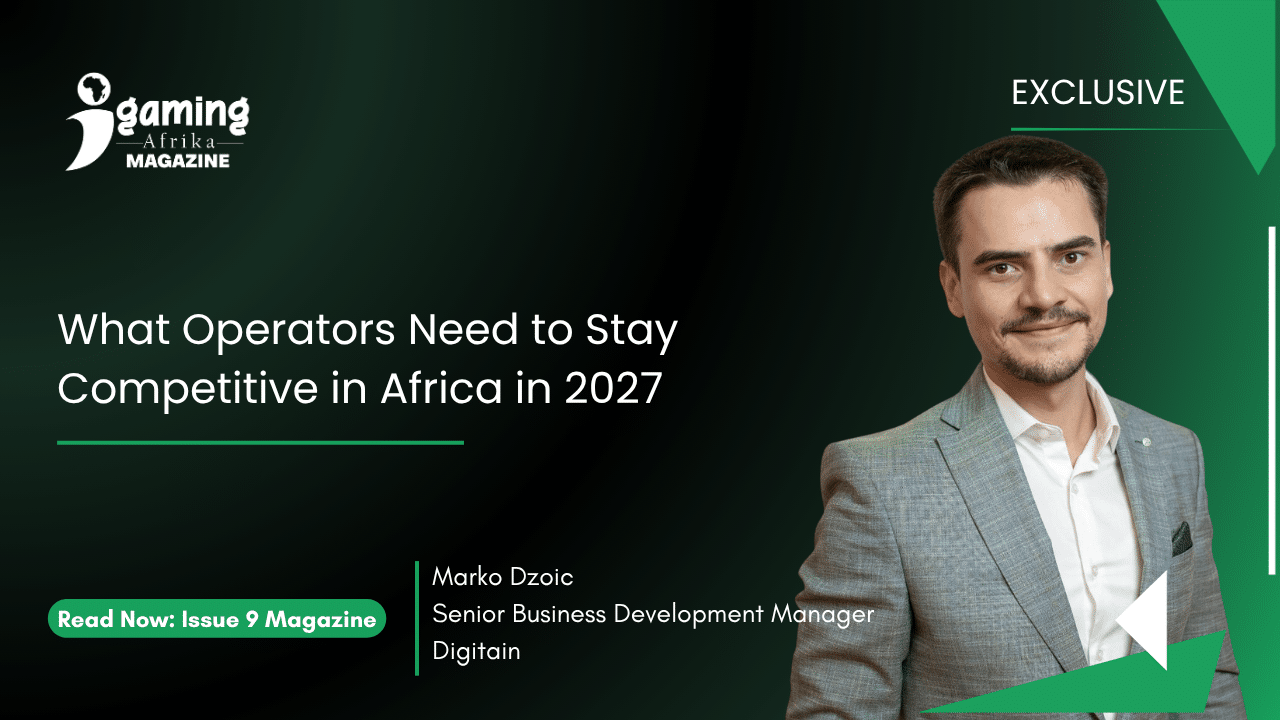
Before joining Digitain, I spent years on the other side of the table. I moved to Tanzania at the end of 2021, led an operator team of 300 people across every region of the country, worked with a network of some 3,000 agents, and eventually founded my own company there. So, when I write about what operators in Africa will need in 2027, I’m not writing from a market report – I’m writing from the betting shops, the agent meetings, hundreds of conversations with operators, and the licensing queues I’ve stood in myself.


That experience teaches you two things. First: most of what the industry says about Africa is written from too far away. Second: technology doesn’t win markets – it enables operators to win them. Everything that follows rests on that distinction.
Localisation is not a feature. It’s survival.
Every presentation about the continent repeats the same line: “Africa is not one market.” True, but it also isn’t fifty-four. The real differences don’t stop at borders. In Tanzania alone, player behavior changes from region to region: which sports drive turnover, how players move money, whether they trust an app or want to hand cash to an agent they know by name. A payment method that dominates one market is irrelevant 500 kilometers away.
By 2027, product quality will decide who competes – local understanding will decide who wins. The next competitive edge will come from adapting experiences region by region, not country by country. Through Digitain’s Centrivo iGaming Platform, operators can configure the player journey market by market and region by region, not just translate it, while our payment integrations allow players to pay the way they already trust. In Africa, that kind of flexibility isn’t a luxury. It’s infrastructure.






Speed decides markets before product quality does
As an operator, I lost count of opportunities with a short shelf life. A new payment integration, a promotional window around a major tournament, or a regulatory change in a neighboring market – these doors opened fast and closed even faster. A provider that needs months to deliver isn’t a partner; it’s a handbrake.
By 2027, the gap between market leaders and the rest will be measured in time-to-market – because the operator who reaches an opportunity six weeks earlier rarely gives it back. Digitain’s modular ecosystem was built for exactly this reality. Whether an operator needs a fully managed turnkey solution or standalone products like our award-winning Sportsbook, the technology is designed to scale at market speed.

Retail is not the past. It’s the trust layer.
I remember visiting an agent in Tanzania who knew nearly every regular customer by name. When mobile betting accelerated, many predicted his shop would disappear. Instead, it became the place players visited whenever something went wrong online. Retail didn’t lose its relevance – it changed its role. It never survived because players lacked smartphones; it survived because people trusted people.
Read Also: Hamed Rahimi on Technology, Localisation and the Future of iGaming
Online will continue to grow, and online-only models can absolutely succeed. But where retail remains culturally important, the strongest operators treat retail and digital as one business. Retail is increasingly becoming an acquisition, education and trust channel – not simply a spot to place bets. Digitain’s omnichannel capabilities, including Self-Service Betting Terminals, help operators bridge those worlds seamlessly. Because in these markets, ignoring retail doesn’t mean skipping a channel – it means skipping the handshake.
Regulation: slow, complicated and worth it
Founding my own company in Africa, outside betting, became the final stage of my market education. Working with regulators, permits, and licensing authorities as an investor – and later consulting for iGaming companies facing those same challenges – taught me that compliance is never just paperwork. It’s what keeps your license alive while you focus on growth. The next winners won’t be the companies that react fastest to regulation – they’ll be the companies already prepared before the regulation arrives. Digitain’s platform includes compliance, reporting and responsible gaming capabilities designed to evolve alongside local regulatory requirements.
Partnership is the product
One gap will continue widening by 2027: between operators who review player data weekly and those whose businesses react to it in real time. Having managed thousands of agents, I can say with confidence that small improvements in fraud detection, CRM and retention often produce larger commercial gains than launching another promotional campaign.
If I could distill five years in Africa into two sentences, it would be this:
Operators won’t remember your full feature list. They’ll remember whether you delivered what was promised, when it was promised – and whether you picked up the phone when it mattered.
Technology matters; so do localization and regulation. But after years spent building businesses in East Africa, I’m convinced the biggest competitive advantage is still proximity to the market itself. Operators that stay closest to their players will always adapt faster than operators relying on dashboards alone.
And the same rule applies to providers. A provider serving Africa from a distance will always struggle to keep pace with what’s actually changing on the ground – regulations shifting, payment habits evolving, player behavior moving faster than any quarterly report can capture. Active presence, not just an outstanding product, will be part of what operators expect from their technology partner.
That’s the philosophy we bring into every partnership at Digitain.
The winners in 2027 won’t simply offer technologically advanced products and keep pace with change – they’ll be close enough to the ground to see it coming first.
Author: Marko Dzoic, Senior Business Development Manager at Digitain