Gift Tuadibofa on Balancing Growth and Governance: Inside Nigeria’s Evolving Gaming Landscape

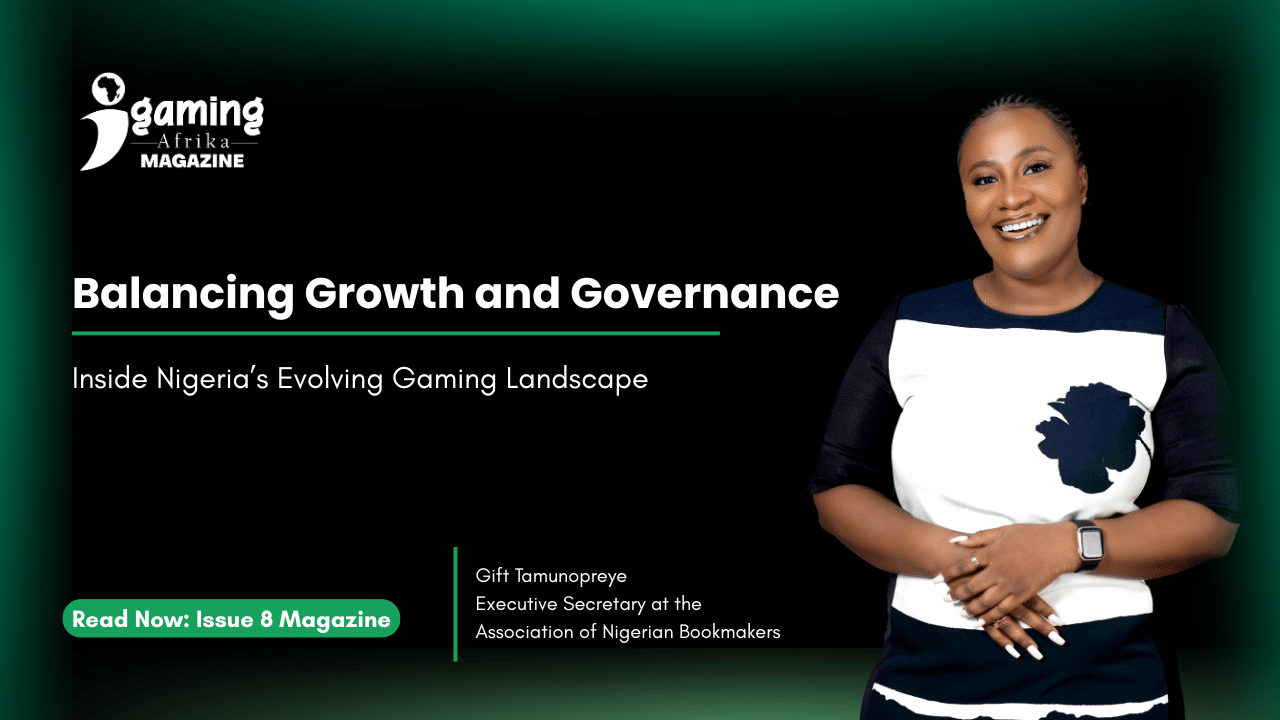
With Nigeria’s gaming industry booming, it’s become crucial to establish clear regulations, foster effective collaboration, and prioritise responsible development. In a recent chat with iGaming AFRIKA, Gift Tamunopreye Tuadibofa from the Association of Nigerian Bookmakers opened up about her experiences navigating legal compliance and advocating for the industry. She highlighted the challenges of regulatory fragmentation, stressed the importance of building trust through collaboration, and discussed how the sector can balance innovation with accountability to ensure long-term sustainability.


iGaming AFRIKA: Could you tell us about your journey into Nigeria’s gaming industry? What led to your role at the Association of Nigerian Bookmakers?
Gift Tamunopreye: My path began with a foundational engagement that provided a practical introduction to the sector from both legal and operational perspectives. Initially, my focus was strictly on compliance, ensuring business alignment with licensing requirements and evolving legal frameworks. What started as a purely legal function quickly transformed as I saw a dynamic ecosystem driven by technology and consumer behaviour.
As I moved from managing organisational compliance to broader industry engagement, participating in discussions around policy and responsible gaming, I was drawn to the Association of Nigerian Bookmakers. Serving here allows me to operate strategically, contributing to industry advocacy and helping shape a more structured, transparent, and sustainable sector.
iGaming AFRIKA: Coming from a legal and compliance background, how has that shaped your approach to industry advocacy
Gift Tamunopreye: My background has instilled in me a deep appreciation for balance. While I understand the necessity of regulation for consumer protection and financial transparency, I have also seen the challenges operators face when navigating overlapping requirements. Consequently, my advocacy is grounded in practicality. I don’t view advocacy as pushing back against regulation, but as refining it. I aim to translate operational realities into policy discussions, ensuring that regulatory objectives are met without creating unnecessary friction for compliant businesses. In my experience, clarity is the best remedy for compliance challenges.


iGaming AFRIKA: What is the core mandate of the Association of Nigeria’s Bookmakers today?
Gift Tamunopreye: We serve as a collective platform for licensed sports betting operators across Nigeria, focusing on advocacy, promoting regulatory compliance, responsible gaming, consumer protection, and the sustainable growth of the gaming sector. In a complex landscape where gaming oversight involves both national and subnational institutions, the Association acts as an organised voice to provide feedback on proposed policies. We also function as a bridge, promoting ethical standards and helping members understand regulatory expectations through training and stakeholder engagement.
iGaming AFRIKA: What are the most pressing issues currently facing licensed bookmakers in Nigeria?
Gift Tamunopreye: The challenges are largely structural, with regulatory fragmentation being a major hurdle. Navigating multiple layers of oversight increases the cost of doing business and creates uncertainty. However, the introduction of a Universal Reciprocity Licence by the Federation of State Gaming Regulators of Nigeria (FSGRN) is a very positive step toward easing this burden. Other critical issues include the presence of unlicensed operators who create an uneven playing field, the need for sustainable tax frameworks, and the ongoing challenge of improving public perception of the industry.

iGaming AFRIKA: How does the Association balance operator advocacy with regulatory objectives?
Gift Tamunopreye: We recognise that regulation and growth are not mutually exclusive; in fact, effective regulation enables sustainable growth. Our role is to encourage policies that are practical to implement. This involves active dialogue where we can share operational insights to help regulators adjust implementation mechanisms without compromising their policy goals. We also work internally to encourage operators to adopt high compliance standards and responsible gaming practices.
iGaming AFRIKA: Has regulation kept pace with the rapid growth of the sector?
Gift Tamunopreye: The growth has been remarkable, driven by technology and a youthful population. While regulation is gradually adapting, there are still areas where policy clarity could improve. The industry has become increasingly digital, and traditional structures weren’t always designed for technology-driven platforms. That said, current efforts toward modernising policy and improving coordination are very encouraging.
iGaming AFRIKA: What are the biggest misconceptions about the Nigerian gaming industry?
Gift Tamunopreye: The most persistent misconception is that operators function in an unregulated environment. In reality, licensed operators operate within a robust regulatory framework that encompasses taxation, anti-money laundering obligations, and consumer protection requirements.
Read Also: Exclusive: Borah Omary Shares Insights on betPawa’s Marketing and CSR Strategy
Another common misunderstanding is that responsible gaming is not a priority. On the contrary, operators make significant investments in player protection tools and safeguards across their platforms.
In further demonstration of this commitment, the industry has introduced the SafePlay platform. This platform serves as a centralised responsible gaming and self-exclusion system, specifically designed to enhance player protection, with implementation already underway in Lagos State.
Furthermore, there has been a formal request for this initiative to be scaled across the industry through the FSGRN, in order to ensure a more unified and effective approach to responsible gaming nationwide.
iGaming AFRIKA: What makes Nigeria distinct compared to other African jurisdictions?
Gift Tamunopreye: It is a unique combination of scale and complexity. We have a massive population with a strong sports culture and high mobile technology adoption. Nigerian operators are also highly innovative and adapt quickly to consumer behaviour. However, the multi-layered regulatory structure adds a level of complexity that requires a very high degree of compliance awareness compared to other markets.