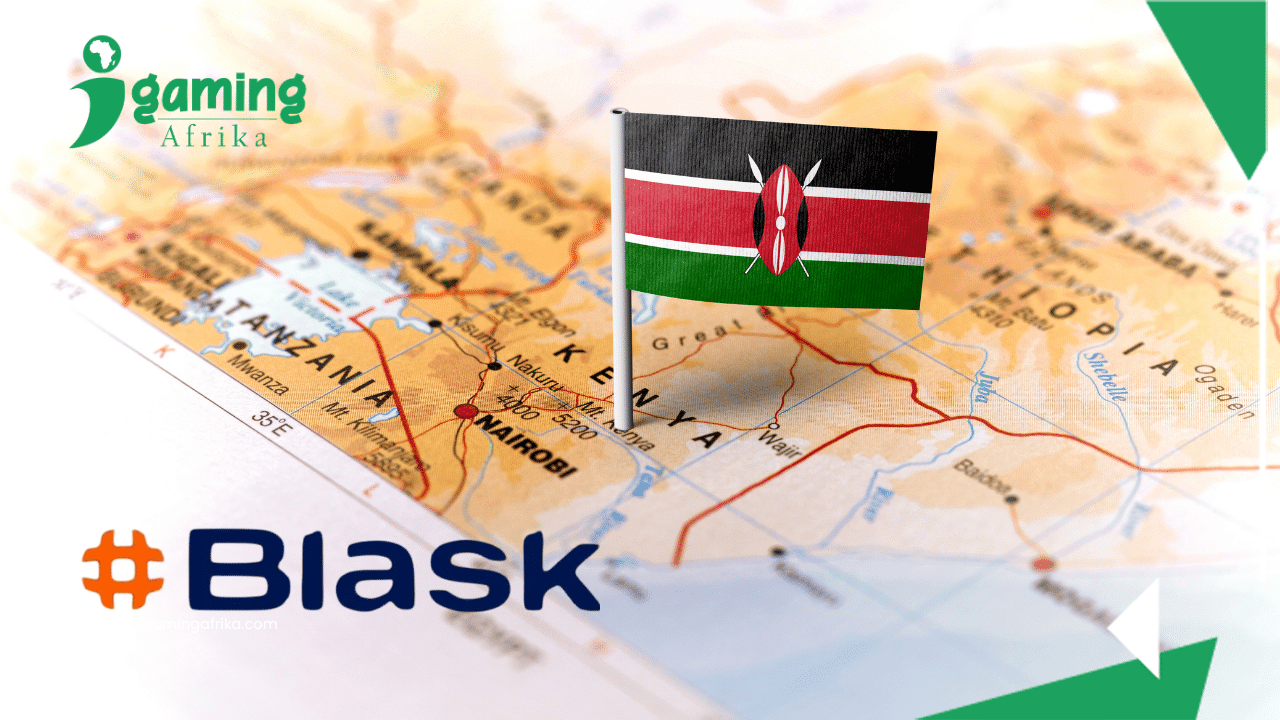
From July to September Kenya’s iGaming demand climbed 29.5% while the High Court left the new licence fee unset.


The fee for a new Kenya gambling licence has been in dispute since 20 July 2026, when the High Court froze the Gambling Control (Licensing) Regulations. Judgement in that case did not come on 2 October as expected, and the file returns for mention on 12 October. That rise was already in the monthly data when the judgement date passed with no ruling.
Blask metrics
- Blask Index — real-time measure of iGaming search demand for brands and markets.
- BAP (Brand’s Accumulated Power) — a brand’s share of total market demand in a country and period.
- CEB (Competitive Earning Baseline) — projected revenue baseline in USD, shown as an average with a min–max range.
What the court left open
Judicial Review E251 of 2026 has not set the licence fee. On 20 July the High Court put the Gambling Control (Licensing) Regulations, 2026 on hold. On 7 August Justice W. Musyoka narrowed that hold to the new licence fees and the capital requirements and left the other rules in place. On 21 August he confirmed the Authority could take those fees and pay them back if a later ruling found them unlawful, so it could process 246 applications that were waiting. The rules had been in force since 29 June.
On 21 September the court left 2 October as the ruling date after AGOK raised messages, which it said came through Safaricom, about switching off operators’ Paybills on 24 September. The judge said the existing orders were there to block that. On 2 October no decision came.




AGOK said the court gave three other parties and the state lawyer more time, including for the David Biketi and Sharkscode cases, and the case comes back on 12 October.
Demand rose while the Kenya licence fee stayed open
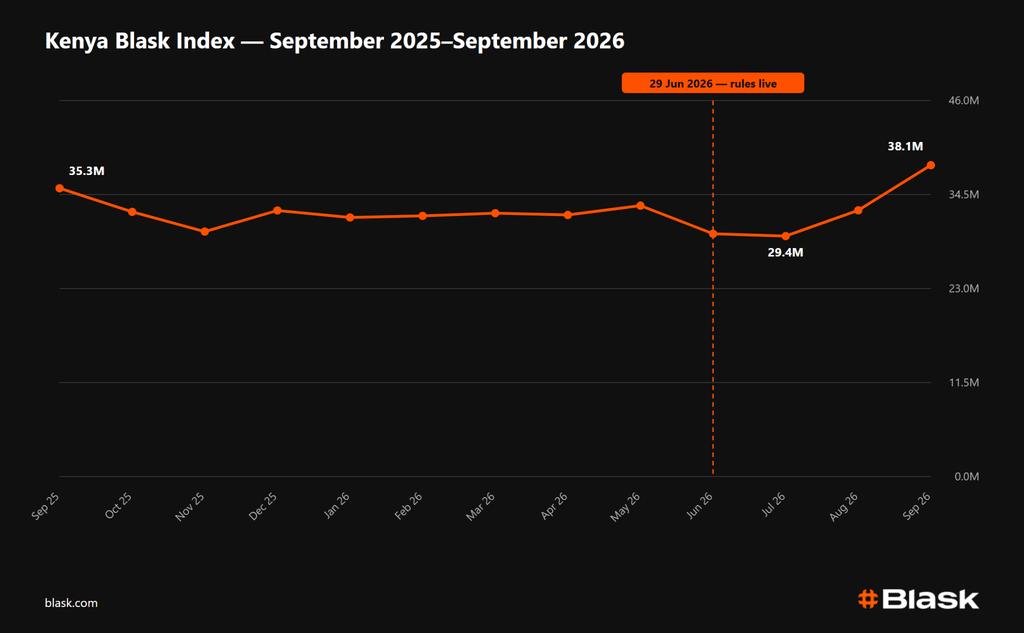
Blask Index had been easing for most of the year before those rules went live. From September 2025 to July 2026, Blask Index fell 16.6%, and July is the low month on the chart, the first full month after the 20 July stay. The 29 June operational date sits on that floor.

August and September reversed the fade. September is the highest month in the thirteen, and the rise runs through the period when the Authority could collect the new fee only against the refund undertaking. The revenue baseline moved in the same months, on a flatter line.
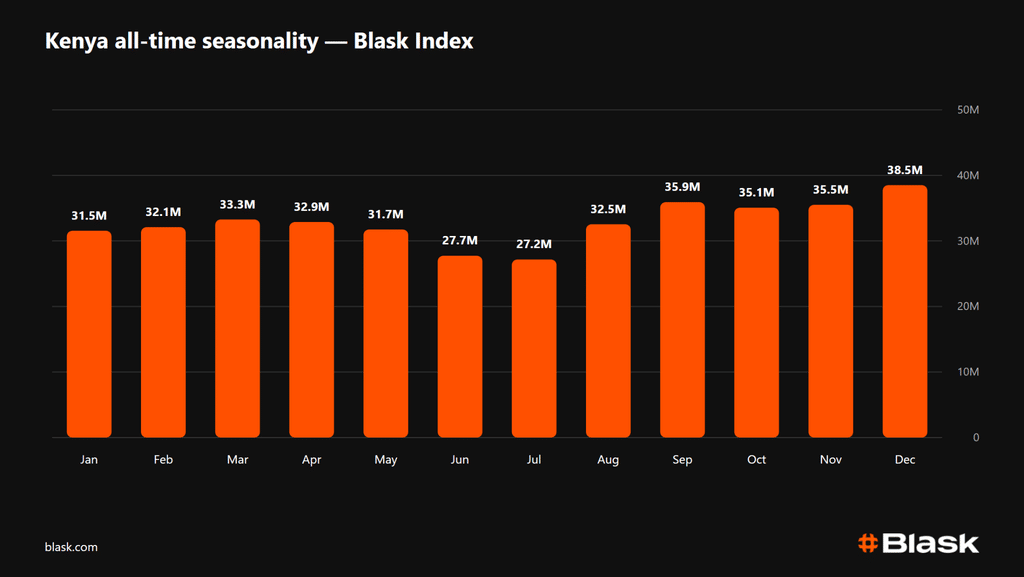
In the all-time profile, July is the weakest month, and September ranks second, with December the highest. The 2026 gain of 29.5% from July to September sits close to that seasonal gap.
Read Also: Rwanda after the gaming tax: demand fell again after H1
Revenue baseline did not match the demand step
Market CEB did not match the September search step. The September 2026 average was 7.9% above September 2025. Over the year, that sits close to the 8% search gain. From August to September the two series split: search was 16.9% higher, while the revenue baseline was 5.9% higher.
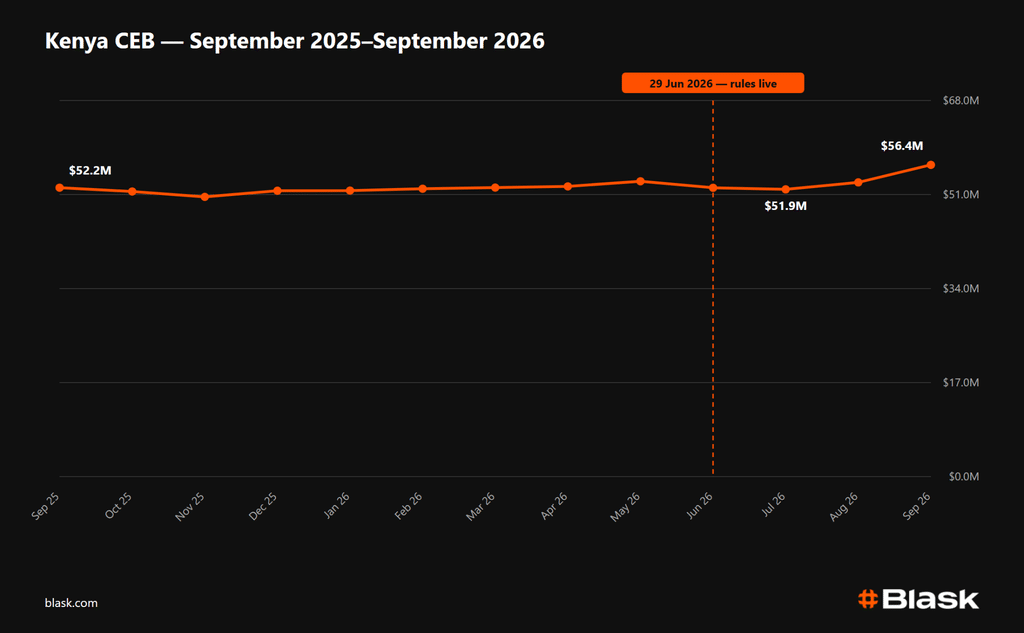
September is the highest month for CEB on this chart as well. The average had held in a narrow band through the year before it, so the 29 June rules did not break the baseline.
Who held September
Betika held September, on 29.1% of BAP, up from 25.7% in July.
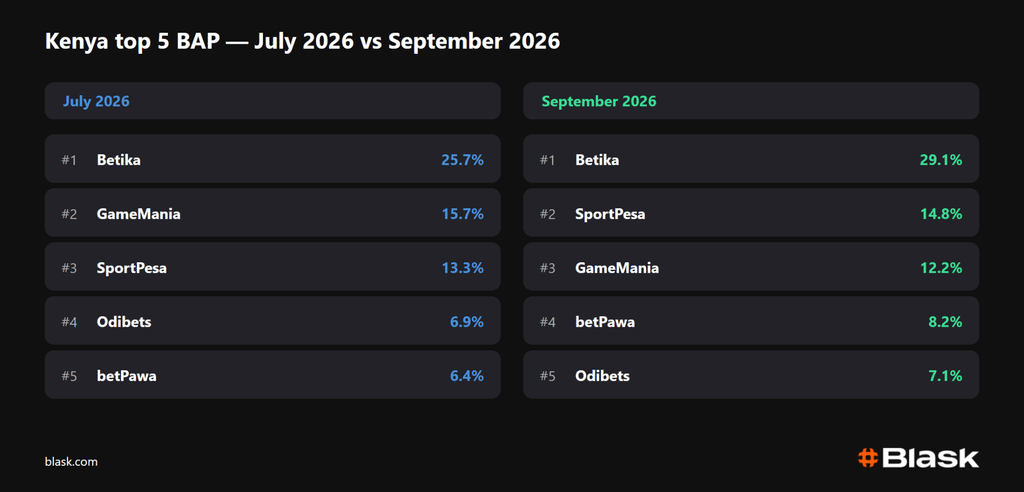
The order under Betika changed inside the same window. GameMania lost 3.5, and SportPesa gained 1.5-point, it was enough to take second. betPawa moved into fourth, ahead of Odibets.
Bottom line
On 6 October the High Court had not priced Kenya’s new gambling licence, and the next mention is 12 October while the Authority collects the disputed fees against a refund. September put both search and the revenue baseline at a high for the year, with the search step the steeper one, and Betika held the month after SportPesa moved into second. Whether that mention settles the fee is the open point for anyone already paying it.
About Blask
Blask is an AI-powered platform for iGaming and gambling market analytics. The company turns fragmented open-source signals into real-time insight on brand visibility, player demand, and baseline revenue metrics.