President Tinubu Signs NIMC Act 2026 to Support Nigeria’s $1 Trillion Digital Economy

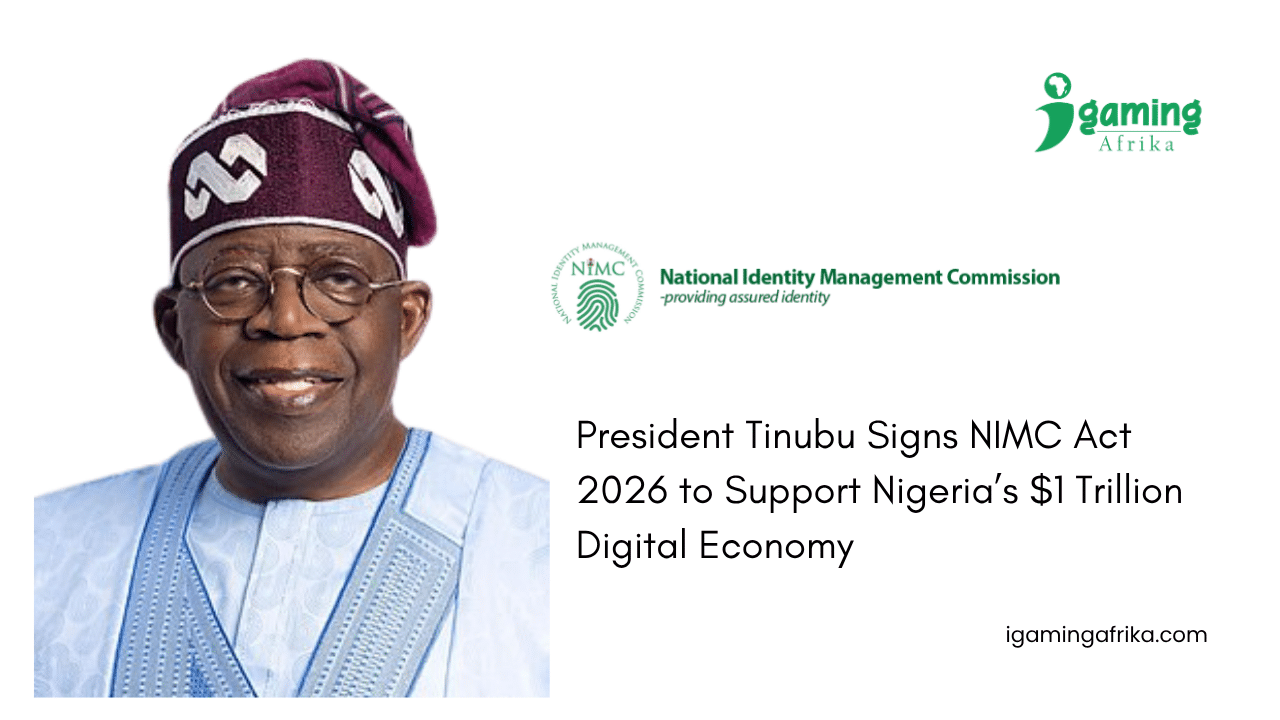
Nigeria’s President Bola Ahmed Tinubu has signed the National Identity Management Commission (NIMC) Act, 2026 into law, marking a transformative shift in Nigeria’s digital landscape.


The new legislation repeals and replaces the nearly two-decade-old NIMC Act of 2007, establishing a modern legal framework designed to secure digital identity, enhance cybersecurity, and accelerate the nation’s goal of becoming a one-trillion-dollar economy.
The Act’s most significant provision shows NIMC as the root certification authority for Nigeria’s National Public Key Infrastructure (PKI) and Digital Public Infrastructure (DPI). This role establishes the Commission as the primary trusted authority for secure digital authentication and electronic trust services across both government and private-sector platforms.
Under the principle of “One Person, One Identity, One Number,” the National Identification Number (NIN) is now firmly established as the country’s foundational identity credential. This reform is expected to revolutionize the financial sector by serving as the legally mandated KYC (Know Your Customer) and credit anchor for all bank accounts, loans, and SME transactions. Experts note that while 121 million NINs have been issued, this law aims to close the gap for 40 million unbanked Nigerians, targeting 95% financial inclusion by 2028.






Key innovations introduced by the Act include a general multipurpose card, a versatile credential that functions as both a national ID and a bank account, enhancing convenience and integration. The Act also emphasizes Data Protection, with enhanced safeguards for personal information that align with the Nigeria Data Protection Act (NDPA) and global privacy standards.
To promote inclusivity for vulnerable groups, it introduces a new identifier system and special enrollment measures for underserved populations, including those without permanent residences. Additionally, the Act incorporates anti-fraud measures, imposing stringent penalties for multiple registrations and identity theft to bolster confidence in digital transactions.

The necessity for this reform is rooted in a rapidly evolving global digital landscape that has outpaced the 2007 framework. The new Act addresses modern challenges such as e-governance, electronic commerce, and evolving cybersecurity threats. By integrating 14 key government agencies, including the Central Bank of Nigeria (CBN) and the EFCC, the law streamlines identity verification across the entire government.
NIMC has indicated it will soon issue regulations and guidelines to ensure a seamless transition to this new framework. For fintech users, the Act makes the National Identification Number (NIN) mandatory for all KYC and financial transactions, effectively eliminating user anonymity. Under the “One Person, One Identity” principle, it imposes strict penalties for multiple registrations and identity theft, making fraud and duplicate accounts harder to create. As Nigeria’s Root Certification Authority, NIMC also ensures secure, interoperable digital authentication, while alignment with the Nigeria Data Protection Act protects users’ sensitive financial data. Together, these reforms strengthen trust, security, and integrity across the digital ecosystem.